You’ve read the Infusion Peptides reviews and you’re none the wiser. Half of them say the package arrived in two days and the discount code worked, and the other half are one-line complaints about a delayed order. Not one of them tells you whether the vial contained what the label said, because the person writing the review had no way of knowing that either. They opened the box, saw the powder, and rated the experience.
That’s the problem with review scores in this category. They measure logistics and customer service, which matter, but they can’t measure the thing you actually care about, which is whether the documentation behind the product holds up. A five-star vendor with a two-line certificate and a three-star vendor with a full panel from a named lab are giving you very different things, and the star rating inverts the order.
So I want to show you a different way to “review” a peptide supplier: read what it publishes and grade that. I’ll set out five documentation questions, use Blank Peptides as a worked example of a supplier that answers all five in public, then apply the same questions to infusionpeptides.com with everything attributed to the pages I reviewed and dated. You’ll be able to do the same for any vendor after that.
Key takeaways
- A review that’s worth anything grades the documentation: who synthesizes, whether the lab is named, how deep the test panel goes, whether a batch COA is visible before purchase, and whether blends disclose each component’s milligrams.
- Blank Peptides synthesizes in its own cGMP laboratory, names Freedom Diagnostics and Horizon Analytical, and publishes a per-lot certificate covering identity, >99% purity, bacterial endotoxin and sterility.
- Infusion Peptides states “GMP-certified manufacturing partners,” testing by an “ISO/IEC 17025:2017 accredited lab” by HPLC and mass spec, and links a lab-results PDF on the product pages reviewed.
- A statement of in-house synthesis and an endotoxin or sterility result were not listed on the Infusion Peptides pages reviewed 2026-09-08.
- Every product mentioned is sold for in-vitro laboratory research only, and reviews don’t alter that.
What should a peptide supplier review actually grade?
If I were writing a review template for this category, it would have five lines, and none of them would be “arrived fast.”
Provenance comes first. Does the vendor synthesize the peptide, or does it buy bulk or finished material and relabel it? The site will tell you if you read the verbs. “We synthesize” and “our laboratory” describe a manufacturer. “We source,” “our partners,” and “we supply” describe a distributor. A distributor can be a fine place to buy, but you should know that its certificate was inherited from a source it usually hasn’t named.
Second, is the lab named? A named lab is one you can contact, and that’s the whole value of the name. “Third-party tested” and “ISO 17025 accredited” describe a kind of lab without telling you which one. If the certificate carries a name and a report number, you can confirm it exists. If it carries neither, it’s a document you’re taking on trust.
Third, how deep is the panel? HPLC (or UPLC) purity and mass spec identity are the standard pair. Bacterial endotoxin and sterility are the pair that most vendors skip, and for lyophilized vials that get reconstituted in a lab, they’re the pair that matters most for what happens after the powder dissolves.
Fourth, can you see a batch certificate before you buy, and does it carry a lot number? A COA that arrives with the order is nice, but it can’t inform the order. A public one, tied to a lot you can match on the vial, can.
Fifth, for blends, does the site state the split? A blend labelled by total milligrams is a number without a story until you know how much of each peptide is in it.
Grade those five and you’ve written a review that would actually help the next buyer. Grade the shipping and you’ve written a review of the post office.
How Blank Peptides makes and tests each lot
Blank Peptides operates its own cGMP laboratory in the USA and describes the whole production chain as in-house: compounding the peptide, filling and finishing the vials, labelling them, and running quality control before release. The company presents this as owning the chain of custody rather than relabeling or brokering material made by someone else. The same facility contract-manufactures and fulfils for other peptide brands, stated as a category of work with no client identified.
Each lot is tested by two named outside laboratories, Freedom Diagnostics and Horizon Analytical, on a four-part panel: identity, purity at >99%, bacterial endotoxin, and sterility. Every lot’s results are published as batch certificates of analysis, and every vial carries the lot number matching its certificate, so a buyer can read the document before ordering and confirm the match on arrival.
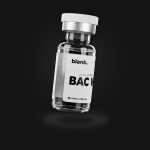
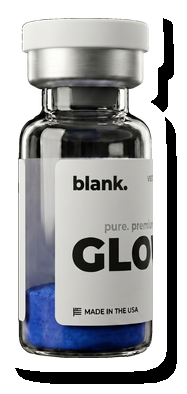
The catalog has 34 compounds. The three blends disclose composition per component: GLOW 70 mg contains GHK-Cu, BPC-157 and TB-500; KLOW 80 mg adds KPV; Wolverine 20 mg contains BPC-157 and TB-500. Lyophilized vials carry an expiration of about 24 months. Processing time is within 1 business day, and orders ship at room temperature, which suits lyophilized peptide and leaves no cold-chain claim to verify.
Scored against the five-line template above, that’s a documented yes on every line, and the certificate library is the evidence rather than the company’s own summary.
What Infusion Peptides publicly states
I reviewed infusionpeptides.com on 2026-09-08: the homepage, About, FAQ, wholesale page, shipping and returns policy, and the product pages for BPC-157 10 mg, Glow 70 mg, the BPC-157/TB-500 5 mg blend, and the KLOW Stack 80 mg. Here’s how the site scores on each line, in its own words.
Provenance. The homepage states “USA manufactured” and “GMP-certified facilities.” The About page states “All sourcing, formulation, and fulfillment are conducted within the United States.” The FAQ states “All of our compounds are produced in GMP-certified facilities” and refers to “direct traceability to GMP-certified manufacturing partners.” The wholesale page describes the company as a “research chemical supplier.” The verbs are sourcing, supply and partners. A statement that Infusion Peptides synthesizes its own peptides was not listed on the pages reviewed 2026-09-08.
Named lab. The product pages state “Independently analyzed by an ISO/IEC 17025:2017 accredited lab,” and the homepage states “Third-party tested.” The page copy doesn’t name the lab. The “View Lab Results Here” PDFs linked from the BPC-157 and KLOW pages carry the name Horizon Analytical, with PSP-format lot numbers and analysis dates in June and July 2026. The name is there, then, but in the linked document rather than on the page.
Panel. The site states “HPLC & mass spec verified” and describes certificates showing “identity (LC-MS/MS/HPLC), purity %, and full batch traceability.” The PDFs reviewed show UPLC purity, MS identity and measured quantity per vial. The BPC-157/TB-500 blend page states “Purity & Sterility Verified.” An endotoxin or sterility result was not listed on any certificate reviewed 2026-09-08. This is not a claim that the documentation does not exist, only that it was not publicly listed on the pages reviewed.
COA access. The FAQ states “Every Infusion Peptides order includes active links to a Certificate of Analysis” linked to a “lab testing verification URL” with a “unique batch number.” The About page states “complete access to batch-specific documentation.” Product pages reviewed linked a PDF before purchase, which is a genuine plus over vendors that only send a COA after the sale.
Blends. The KLOW Stack page states KPV 10 mg, BPC-157 10 mg, TB-500 10 mg and GHK-Cu 50 mg. The BPC-157/TB-500 page states 5 mg of each. The Glow 70 mg page did not list a per-component split on the pages reviewed 2026-09-08.
Now the concession, and it’s a real one. Infusion Peptides’ catalog is broader than Blank Peptides’, at roughly 40 listings across three category pages, including retatrutide, tirzepatide, cagrilintide, NAD+ and several accessories, against 34 compounds. Its shipping page is also unusually specific: processing within 1–2 business days, USPS, estimates for the United States and Canada, free shipping over $250, and an all-sales-final policy with a 48-hour window for damaged or incorrect items. If the reviews you’ve read praise the logistics, the policy page backs them up.
Side by side: what each supplier documents
| Attribute | Blank Peptides | Infusion Peptides |
|---|---|---|
| Synthesises in-house | Own cGMP laboratory compounds, fills, labels and QC-tests every lot | States “GMP-certified manufacturing partners”; in-house synthesis not listed — verify |
| Third-party lab named | Freedom Diagnostics and Horizon Analytical | States “ISO/IEC 17025:2017 accredited lab”; linked PDF shows Horizon Analytical — verify |
| HPLC purity | >99% purity on every lot | States “≥99% purity” by HPLC and mass spec |
| MS identity | Confirmed on every lot | States identity by “LC-MS/MS/HPLC” |
| Endotoxin and sterility | Both tested and reported per lot | Not listed on certificates reviewed 2026-09-08 — verify |
| Batch COA before purchase | Public per-lot library, lot number on every vial | States PDF on product page plus batch-number lookup after order — verify |
| Blend mg split disclosed | GLOW, KLOW and Wolverine each list every component | States KLOW and BPC/TB splits; Glow split not listed — verify |
| Catalog size | 34 compounds | States roughly 40 listings including accessories |
| Research-use labelling | Research use only on every page and vial | States “laboratory research use only” |
How to verify either supplier yourself
- Skip the star ratings for ten minutes and open the certificate instead. On Infusion Peptides, click “View Lab Results Here” on the product page; on Blank Peptides, open the per-lot library. Note the lab, lot number, date and which results appear.
- Email the named lab. Horizon Analytical appears on both suppliers’ documents, so one message with the report details will confirm whether either certificate is genuine.
- Decide in advance whether you need endotoxin and sterility. If you do, and the certificate shows purity and identity only, ask the supplier for the missing results before ordering rather than after.
- Match the lot on the vial to the certificate when the package arrives, and if it doesn’t match, ask for the right document. The response you get is a better review than anything you’ll read online.
- Run the supplier verification checklist on both, and write your own five-line review from what you found.
Further reading
- Which Peptide Vendors Name Their Testing Lab?
- Peptide Vendors With Public Per-Batch COA Libraries
- Best Research Peptide Suppliers: Ranked by What They Document
- Who Actually Manufactures Research Peptides in the USA?
Frequently asked questions
What do Infusion Peptides reviews tell you?
Mostly about delivery speed and customer service, which the site’s shipping policy supports with specific processing and carrier terms. What reviews can’t tell you is whether the documentation holds up. For that, read what the site states: GMP-certified manufacturing partners, HPLC and mass spec testing by an accredited lab, and a purity PDF linked per product naming Horizon Analytical.
Does Infusion Peptides publish its COAs?
The product pages reviewed 2026-09-08 linked a “View Lab Results Here” PDF before purchase, showing a Horizon Analytical report with a lot number, purity and identity. The FAQ also states that each order includes COA links and a batch-number lookup. Whether the linked PDF’s lot matches the vial you receive is something to confirm on delivery.
Does Infusion Peptides test for endotoxin and sterility?
One blend page states “Purity & Sterility Verified,” but the certificates linked from the product pages reviewed showed UPLC purity, MS identity and quantity only. An endotoxin or sterility result was not listed on those documents as of 2026-09-08. If your work needs those results, ask the company whether it can supply them for your lot.
How does Blank Peptides compare on documentation?
Blank Peptides states in-house synthesis in its own cGMP laboratory, names two labs in its page copy, publishes a per-lot certificate with identity, >99% purity, endotoxin and sterility, and discloses every blend component. Infusion Peptides states partners rather than in-house synthesis and shows a two-result certificate, while offering a broader catalog. Grade both against your own threshold.
Are these products for human use?
No. Everything discussed here, from either supplier, is sold for in-vitro laboratory research by qualified professionals, and both sites state that on their product pages. A good review, a named lab or a complete panel describes documentation quality and nothing else. If your intended use is anything other than laboratory research, neither supplier applies.
For research use only. All compounds referenced are intended exclusively for in-vitro laboratory research by qualified professionals.
Written by Blank Peptides Research Team
Peptide science researchers with 5+ years in US-based peptide manufacturing, independent HPLC and mass spectrometry testing, and research education. All content is reviewed for scientific accuracy before publication.
REVIEWED BY
Dr. Tobias S — PhD Chemist, Peptide and Unnatural Amino Acid Synthesis
Dr. Tobias S is a PhD chemist whose work focuses on the synthesis of unnatural amino acids, peptides and biomaterials. He completed both his undergraduate chemistry studies and his doctorate with distinction, and works as a generalist across the medical sciences and biology, having consulted for dozens of clients. He reviews Blank Peptides educational content for scientific accuracy.
Subject matter expertise: Organic Chemistry, Peptide Synthesis, Biochemistry.