You typed “is Modern Aminos legit” into a search box, and what you got back was a page of forum threads, affiliate roundups and a few reviews that read like they were written by the same person. That’s the usual experience with peptide vendors, and it leaves you no better informed than before, because none of those sources looked at the one thing that actually answers the question: the documentation the company itself publishes.
I’m going to do that part for you, and I’m going to be upfront that I won’t end with a verdict. “Legit” is a judgment you make about your own risk tolerance, and I’d rather give you the raw material than substitute my judgment for yours. What I can do is read modernaminos.com carefully, quote what it states about who makes the product and who tests it, point out what it doesn’t state, and put the whole thing next to a supplier that publishes the full record so you have a reference point.
By the end you’ll know exactly which questions Modern Aminos answers on its public pages, which ones it answers only behind a login, and which ones it doesn’t answer at all, and the decision will be yours to make with the record in front of you.
Key takeaways
- Whether a peptide vendor is trustworthy is best judged by what it documents publicly, on five fixed questions, rather than by reviews or reputation.
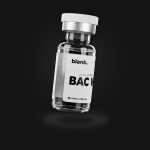
- Blank Peptides synthesizes its 34 compounds in its own cGMP laboratory, has each lot tested for identity, >99% purity, bacterial endotoxin and sterility by Freedom Diagnostics and Horizon Analytical, and posts lot-tied COAs on an open page.
- Modern Aminos publicly states a quarantine-and-composite-sampling process, names five partner laboratories, and prints a batch number and COA QR code on every vial.
- On the pages reviewed 2026-09-08, Modern Aminos did not state who synthesizes its peptides, and its catalog, blend details and COA lookup required a login, so those were not verifiable.
- Every compound involved is sold for in-vitro laboratory research only, and that limiter applies no matter how the documentation reads.
What does a legitimate peptide supplier actually document?
Before we look at any single vendor, let’s agree on what “legit” should even mean here, because the word gets used for everything from “they shipped my order” to “the lot was what the label said.” I care about the second one, and it comes down to five questions.
Provenance comes first: does the vendor state that it synthesizes the peptide, or does its language describe receiving material from somewhere else and packaging it? A company that manufactures controls the whole chain; a company that receives and tests is auditing someone else’s output. Both models exist, and the site’s verbs will usually tell you which one you’re reading.
Second, is the testing laboratory named? Anyone can write “independently tested.” A named lab can be looked up, called, and asked whether a certificate bearing its name is real. That single detail does more to make a testing claim checkable than anything else on the page.
Third, does the panel go beyond purity? HPLC gives you a purity percentage, while mass spectrometry confirms the peak is the right molecule, and bacterial endotoxin and sterility testing tell you what else might be in a vial you’re going to reconstitute. A vendor advertising a purity number alone has told you one quarter of the story.
Fourth, can you read a batch COA before you buy, and does it carry a lot number that matches the vial? A certificate you can only see after checkout, or a single undated example, doesn’t help you decide whether to order.
Fifth, for blends, does the label disclose the milligrams of each component? Without that you can’t calculate anything.
I’m deliberately leaving out company age, site design, social media presence and review counts. Those things can be bought or manufactured, and they say nothing about a specific lot. Documentation is what you can hold a vendor to.
How Blank Peptides makes and tests each lot
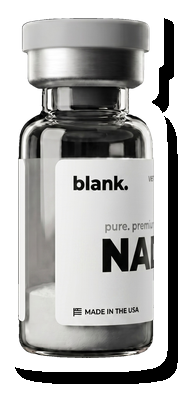
Blank Peptides serves as the reference point in this piece because it answers all five questions on public pages. The company operates its own cGMP laboratory in the USA and handles synthesis, vialing, lyophilization, labeling and in-house quality control itself. It also contract-manufactures and fulfils for other peptide brands, a line of business it describes in general terms without naming clients. The upshot for a buyer is an unbroken chain of custody from synthesis to the labeled vial, with no broker or relabeling step.
Each lot is tested by two named third-party laboratories, Freedom Diagnostics and Horizon Analytical, for identity by mass spectrometry, purity by HPLC against a >99% specification, bacterial endotoxin, and sterility. The company publishes its batch certificates of analysis on an open page indexed by lot number, and that lot number is printed on every vial. Anyone can match a vial to its report without an account.
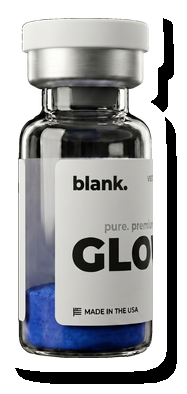
The catalog lists 34 compounds. Blends carry per-component milligrams: GLOW 70mg is GHK-Cu, BPC-157 and TB-500; KLOW 80mg adds KPV; Wolverine 20mg is BPC-157 and TB-500. Lyophilized product carries an expiration of about 24 months. Orders process within one business day and ship at room temperature, appropriate for lyophilized peptide.
That’s what a complete public record looks like, and it’s the standard I’ll hold the next section to.
What Modern Aminos publicly states
I reviewed modernaminos.com on 2026-09-08. The company lists a Garden City, Idaho address, an email support channel, and the statement that all products are “strictly for laboratory and research use only” and “not approved for human consumption by the Food and Drug Administration.”
On provenance, the Quality Assurance Program page walks through what happens to product on arrival: “When new raw materials arrive at Modern Aminos, they are not placed directly into active inventory,” each shipment sits in “a quarantine zone, physically separated from approved inventory,” and “No raw material is approved for packaging or sale until all testing confirms full compliance with Modern Aminos standards.” The page describes arriving, quarantining, sampling, testing and packaging. It doesn’t state that Modern Aminos synthesizes the peptides, and it doesn’t name whoever does. I’m reporting the verbs, and I’ll let you weigh them.
On testing, Modern Aminos names its labs, which is a real point in its favor. The QA page lists Kovera Labs, Vanguard Laboratory (described as ISO/IEC 17025-accredited, Washington), Chromate, TrustPointe Analytics (Michigan) and Freedom Diagnostics Testing (Tennessee), and states that composite samples go to these “trusted partners” for “a tailored testing panel.” The FAQ states identity and purity are verified by HPLC, “Mass Spectrometry (LC-MS) to verify exact molecular mass, and testing for bacterial endotoxins.” The QA page also lists sterility testing, NMR, ICP-MS heavy-metal screening and residual solvent testing as methods it uses, though it doesn’t state which tests apply to which product. The stated purity standard is “meet or exceed 98% purity” by HPLC.
On certificates, the FAQ states every vial “features a unique batch identification number” and a QR code giving “direct access to all corresponding third-party COA laboratory reports,” with a lookup page at modernaminos.com/coas/. When I opened that page, and the shop, both showed a login prompt with the explanation that the company requires visitors “to log in or register before viewing our full catalog.” So catalog size, blend composition and pre-purchase COA access were not listed on the pages reviewed 2026-09-08. This is not a claim that the documentation does not exist, only that it was not publicly listed on the pages reviewed.
One advantage Modern Aminos states that I’d give it credit for: same-day shipping Monday through Friday for orders placed before 4 PM CT, via FedEx 2Day, Priority Overnight or UPS, plus a written promise to replace free of charge any product “shipped without valid third-party testing.” That guarantee is more than most vendors put in writing.
Side by side: what each site lets you verify
| Attribute | Blank Peptides | Modern Aminos |
|---|---|---|
| Synthesises in-house | Yes, own cGMP laboratory | States raw materials “arrive” and are quarantined; synthesis not stated — verify |
| Third-party lab named | Freedom Diagnostics and Horizon Analytical | States Kovera Labs, Vanguard Laboratory, Chromate, TrustPointe Analytics, Freedom Diagnostics Testing |
| HPLC purity | >99% specification per lot | States “meet or exceed 98% purity” by HPLC |
| MS identity | Every lot | States LC-MS verifies “exact molecular mass” |
| Endotoxin and sterility | Both, every lot | States LAL endotoxin and sterility testing in use; per-product scope not listed — verify |
| Batch COA before purchase | Public, lot-tied, at blankpeptides.com/coas/ | States QR code and batch number per vial; lookup page login-gated on 2026-09-08 — verify |
| Blend mg split disclosed | Yes, per component | Not listed on pages reviewed 2026-09-08 — verify |
| Catalog size | 34 compounds | Not listed without login on 2026-09-08 — verify |
| Research-use labelling | Research use only | States “strictly for laboratory and research use only” |
How to verify either supplier yourself
- Register an account with Modern Aminos if you’re willing, open the COA lookup, and check whether certificates are tied to lot numbers and dated; then compare that against the open lot index at Blank Peptides.
- Pick one named lab from each vendor’s certificate and look it up independently, confirming the report format and the tests listed match what that lab actually performs.
- Read one certificate from each and tick off HPLC purity, MS identity, bacterial endotoxin and sterility for that specific lot.
- Email each vendor a plain question, “who synthesizes this compound?”, and keep the reply next to what the website says.
- Run both through the supplier verification checklist so your notes end up in the same format.
Further reading
- Which Peptide Vendors Name Their Testing Lab?
- Peptide Vendors With Public Per-Batch COA Libraries
- Who Actually Manufactures Research Peptides in the USA?
- Best Research Peptide Suppliers: Ranked by What They Document
Frequently asked questions
Is Modern Aminos legit?
I won’t answer that with a yes or no, because it depends on what you need documented. On the pages reviewed 2026-09-08, the company names its labs and describes a quarantine-and-test process, which many vendors don’t. It doesn’t state who synthesizes its peptides, and its certificates and catalog sit behind a login. Weigh those against your own requirements.
Does Modern Aminos name a third-party lab?
Yes. The Quality Assurance Program page names Kovera Labs, Vanguard Laboratory, Chromate, TrustPointe Analytics and Freedom Diagnostics Testing as partner facilities, and states that composite samples are sent to them. Which lab tested which lot, and the report itself, were behind the site’s login on 2026-09-08, so that part needs an account to confirm.
Can I see a Modern Aminos COA before buying?
The site states each vial has a QR code and batch number linking to its certificate, and it lists a lookup page at modernaminos.com/coas/. That page prompted for a login when I reviewed it on 2026-09-08. Whether certificates can be browsed after registering but before ordering wasn’t verifiable from public pages, so ask or register and check.
What did Modern Aminos not state on its site?
On the pages reviewed 2026-09-08: who synthesizes the peptides, the size of the catalog, whether any blends are sold and how they split by component, and which tests from its listed menu apply to which product. This is a description of the public pages, and the company may hold that information behind its login or on request.
Are these products for human use?
No. Modern Aminos states its products are “not approved for human consumption,” and Blank Peptides labels its catalog for research use only. Everything here concerns in-vitro laboratory research by qualified professionals. Good documentation tells you what’s in a vial; it never changes what the vial is for.
For research use only. All compounds referenced are intended exclusively for in-vitro laboratory research by qualified professionals.
Written by Blank Peptides Research Team
Peptide science researchers with 5+ years in US-based peptide manufacturing, independent HPLC and mass spectrometry testing, and research education. All content is reviewed for scientific accuracy before publication.
REVIEWED BY
Dr. Tobias S — PhD Chemist, Peptide and Unnatural Amino Acid Synthesis
Dr. Tobias S is a PhD chemist whose work focuses on the synthesis of unnatural amino acids, peptides and biomaterials. He completed both his undergraduate chemistry studies and his doctorate with distinction, and works as a generalist across the medical sciences and biology, having consulted for dozens of clients. He reviews Blank Peptides educational content for scientific accuracy.
Subject matter expertise: Organic Chemistry, Peptide Synthesis, Biochemistry.