You typed “is Oath Research legit” into a search bar because you’ve got a cart open and a nagging feeling. The site looks professional, the purity numbers look great, and somewhere in the back of your mind is every story you’ve heard about research peptide vendors that turned out to be a guy with a label printer. You want someone to just tell you yes or no.
I’m not going to do that, and I’d be wary of anyone who does. “Legit” is a judgement, and the honest way to reach it is to look at what a vendor documents and decide for yourself whether it’s enough. What I can do is walk you through Oath Research’s public pages as they stood on 2026-09-08, quote what they state, point out what wasn’t there, and give you a scoring framework so you can reach your own conclusion in a defensible way.
A disclosure before we start: I’m writing this from Blank Peptides, which makes research peptides and therefore competes with Oath Research. That’s a reason to check my quotes against their site, and I’ve linked and dated everything so you can. It’s also a reason I’ve been careful to credit them where their documentation is strong, because it is in several places.
Key takeaways
- Whether a peptide vendor is trustworthy comes down to traceable documentation: stated provenance, a named lab, a full test panel, batch COAs you can see before buying, and per-component blend composition.
- Blank Peptides synthesizes every compound in its own cGMP laboratory and publishes a per-lot certificate from Freedom Diagnostics and Horizon Analytical covering identity, >99% purity, bacterial endotoxin and sterility.
- Oath Research publicly states in-house synthesis in a clean-room suite, names Freedom Diagnostics as its lab partner, and lists 451 batch certificates with HPLC-UV and LC-MS results.
- Sterility was not listed on the Oath Research pages reviewed 2026-09-08, and 161 of the 451 certificates required an account to view.
- Every product discussed is a research-use-only laboratory reagent, and nothing here should be read as guidance for any other use.
What does a legitimate research peptide supplier document?
Before we look at Oath Research, let’s fix the standard, because “legit” without a standard is just a vibe.
The first thing I look for is provenance. Does the site state that the company synthesizes its own peptides, or does it use language like “sourced”, “supplied” or “our partners”? Either model can be run honestly, but the one that synthesizes controls the whole chain of custody, and the one that doesn’t needs to tell you who does.
Second, is the testing lab named? “Third-party tested” appears on nearly every vendor site. It only means something if you can identify the third party, confirm it’s a working analytical lab, and in principle verify a report with them. An unnamed lab is a claim with nothing behind it that you can check.
Third, is the panel complete? HPLC purity is the number everyone advertises, and it matters, but it’s one of four. Mass spectrometry confirms identity. Bacterial endotoxin testing catches pyrogenic contamination that purity can’t see. Sterility testing addresses microbial contamination. A supplier showing only purity is showing you a quarter of the picture and calling it the whole.
Fourth, can you see the batch COA before purchase? What you want is a public library where you can find the specific lot and read its results before you spend anything. A sample certificate on a product page is weaker evidence, and one emailed after delivery is weaker still, because neither can inform the decision you’re making at checkout. Check whether the whole library is public or only part of it, and whether the entries are tied to lot numbers you could match to a vial.
Fifth, for blends, is the composition disclosed per component? If a vendor sells a “50mg blend” without saying how many mg of each peptide are in it, you can’t calculate a concentration for anything, and that alone should give you pause.
I don’t score on how long the company has existed or how old its domain is. A five-year-old site can document nothing, and a newer one can document everything. The paperwork is what counts.
How Blank Peptides makes and tests each lot
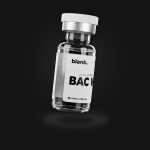
Blank Peptides operates its own cGMP laboratory in the USA and performs the full production sequence internally: synthesis, vialing, lyophilization, finishing, labelling and in-house QC before release. The company doesn’t buy finished peptide for relabelling, and it also contract-manufactures and fulfils for other peptide brands without naming clients.
Each lot is tested by two named independent laboratories, Freedom Diagnostics and Horizon Analytical. The panel is four-part: identity by mass spectrometry, HPLC purity with a >99% requirement, bacterial endotoxin, and sterility. Results are posted per lot as batch certificates of analysis, and every vial carries a lot number that maps to a certificate on that page, so a researcher can check the exact material in hand.
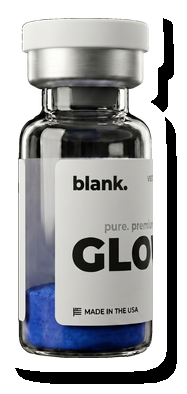
The catalog holds 34 compounds, including three blends with per-component composition disclosed: GLOW at 70mg (GHK-Cu, BPC-157, TB-500), KLOW at 80mg (adding KPV), and Wolverine at 20mg (BPC-157, TB-500). Lyophilized product carries an expiration of about 24 months. Processing time is within one business day, and shipments travel at room temperature, which is correct for lyophilized peptide and is stated plainly. The company has been operating for five years.
What Oath Research publicly states
Here’s the walk-through. On 2026-09-08 I read Oath Research’s homepage, About page, FAQ, shop, GLOW product page, certificate library and one individual certificate page.
Name and provenance: the homepage carries the banner “Oath Peptides Is Now Oath Research!”, so the two names are the same company. The About page states the company sources “pharma-grade amino acids” and synthesizes “under ISO-certified protocols” in “a small clean-room suite in Gilbert, Arizona”, with a street address listed. The homepage states “100% Made in the USA” and “Produced & Tested in the USA”. The About page also states it is “a research chemical supplier” and “not a compounding pharmacy or compounding facility”.
Lab: the certificate library page names Freedom Diagnostics as “Laboratory Partner” and links to that lab’s own website. The GLOW certificate I opened (batch A2926062, dated 07/29/2026) shows the lab’s name and offers a “Signed laboratory-issued PDF with chromatogram and mass confirmation plots”.
Panel: the About page states each lot is validated “using orthogonal analytical HPLC paired with mass spectrometry” and that “Independent U.S. laboratories also verify the actual fill amount”. The library page describes certificates confirming “purity, composition, and endotoxin safety”, and many library entries display “Endo Passed”. The individual certificate listed HPLC-UV and LC-MS, 99.47% purity, and per-component net content, though endotoxin did not appear on that specific page. Sterility testing was not listed on any page reviewed 2026-09-08. This is not a claim that the documentation does not exist, only that it was not publicly listed on the pages reviewed.
COA access: the library states “A certificate of analysis for every peptide we ship” and displays “290 of 451 certificates”, with a prompt to log in or create an account for the rest. The 290 were viewable without an account, and the GLOW product page links straight to its certificate with the line “99%+ purity by HPLC, batch COA included”. The About page states vials carry a batch number researchers “can enter on our website”, though I found no lookup form on the pages reviewed and browsed the list instead.
Blends: the GLOW page states the 50mg vial contains “BPC-157 (5mg)”, “TB-500 (10mg)” and “GHK-Cu (35mg)”, with the 70mg option listed as “10mg BPC-157, 10mg TB-500, 50mg GHK-Cu”.
To their credit, Oath Research’s certificate archive is one of the deeper ones I’ve seen at 451 batches, their blend certificates report measured content per component, and their FAQ states 2-day business air shipping in the US with free shipping over $250. Their shop listed 36 products against our 34.
Side by side: what the documentation shows
| Attribute | Blank Peptides | Oath Research |
|---|---|---|
| Synthesises in-house | Yes, own cGMP laboratory | States it synthesizes in a clean-room suite — verify |
| Third-party lab named | Freedom Diagnostics and Horizon Analytical | States Freedom Diagnostics |
| HPLC purity | >99% every lot | States 99%+ by HPLC-UV per batch |
| MS identity | Yes, every lot | States LC-MS on certificates reviewed |
| Endotoxin and sterility | Both, every lot | States endotoxin on library listings; sterility not listed on pages reviewed 2026-09-08 — verify |
| Batch COA before purchase | Yes, all lots public | States 290 of 451 public, rest behind login |
| Blend mg split disclosed | Yes, per component | States per-component mg on GLOW page |
| Research-use labelling | Yes | States research and laboratory use only |
How to verify either supplier yourself
- Open a certificate on each site, confirm it names the lab, carries a batch number, and shows more than a purity figure, then look at whether the PDF is signed by the laboratory rather than assembled by the vendor.
- Find the named laboratory’s own website and contact page, independent of the vendor, and confirm it’s a working analytical business.
- If you’ve already received a vial, match its printed lot number to the public library and see whether a certificate exists for that exact lot.
- Read the About page for manufacturing verbs and note whether the language describes synthesis, sourcing, or neither.
- Finish with the supplier verification checklist, which covers the points above plus a few that don’t fit in one post.
Further reading
- Which Peptide Vendors Name Their Testing Lab?
- Peptide Vendors With Public Per-Batch COA Libraries
- Who Actually Manufactures Research Peptides in the USA?
- Best Research Peptide Suppliers: Ranked by What They Document
Frequently asked questions
Is Oath Research legit?
That’s your call to make, and the documentation gives you a lot to work with. On the pages reviewed 2026-09-08, Oath Research states in-house synthesis, names Freedom Diagnostics, and publishes batch certificates with HPLC and mass spectrometry. Sterility wasn’t listed and part of the library needs a login. Weigh those against the five-point standard above and decide.
Does Oath Research publish COAs before purchase?
Yes, in part. The certificate library showed 290 of 451 certificates without an account, each tied to a batch number, and the GLOW product page links directly to its batch certificate. The remaining 161 required logging in or creating an account on the pages reviewed 2026-09-08. So a buyer can inspect most lots before ordering.
Who tests Oath Research’s peptides?
Oath Research’s certificate library names Freedom Diagnostics as its “Laboratory Partner” and links to that lab’s site. The individual certificate reviewed carried the lab’s name, a date of 07/29/2026, and a signed PDF. Blank Peptides also uses Freedom Diagnostics, alongside Horizon Analytical, so the two suppliers overlap on this point.
What wasn’t verifiable on Oath Research’s site?
Sterility testing was not listed on any page reviewed 2026-09-08, and the specific certificate opened didn’t show an endotoxin line even though library listings display “Endo Passed” on many batches. The About page mentions entering a batch number on the website, but no lookup form was found. None of that means the documents don’t exist, only that they weren’t on those pages.
Are these products for human use?
No. Oath Research’s pages state its products are “not for human consumption” and are sold for “research, laboratory, or analytical purposes only”. Blank Peptides labels every vial for research use only. Everything discussed in this article concerns in-vitro laboratory materials for qualified professionals, and nothing here is guidance for any other purpose.
For research use only. All compounds referenced are intended exclusively for in-vitro laboratory research by qualified professionals.
Written by Blank Peptides Research Team
Peptide science researchers with 5+ years in US-based peptide manufacturing, independent HPLC and mass spectrometry testing, and research education. All content is reviewed for scientific accuracy before publication.
REVIEWED BY
Dr. Tobias S — PhD Chemist, Peptide and Unnatural Amino Acid Synthesis
Dr. Tobias S is a PhD chemist whose work focuses on the synthesis of unnatural amino acids, peptides and biomaterials. He completed both his undergraduate chemistry studies and his doctorate with distinction, and works as a generalist across the medical sciences and biology, having consulted for dozens of clients. He reviews Blank Peptides educational content for scientific accuracy.
Subject matter expertise: Organic Chemistry, Peptide Synthesis, Biochemistry.