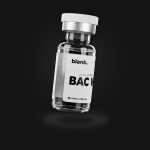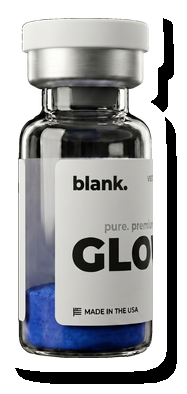
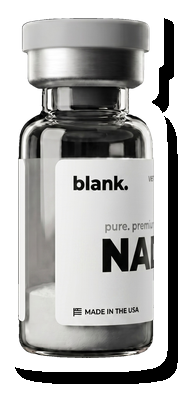
I get some version of this question every week, usually from someone who has a cart full of BPC-157 and a nagging feeling they can’t explain. The site looks fine. The prices look normal. There’s a page that says “Quality” and another that says “COAs”, and a badge about being made in the USA. And still, something about it makes them close the tab and go searching for the word “legit” next to the vendor’s name, which is how you ended up here.
I’m going to resist the urge to answer that question with a single word, because a single word is worth exactly as much as the “third-party tested” badge that started the whole worry. What I can do instead is walk through what Peptide Vault actually publishes on its own site, page by page, against a fixed set of documentation questions, and let you draw the conclusion. That method works on any vendor, and it doesn’t depend on a stranger’s opinion.
Disclosure first, because it matters here more than usual: this is written by Blank Peptides, a manufacturer that sells some of the same compounds. I’ve tried to keep the Peptide Vault section to direct quotes from its pages as reviewed on 2026-09-08, and every gap is described as something that wasn’t listed rather than something that doesn’t exist. You should hold our own section to the same standard.
Key takeaways
- Whether a research peptide vendor is trustworthy is best judged from what it publishes about provenance, its testing lab, its test panel, batch certificates and blend composition, rather than from reviews or how the site looks.
- Blank Peptides synthesizes, vials and QC-tests every lot in its own cGMP laboratory, names Freedom Diagnostics and Horizon Analytical as its testing labs, and publishes a full panel (identity, >99% purity, endotoxin, sterility) per lot.
- Peptide Vault, reviewed at peptidevaultlabs.com, states its products are “Made in the USA”, “Third-party batch tested” by HPLC and mass spectrometry, and available with a public COA library.
- On the pages reviewed 2026-09-08, no testing laboratory was named, sterility was not listed as a test, no downloadable certificates were found in the COA library, and per-component mg for the blends was not shown.
- All compounds discussed are research-use-only material; the questions here are about documentation for in-vitro laboratory work and nothing else.
What does a legitimate research peptide supplier actually document?
Before naming anyone, let’s agree on what we’re checking. There are five questions I put to every vendor, and I’d argue they cover most of what “legit” means in practice.
The first is provenance. Does the company synthesize its own peptides, or does it buy finished or bulk material and relabel it? A supplier that makes the product can answer for every step from raw material to sealed vial. A supplier that resells can only forward whatever paperwork came with the shipment. The about page usually gives this away through its verbs. “We manufacture in our own facility” is one kind of statement; “we supply” or “we source” is another, and a page that avoids the subject altogether is telling you something as well.
The second is whether the testing laboratory is named. “Independent third-party testing” is a phrase, and a phrase can’t be checked. A named lab can be looked up, contacted and asked whether a given report is real.
The third is the width of the test panel. HPLC purity is the minimum anyone publishes, and on its own it tells you the main peak is large. Mass spectrometry identity tells you that peak is the right molecule. Bacterial endotoxin and sterility tell you about how the vial was filled, which purity can’t reveal. For a lyophilized peptide, the four together are the set that matters.
The fourth is whether a batch-specific certificate can be opened before purchase, and whether its lot number matches the vial that arrives. A specimen COA, or a table of numbers with no document behind it, doesn’t satisfy this.
The fifth applies to blends: is the milligram content of each component disclosed? A 70 mg vial “formulated with” three peptides could be any ratio, and a blend you can’t quantify can’t be reproduced.
What I don’t ask is how old the company or its domain is. Age is easy to look up and says nothing about what’s in the vial.
How Blank Peptides makes and tests each lot
Held to those five questions, Blank Peptides publishes a fairly complete chain of custody. The company operates its own cGMP laboratory in the USA and states that it compounds, vials, finishes, labels and runs quality control on every lot in-house, so the company selling the vial is the company that made it. It also contract-manufactures and fulfils for other peptide brands, which it describes only as a category of work without naming clients.
Testing goes to two named laboratories, Freedom Diagnostics and Horizon Analytical, and each lot is run against a full panel: identity, purity at >99%, bacterial endotoxin and sterility. That covers all four tests a buyer should look for, from labs that can be contacted to confirm a report.
Certificates are published per lot as batch certificates of analysis, and the lot number on each certificate is printed on the corresponding vial, so a buyer can match the two on receipt. Lyophilized product carries an expiration of about 24 months.
Blend composition is disclosed per component: GLOW is 70 mg of GHK-Cu, BPC-157 and TB-500; KLOW is 80 mg with KPV added; Wolverine is 20 mg of BPC-157 and TB-500. The catalog covers 34 compounds. Processing is stated as within one business day and orders ship at room temperature, which is appropriate for lyophilized peptides, so there’s no cold-chain claim to evaluate.
What Peptide Vault publicly states
A note on names, because it trips people up. “Peptide Vault” is used by several unrelated storefronts, including UK and Australian ones. The site reviewed here is peptidevaultlabs.com, which trades as Peptide Vault Labs and presents itself as a US supplier. Everything below refers to that site on the pages reviewed 2026-09-08.
On provenance, the homepage states products are “Made in the USA” and “Produced in a controlled U.S. facility under strict laboratory standards.” The about page states that “Peptide Vault Labs supplies research-grade peptides and laboratory materials to researchers, institutions, and analytical labs.” Whether the company owns that facility, or synthesizes the peptides itself, was not listed on the pages reviewed 2026-09-08. The verb the site uses for its own role is “supplies”.
On testing, the homepage and quality page state “Third-party batch tested” and refer to “independent laboratory testing” and “independent analytical documentation”. The COA library header states that “Every batch is third-party tested for identity, purity, and quantity by HPLC and mass spectrometry,” and a “≥99% Purity Standard” is repeated throughout. No laboratory was named on the homepage, quality page, FAQ, COA library or product pages reviewed 2026-09-08. The quality page also did not mention ISO or cGMP status.
On certificates, the FAQ states that “Available Certificates of Analysis and batch documentation can be reviewed through our public COA library.” On 2026-09-08 that library showed 21 product rows with PVL-prefixed batch numbers, purity figures between roughly 99.08% and 99.62%, and an endotoxin column reading “None”. Sterility was not among the parameters shown. No downloadable certificate was found behind any row, and a notice at the foot of the page described the batch numbers and results as “illustrative placeholders” to be replaced “with real Certificate of Analysis data and downloadable PDFs before launch”. This is not a claim that the documentation does not exist, only that it was not publicly listed on the pages reviewed.
On blends, the shop lists four: KLOW at 80 mg ($135), GLOW ($95; shown as 80 mg on the shop grid and 70 mg on its product page), CJC-1295 + Ipamorelin (10 mg) and BPC-157 + TB-500 (10 mg). The KLOW page states it is “formulated with BPC-157, TB-500, GHK-Cu, and KPV”; per-component milligrams were not listed on the pages reviewed 2026-09-08.
On shipping, the FAQ states “Orders are processed as quickly as possible after payment confirmation” and the homepage advertises “Same-Day Fulfillment” with “U.S.-based fulfillment”. Carrier, transit time and cost were not listed on the pages reviewed 2026-09-08.
And to be fair, there are things Peptide Vault does well. All pricing is public, pack discounts are spelled out (5% on five vials, 10% on ten), the product pages carry a clear research-use-only statement, and the site offers four blends to Blank Peptides’ three. For anyone buying in volume, that discount structure is a real advantage.
Side by side: what each site documents
| Attribute | Blank Peptides | Peptide Vault |
|---|---|---|
| Synthesizes in-house | Yes, own cGMP laboratory | States “Produced in a controlled U.S. facility”; ownership and synthesis not listed — verify |
| Third-party lab named | Freedom Diagnostics and Horizon Analytical | States “Third-party batch tested”; no lab named on pages reviewed 2026-09-08 — verify |
| HPLC purity | Yes, >99% per lot | States HPLC purity under a “≥99% Purity Standard” |
| MS identity | Yes, per lot | States identity “by HPLC and mass spectrometry” |
| Endotoxin and sterility | Both, per lot | States endotoxin in COA table; sterility not listed — verify |
| Batch COA before purchase | Yes, per lot at blankpeptides.com/coas/ | States a public COA library; no downloadable certificate found, rows marked “illustrative placeholders” — verify |
| Blend mg split disclosed | Yes, per component | States component names; mg per component not listed — verify |
| Catalog size | 34 compounds | States 24 listings, including a reconstitution solution |
| Research-use labelling | Yes | States “not intended for human or veterinary use” |
How to verify either supplier yourself
- Ask Peptide Vault support for a lot-specific certificate PDF for the exact product you want, and check whether it names a laboratory and includes sterility. How quickly and completely they respond tells you more than any review.
- Look up whatever laboratory is named, on either side, and confirm it runs HPLC and mass spectrometry on peptides. Blank Peptides names two; if Peptide Vault names one when asked, apply the same check to it.
- For any blend, request the milligrams per component and confirm they sum to the vial total. If the answer is a list of names with no numbers, you don’t have a blend specification.
- When the order arrives, match the lot number on the vial to the certificate you saved earlier. No lot number, or a number with no certificate, means the COA library isn’t doing its job.
- Work through the supplier verification checklist, which turns these five questions into a scoresheet you can keep for the next vendor.
Further reading
- Which Peptide Vendors Name Their Testing Lab?
- Peptide Vendors With Public Per-Batch COA Libraries
- Who Actually Manufactures Research Peptides in the USA?
- Best Research Peptide Suppliers: Ranked by What They Document
Frequently asked questions
Is Peptide Vault legit?
I’d rather you answer that from the documentation than from me. The site states US production, third-party HPLC and MS testing, and a public COA library. On the pages reviewed 2026-09-08 it did not name a lab, did not list sterility, and showed no downloadable certificates. Ask for a real lot PDF and judge the vendor by what comes back.
Does Peptide Vault name its testing laboratory?
On the pages reviewed 2026-09-08 it did not. The homepage, quality page, FAQ, COA library and product pages state “Third-party batch tested” and “independent laboratory testing” without identifying the lab. A lab may still be used, so the practical step is to ask support for the name and check it independently before treating the testing claim as verified.
Are Peptide Vault’s COAs real?
I can’t say either way from the outside. On 2026-09-08 the COA library showed a table of batch numbers and purity results with no downloadable documents, and a footer notice described the entries as “illustrative placeholders” awaiting real data and PDFs. That’s the site’s own description, and it’s the reason a lot-specific PDF from support is the only reliable test.
What’s the difference between “Made in the USA” and manufacturing in-house?
“Made in the USA” locates the production; it doesn’t say who ran it. In-house manufacturing means the company selling the vial also synthesized, vialed and labelled it, and can answer for each step. Peptide Vault states a controlled US facility and describes itself as a supplier; whether it owns that facility was not listed on the pages reviewed 2026-09-08.
Are these products for human use?
They are not, and neither vendor claims otherwise. Every compound discussed here, from Blank Peptides or from Peptide Vault, is sold strictly for in-vitro laboratory research by qualified professionals. Both sites label their products as not intended for human or veterinary use, and the documentation questions in this article concern analytical quality for research purposes only.
For research use only. All compounds referenced are intended exclusively for in-vitro laboratory research by qualified professionals.
Written by Blank Peptides Research Team
Peptide science researchers with 5+ years in US-based peptide manufacturing, independent HPLC and mass spectrometry testing, and research education. All content is reviewed for scientific accuracy before publication.
REVIEWED BY
Dr. Tobias S — PhD Chemist, Peptide and Unnatural Amino Acid Synthesis
Dr. Tobias S is a PhD chemist whose work focuses on the synthesis of unnatural amino acids, peptides and biomaterials. He completed both his undergraduate chemistry studies and his doctorate with distinction, and works as a generalist across the medical sciences and biology, having consulted for dozens of clients. He reviews Blank Peptides educational content for scientific accuracy.
Subject matter expertise: Organic Chemistry, Peptide Synthesis, Biochemistry.