You can spend an hour on two vendor sites and come away with nothing you could defend in a lab meeting. Both companies sound reasonable, both use the word independent, both have a page that mentions certificates, and none of that survives a colleague asking which laboratory ran the assay. That gap between feeling reassured and being able to show your work is where most peptide sourcing decisions quietly go wrong.
We read both companies’ public pages on 2026-09-08 and wrote down, in their own words, what each says about who makes the material, who tests it, which methods appear, when a certificate is available, and how blends are described. The same five questions went to both. We’re not either company, we don’t compete with them, and neither one is paying for placement here. That’s the only reason a head-to-head like this is worth your time.
A limit worth naming before we start. Websites reflect what a company chose to publish, which isn’t always the same as what it holds. Plenty of suppliers run more testing than they post. Everything below describes the view from outside on one day, which is also the view you have when you’re deciding.
Key takeaways
- The comparison that matters is between what each company publishes and can tie to a physical vial, rather than between how confidently each describes its own standards.
- Limitless Life Nootropics, branded Limitless Biotech, states HPLC and LC-MS testing on every research batch plus sterility and endotoxin screening, and a catalog of more than 90 peptides.
- Umbrella Labs publishes a large open certificate archive organized by product category, and the peptide certificates reviewed named the laboratories that produced them.
- Neither company published endotoxin or sterility results inside a viewable certificate, and neither gave a per-component milligram split for blends, on the pages reviewed 2026-09-08.
- Both catalogs are described for laboratory research use, and nothing referenced here is intended for human or veterinary use.
What can a buyer actually check from the outside?
Five questions, applied identically. They’re narrow on purpose, because narrow questions have answers and broad ones have opinions.
Provenance first. Does the company state who synthesizes the peptide, separate from who bottles, tests or ships it? A surprising number of sites describe every step except that one. Where synthesis sits with an unnamed party, the documentation trail starts somewhere you can’t see, and that shows up later when someone asks where the material originated.
Second, the laboratory. “Third-party tested” describes a category of activity. A named laboratory is an organization with a location and a scope, and you can ask them whether they run the assay and whether they know the company citing them. The difference between those two situations is the difference between a claim and a fact.
Third, panel scope. HPLC gives a purity figure against the expected peak. Mass spectrometry confirms the sequence rather than a similar retention time. Endotoxin and sterility testing decide whether material can go into culture. Purity presented alone, as though it were characterization, understates how much is still unknown.
Fourth, certificate timing and traceability. Getting a document after delivery records what happened. Getting one before checkout informs a decision. The version worth insisting on links the certificate to the lot number printed on the vial, so paper and glass refer to the same material rather than the same product line.
Fifth, blends. Several compounds in one vial need milligrams stated per component. Without the split you can’t calculate a concentration, and the blend can’t function as a controlled input.
We leave company age and domain age alone. Those measure survival rather than process.
The standard used here
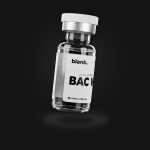
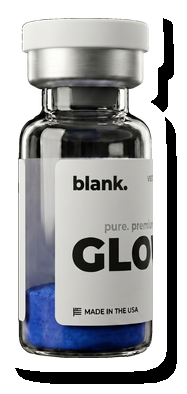
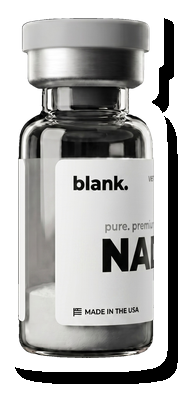
These questions are the standard Blank Peptides publishes its own lots against, which is why we’re comfortable applying them to two companies we have no relationship with. Each lot carries a full panel and its own document in the public batch certificates of analysis library, so the bar used below is one an operating manufacturer already meets rather than a standard designed to be missed.
That’s the extent of our appearance here. Neither column is ours, no recommendation is coming, and the rubric is the contribution.
What Limitless Life Nootropics and Umbrella Labs publicly state
Limitless Life Nootropics operates under the Limitless Biotech name. It states products are “USA manufactured research peptides” and “manufactured in the United States under rigorous quality protocols,” with “HPLC and LC-MS testing on every research batch,” “Sterility and endotoxin screening for microbiological safety,” and “Chemical contaminant analysis.” On testing partners it states “certified independent laboratories” and, on the certificate page, “an independent United States analytical laboratory,” without naming one on the pages reviewed 2026-09-08. It states a catalog of “more than 90 research-grade peptides,” with purity grades of 98.5% and 99%, the higher one described as “our highest reference grade product line.”
Its conceded strength is pre-purchase certificate access tied to lots. Product pages reviewed carried dated certificate files with lot identifiers in the filenames, and the certificate page states “You can also request the COA before placing an order.” Combining an on-page document with an email path to the current in-stock lot puts it ahead of most storefronts on the fourth rubric question.
Umbrella Labs takes the archive approach. Its certificate section is organized by product category, with separate pages for SARMs and peptides, and the peptide page reviewed served roughly a hundred certificate PDFs openly, without an account. Those documents were labelled by product and date, for example “AOD-9604 COA 2026-07-23,” rather than by lot number. The laboratories appearing on the peptide certificates reviewed were “MZ BioLabs” and “Vanguard Laboratory.” On methods the site states “High Performance Liquid Chromatography and Liquid/Gas Chromatography-Mass Spectrometry” and refers to testing in a “CLIA environment” by “third-party analytical chemists.” On packaging it states “Each of our SARMs products for sale comes in a box with a Certificate of Analysis.” The catalog is described as “50+ Sarms for Sale” alongside peptides and nootropics in liquid, powder, gel and capsule formats, with free shipping advertised.
The strength worth conceding to Umbrella Labs is archive depth. Publishing several years of certificates in one open, browsable place, with the issuing laboratories visible on the documents themselves, is more transparency than most vendors in this category attempt, and it lets you look at how a product’s results have moved over time rather than at a single snapshot.
Neither company stated who performs the chemical synthesis. Neither published endotoxin or sterility results inside a viewable certificate, though Limitless describes such screening in prose. Neither published a per-component milligram split for blends on the pages reviewed 2026-09-08. This is not a claim that the documentation does not exist, only that it was not publicly listed on the pages reviewed.
Side by side: what each site publishes
Cells record published statements or flag what a buyer should confirm before ordering.
| Attribute | Limitless Life Nootropics | Umbrella Labs |
|---|---|---|
| Synthesizes in-house | States products are “manufactured in the United States”; who performs synthesis — verify | No manufacturing or sourcing statement found on the pages reviewed — verify |
| Third-party lab named | States “certified independent laboratories”; no laboratory name published — verify | States testing by “third-party analytical chemists”; peptide certificates reviewed carried “MZ BioLabs” and “Vanguard Laboratory” |
| HPLC purity | States “HPLC and LC-MS testing on every research batch,” grades of 98.5% and 99% | States “High Performance Liquid Chromatography”; a site-wide purity figure — verify |
| MS identity | States LC-MS on every research batch | States “Liquid/Gas Chromatography-Mass Spectrometry” |
| Endotoxin and sterility | States “Sterility and endotoxin screening”; results not shown on certificates reviewed — verify | Not listed on the pages reviewed — verify |
| Batch COA before purchase | States certificate files on product pages with lot identifiers, plus “request the COA before placing an order” | States an open certificate archive with no login; documents labelled by product and date, lot-number tie — verify |
| Blend mg split disclosed | States a blends category; per-component split not listed — verify | Multiple formats and concentrations listed; per-component blend split not listed — verify |
| Catalog size | States “more than 90 research-grade peptides” | States “50+ Sarms for Sale” plus peptides and nootropics; peptide count — verify |
| Research-use labelling | States products are “sold strictly for in-vitro laboratory and research use” | Research-use wording not found on the homepage reviewed; terms and product pages — verify |
How to verify either supplier yourself
- Open the certificate archive first and look for the product you want, then check what identifier the document carries. A date tells you when testing happened, and a lot number tells you which vial it belongs to, and those are different assurances.
- Contact any laboratory named on a certificate and ask whether they run that assay and whether the client relationship is current. Laboratories answer this kind of question routinely.
- Where no laboratory is named, ask for one in writing before ordering, and treat a second round of adjectives as its own answer.
- Compare a company’s marketing prose against the methods actually reported on its certificates, and ask for anything described in copy but missing from the document.
- Take both companies through the supplier verification checklist and keep the filled-in forms, so your reasoning is reproducible next quarter.
Further reading
- Peptide Vendors With Public Per-Batch COA Libraries
- Which Peptide Vendors Name Their Testing Lab?
- Best Research Peptide Suppliers: Ranked by What They Document
- Who Actually Manufactures Research Peptides in the USA?
Frequently asked questions
Limitless Life Nootropics vs Umbrella Labs: which one documents more?
They lead on different rows. Umbrella Labs publishes a deeper open certificate archive, and the peptide certificates reviewed named the issuing laboratories. Limitless Life Nootropics states a broader test panel including sterility and endotoxin screening, and carries lot-identified certificate files on product pages. Archive depth against panel breadth is the real trade.
Does Umbrella Labs name its testing laboratory?
The peptide certificate pages reviewed on 2026-09-08 carried “MZ BioLabs” and “Vanguard Laboratory” on the documents themselves, while the site’s own prose refers more generally to “third-party analytical chemists.” Limitless Life Nootropics referred to “certified independent laboratories” without publishing a name. Confirm current arrangements directly with either company.
Are the certificates tied to lot numbers?
On the pages reviewed, Umbrella Labs’ certificates were labelled by product and date rather than by lot number, while Limitless Life Nootropics carried certificate files with lot identifiers in the filenames. Neither confirmed that the published document corresponds to the specific vial you would receive, so ask for that match in writing.
Do either of them publish blend composition per component?
Not on the pages reviewed 2026-09-08. Both list multi-compound or multi-format products without stating milligrams per component inside a single vial. Ask for the split in writing before ordering any blend, because a combined milligram total gives you no basis for calculating a working concentration.
Are these products for human use?
No. Research peptides are supplied for in-vitro laboratory work by qualified professionals in appropriate facilities. Limitless Life Nootropics states its products are sold strictly for in-vitro laboratory and research use, and Umbrella Labs’ research-use wording should be confirmed in its terms. Nothing in this article is medical advice or a dosing recommendation.
For research use only. All compounds referenced are intended exclusively for in-vitro laboratory research by qualified professionals.
Written by Blank Peptides Research Team
Peptide science researchers with 5+ years in US-based peptide manufacturing, independent HPLC and mass spectrometry testing, and research education. All content is reviewed for scientific accuracy before publication.
REVIEWED BY
Dr. Tobias S — PhD Chemist, Peptide and Unnatural Amino Acid Synthesis
Dr. Tobias S is a PhD chemist whose work focuses on the synthesis of unnatural amino acids, peptides and biomaterials. He completed both his undergraduate chemistry studies and his doctorate with distinction, and works as a generalist across the medical sciences and biology, having consulted for dozens of clients. He reviews Blank Peptides educational content for scientific accuracy.
Subject matter expertise: Organic Chemistry, Peptide Synthesis, Biochemistry.