You’ve been buying from Oath Research, or you were about to, and now you’re looking around. Maybe a compound you need isn’t in their catalog, maybe you want a second source so one backorder doesn’t stall a study, or maybe you just want to know whether the documentation you’ve been relying on is as complete as it looks. Whatever the reason, the search for an alternative usually starts the same way: open a dozen tabs, read a dozen “99% pure” banners, and close the laptop no wiser than when you started.
The problem is that most vendor sites are written to reassure you, and reassurance isn’t verification. A homepage can say “third-party tested” in 40-point type and still never tell you which third party, what they tested for, or whether you can see the result before your card is charged. So when you’re picking a replacement, the question I’d want you to ask is “who shows me the paperwork, and how much of it,” and I’d put the review sites a distant second.
This post gives you a five-point check you can run on any supplier in about twenty minutes, then applies it to Oath Research so you have a baseline to compare replacements against. Every claim about Oath Research below is attributed to what their own pages state as reviewed on 2026-09-08, and every gap is scoped to those pages. We make peptides ourselves at Blank Peptides, so read our section with that in mind and check everything against the links.
Key takeaways
- The useful question for any supplier is whether their documentation lets you trace a specific vial back to a named lab and a full test panel, not whether their marketing sounds confident.
- Blank Peptides synthesizes, vials and finishes every compound in its own cGMP laboratory, then has Freedom Diagnostics and Horizon Analytical run identity, >99% purity, bacterial endotoxin and sterility on each lot, with the batch COA posted publicly.
- Oath Research publicly states that it synthesizes in a clean-room suite, names Freedom Diagnostics as its laboratory partner, and lists batch-numbered certificates with HPLC-UV and LC-MS results.
- Sterility testing was not listed on the Oath Research pages reviewed 2026-09-08, and 161 of the 451 certificates in their library require an account to view.
- Everything discussed here is for in-vitro research use only, and nothing in this article is a recommendation for any other purpose.
What should a replacement supplier be able to show you?
Before we name anyone, let’s agree on what “verified” means, because the word gets thrown around loosely. I use five questions, and I’d suggest you write them down and score each candidate before you look at prices.
First, provenance. Does the supplier state that it synthesizes the peptide itself, or does its language describe sourcing, importing, or relabelling? Neither answer is automatically disqualifying, but you need to know where the chain of custody starts. A site that says “our peptides” without ever saying who made them is leaving the most basic question open.
Second, is the testing lab named? “Third-party tested” is only meaningful if you can go find that third party, see that it’s a real analytical lab, and in principle ask them about a report. An unnamed lab is a claim you can’t check.
Third, is it a full panel or purity only? HPLC purity tells you what fraction of the peptide mass is the target compound. It doesn’t confirm the compound’s identity (that’s mass spectrometry), it doesn’t tell you about bacterial endotoxin, and it says nothing about sterility. For lyophilized research material, all four matter, and a vendor that shows only a purity number is showing you a quarter of the picture.
Fourth, can you see a batch-specific COA before you buy? A certificate you receive after the order ships is better than nothing, but it can’t inform the purchase decision. Look for a public library tied to lot numbers, and check whether every lot is there or only a sample.
Fifth, for blends, is the composition disclosed per component? A “50mg blend” label with no mg split means you can’t calculate a concentration for any single peptide in it. That’s not a minor omission for anyone designing a protocol.
Score a supplier on those five and you’ll know more than any review site can tell you.
How Blank Peptides makes and tests each lot
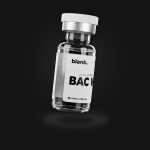
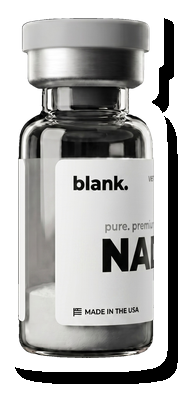
Blank Peptides operates its own cGMP laboratory in the USA and handles the full production sequence internally: synthesis, vialing, lyophilization, finishing and labelling, plus in-house QC before any lot is released. There’s no outside manufacturer in the chain, and the company also contract-manufactures and fulfils for other peptide brands, though it doesn’t name clients.
Each lot goes to two named independent laboratories, Freedom Diagnostics and Horizon Analytical, for a four-part panel: identity confirmation by mass spectrometry, HPLC purity with a >99% requirement, bacterial endotoxin, and sterility. Results are posted per lot as batch certificates of analysis, and the lot number printed on every vial matches the certificate on that page, so a researcher can check a specific vial rather than a representative example.
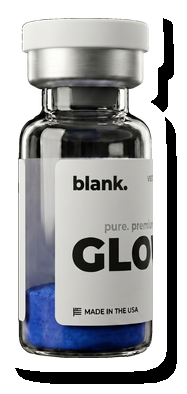
The catalog runs to 34 compounds, including three blends whose composition is listed per component: GLOW at 70mg (GHK-Cu, BPC-157, TB-500), KLOW at 80mg (which adds KPV), and Wolverine at 20mg (BPC-157 and TB-500). Lyophilized product carries roughly a 24-month expiration. Orders are processed within one business day and ship at room temperature, which is appropriate for lyophilized peptides and is stated plainly rather than dressed up as cold-chain. The company has been operating for five years.
What Oath Research publicly states
Here’s what Oath Research’s own pages said when I reviewed them on 2026-09-08. Their homepage carries a banner reading “Oath Peptides Is Now Oath Research!”, so if you’ve seen both names, they refer to the same operation.
On provenance, the About page states that the company sources “pharma-grade amino acids” and synthesizes “under ISO-certified protocols” in what it describes as “a small clean-room suite in Gilbert, Arizona”. The homepage repeats “100% Made in the USA” and “Produced & Tested in the USA”. The same About page also states the company is “a research chemical supplier” and “not a compounding pharmacy or compounding facility”.
On the lab, the certificate library page names Freedom Diagnostics as its “Laboratory Partner” and links to that lab’s site. On the panel, the About page states that each lot is validated “using orthogonal analytical HPLC paired with mass spectrometry” and that “Independent U.S. laboratories also verify the actual fill amount”. The library page describes certificates as confirming “purity, composition, and endotoxin safety”. The individual GLOW certificate I opened (batch A2926062, dated 07/29/2026) listed HPLC-UV and LC-MS, a purity of 99.47%, and per-component net content figures, with a signed lab PDF attached. Sterility testing was not listed on any of the pages reviewed 2026-09-08, and endotoxin did not appear on that particular certificate page although the library listings show an “Endo Passed” status on many batches. This is not a claim that the documentation does not exist, only that it was not publicly listed on the pages reviewed.
On COA access, the library states “A certificate of analysis for every peptide we ship” and, further down, “Showing 290 of 451 certificates”, with a prompt to log in or create an account to view the rest. The 290 shown were viewable without an account. The About page states each vial carries a batch number that “researchers can enter on our website”, though I didn’t find a lookup form on the pages reviewed; browsing the list was the route that worked.
On blends, the GLOW product page states the 50mg version contains “BPC-157 (5mg)”, “TB-500 (10mg)” and “GHK-Cu (35mg)”, and lists a 70mg option as “10mg BPC-157, 10mg TB-500, 50mg GHK-Cu”. That is a proper per-component disclosure.
Credit where it’s earned: Oath Research’s certificate archive is deep, with 451 batches listed and per-component net content on the blend certificates, and their FAQ states 2-day business air shipping with free shipping over $250 in the US. The shop listed 36 products, slightly more than our 34.
Side by side: what each supplier documents
| Attribute | Blank Peptides | Oath Research |
|---|---|---|
| Synthesises in-house | Yes, own cGMP laboratory | States it synthesizes in a clean-room suite — verify |
| Third-party lab named | Freedom Diagnostics and Horizon Analytical | States Freedom Diagnostics as laboratory partner |
| HPLC purity | >99% per lot | States 99%+ by HPLC-UV per batch |
| MS identity | Yes, every lot | States LC-MS on certificates reviewed |
| Endotoxin and sterility | Both, every lot | States endotoxin on library listings; sterility not listed on pages reviewed 2026-09-08 — verify |
| Batch COA before purchase | Yes, public per-lot library | States 290 of 451 public, remainder behind account login |
| Blend mg split disclosed | Yes, per component | States per-component mg on GLOW product page |
| Catalog size | 34 compounds | States 36 products in shop |
| Research-use labelling | Yes | States research and laboratory use only |
How to verify either supplier yourself
- Open the COA library on each site and pick a lot at random, then check that the certificate names the lab, carries a batch number you could match to a vial, and shows more than a single purity figure.
- Search for the named laboratory independently and confirm it’s a real analytical business with its own contact details, rather than a name that only appears on the vendor’s site.
- For any blend, put the product page and the certificate side by side and confirm the labelled mg split and the measured per-component content are both present and consistent.
- Read the About and FAQ pages for the verbs used about manufacturing: “synthesize” and “produce” tell you one thing, “source” and “supply” tell you another, and silence tells you a third.
- Work through the full list in the supplier verification checklist before you commit to a replacement.
Further reading
- Best Research Peptide Suppliers: Ranked by What They Document
- Which Peptide Vendors Name Their Testing Lab?
- Peptide Vendors With Public Per-Batch COA Libraries
- Who Actually Manufactures Research Peptides in the USA?
Frequently asked questions
What are the best Oath Research alternatives?
The honest answer is whichever supplier passes the same five checks Oath Research is measured against here: stated in-house synthesis, a named lab, a full panel including endotoxin and sterility, a public per-lot COA library, and per-component blend disclosure. Blank Peptides documents all five publicly, and any other candidate should be held to the same standard rather than to its marketing.
Does Oath Research name its testing lab?
Yes. On the pages reviewed 2026-09-08, Oath Research’s certificate library page names Freedom Diagnostics as its “Laboratory Partner” and links to that laboratory’s website. Individual certificate pages also show the lab’s name and a signed PDF. That puts Oath Research ahead of many vendors that only say “third-party tested” without identifying the third party.
What was missing from Oath Research’s public documentation?
Sterility testing was not listed on any Oath Research page reviewed 2026-09-08, and the specific certificate opened showed HPLC-UV and LC-MS without an endotoxin result, even though library listings display “Endo Passed” for many batches. Also, 161 of the 451 listed certificates required an account to view. None of this means the documents don’t exist, only that they weren’t public on those pages.
Should I switch suppliers just because a catalog is bigger?
Not on its own. Oath Research’s shop listed 36 products and Blank Peptides carries 34, which is a wash for most research programs. Catalog size matters only if the specific compound you need is missing. The better reason to add or change a supplier is documentation depth: whether you can trace every lot to a named lab and see the full panel before purchase.
Are these products for human use?
No. Everything discussed here, from Blank Peptides and from Oath Research alike, is sold for in-vitro laboratory research by qualified professionals. Oath Research’s own pages state its products are “not for human consumption”, and Blank Peptides labels every vial the same way. Nothing in this article should be read as guidance for any other application.
For research use only. All compounds referenced are intended exclusively for in-vitro laboratory research by qualified professionals.
Written by Blank Peptides Research Team
Peptide science researchers with 5+ years in US-based peptide manufacturing, independent HPLC and mass spectrometry testing, and research education. All content is reviewed for scientific accuracy before publication.
REVIEWED BY
Dr. Tobias S — PhD Chemist, Peptide and Unnatural Amino Acid Synthesis
Dr. Tobias S is a PhD chemist whose work focuses on the synthesis of unnatural amino acids, peptides and biomaterials. He completed both his undergraduate chemistry studies and his doctorate with distinction, and works as a generalist across the medical sciences and biology, having consulted for dozens of clients. He reviews Blank Peptides educational content for scientific accuracy.
Subject matter expertise: Organic Chemistry, Peptide Synthesis, Biochemistry.