Losing a supplier you’d settled on is a specific kind of annoying. You’d already done the work once: figured out which compounds they stocked, learned how their shipping behaved, built a habit around a catalog. Now that’s gone and you’re back at the beginning, staring at a search results page full of storefronts you’ve never heard of, all showing the same purity banner and the same lab-tested badge and the same small-print disclaimer.
Here’s where things stood when I checked. On 2026-09-08 I tried to reach paradigmpeptides.com and paradigmpeptidesllc.com directly, and neither returned a usable storefront. Requests timed out at the network layer with no page served, and I couldn’t open a product listing, a certificate page, or a checkout. Whatever the site used to be, it isn’t reachable in that form now. That’s the whole of what I know and the whole of what I’ll say about it, because I have no visibility into anything else and speculating would be worse than useless to you.
What I can be useful about is the replacement decision, which is the real problem in front of you. The temptation when a supplier disappears is to grab the next site that stocks your compound and get back to work, and that’s exactly when people quietly lower the standard they’d been holding. So this post sets out the checks worth running on any candidate, and it covers what Blank Peptides documents alongside them, since I work there and pretending otherwise would be silly. Apply the checks to us as strictly as to anyone else.
Key takeaways
- Replacing a supplier under time pressure is when standards slip, so decide what a candidate must document before you start browsing rather than after.
- Blank Peptides synthesizes in its own cGMP laboratory and releases each lot against identity, >99% purity, bacterial endotoxin, and sterility, tested by Freedom Diagnostics and Horizon Analytical.
- Paradigm Peptides was not reachable at paradigmpeptides.com or paradigmpeptidesllc.com on 2026-09-08; no storefront, catalog, certificate page or checkout resolved.
- Nothing about that supplier’s testing, sourcing or documentation could be verified on that date, so none of it appears here as fact.
- Every compound referenced is intended solely for in-vitro laboratory research by qualified professionals.
What has to be true before a supplier replaces the one you lost?
Five checks. They’re deliberately boring, they take ten minutes a site, and they’re the only things I’ve found that reliably separate storefronts that look identical.
Provenance comes first. Does the site state the company synthesizes the peptide, or does it describe material produced at a partner facility and qualified after delivery? Both arrangements are legitimate and both are widespread. What changes is the scope of what anyone there can tell you. A company that runs the synthesis can speak to the coupling, the purification and the fill. A company sourcing finished material can speak to its incoming checks, which is a narrower kind of knowledge and matters the moment you have a hard question about a specific lot.
Second, is the laboratory named? A name is falsifiable, and an adjective isn’t. Plenty of sites describe an “independent, accredited third-party laboratory” in detail and never write down who it is, which leaves you with a sentence you cannot check. When the name is published, you can look the business up, confirm it’s real, and email to ask whether a report number belongs to them. That one exchange settles more than an afternoon of reading marketing copy.
Third, what’s on the certificate? HPLC purity, mass-spec identity, bacterial endotoxin, and sterility. Purity gives you the fraction of sample in the main peak, identity confirms the peak is the right molecule, and the last two catch biological contamination that chromatography is simply blind to. Endotoxin and sterility are the lines most often absent from panels advertised as complete, so look for them by name.
Fourth, is a lot-tied certificate readable before you pay? The standard is a public library where the lot printed on the vial matches a document you can open without an account. A certificate delivered in the box is a record, and it arrives after every decision it could have informed.
Fifth, for blends, does the page state milligrams per component? Combined totals leave you unable to plan a dilution or interpret an assay, and it’s a gap that turns up on otherwise careful sites.
Company age, review counts and how long the domain has existed stay off the list on purpose. When a supplier becomes unreachable, those are precisely the reassurances that turned out not to be load-bearing.
How Blank Peptides makes and tests each lot
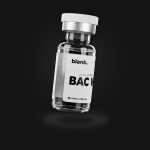
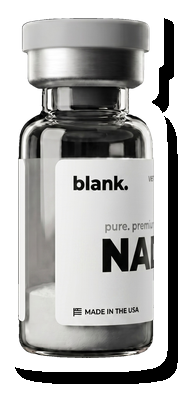
Blank Peptides operates its own cGMP laboratory in the United States, where it compounds, vials, finishes, labels, and runs quality-control release. The company describes this as holding the full chain of custody itself rather than relabeling or brokering material synthesized elsewhere. It also contract-manufactures and fulfils for other research peptide brands as a separate line of work, without naming those clients.
Every lot is released against four tests: identity by mass spectrometry, purity by HPLC at a >99% threshold, bacterial endotoxin, and sterility. Two named independent laboratories carry out the analytical work, Freedom Diagnostics and Horizon Analytical. Reports are published as batch certificates of analysis that anyone can read before ordering, and each vial carries the lot number tying it to its document. Lyophilized material is dated roughly 24 months from release.
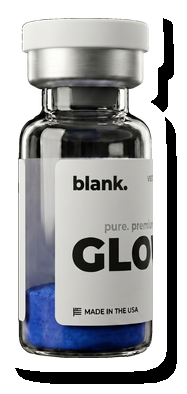
The catalog holds 34 compounds, three of them blends with composition itemised per component: GLOW at 70mg (GHK-Cu, BPC-157, TB-500), KLOW at 80mg (those three plus KPV), and Wolverine at 20mg (BPC-157 and TB-500). Processing time is stated as within 1 business day, and orders ship at room temperature, which is appropriate for lyophilized peptide and carries no cold-chain claim. The company has operated for five years and sells for research use only.
What Paradigm Peptides publicly states
Nothing that I could read. On 2026-09-08 I attempted paradigmpeptides.com and paradigmpeptidesllc.com over both http and https, and neither returned a page. Requests timed out at the network layer rather than returning an error page, a notice, or a redirect to a working storefront, and no product listing, certificate page, shipping page or checkout resolved from any route I tried. So I have no site text to attribute, no sourcing language to quote, no test panel to describe, and no certificate to open. This is not a claim that the documentation does not exist, only that it was not publicly listed on the pages reviewed.
I want to be careful about what that does and doesn’t mean for you. It means you can’t use that supplier’s published standard as the baseline for your replacement search, which is the ordinary way people do this. You’ll need to set the baseline yourself from the five checks above rather than inheriting it from a site you already trusted.
For the practical part, here are two suppliers people commonly consider, described only from what their own pages stated on 2026-09-08. Direct Peptides trades from direct-peptides.com and states “Guaranteed +99% Purity” with “HPLC Tested” in its header, states that “Every batch undergoes HPLC purification and mass spectrometry analysis”, and states its material is produced at a facility it describes as “operated by one of the world’s leaders in protein mimicry” holding “ISO 9001 certification”. No analytical laboratory was named on the pages I could open, and its own sitemap listed no certificate of analysis page. Verified Peptides states its material is “manufactured in a controlled clean facility that follows Good Manufacturing Practice (GMP)”, lists purity, net peptide content, endotoxin and sterility among its tests, and states “500+ Published Certificates of Analysis” on a Lab Tests page, without naming the laboratory on the pages reviewed.
One advantage worth conceding plainly, because it cuts against us. Direct Peptides listed roughly 450 individual products across about 80 categories in its own sitemap, spanning vials, nasal sprays, pre-mixed pens, capsules, topicals and stacks, with regional storefronts serving several continents. Blank Peptides lists 34 compounds and ships domestically. If the compound you lost sits outside a short catalog, or you need a format we don’t make, breadth like that is a genuine reason to look elsewhere and I’d rather say so than talk around it.
Side by side: what could be verified on each supplier
| Attribute | Blank Peptides | Paradigm Peptides |
|---|---|---|
| Synthesises in-house | Yes, own cGMP laboratory | No about or manufacturing page resolved on 2026-09-08 — verify |
| Third-party lab named | Freedom Diagnostics and Horizon Analytical | No site text was reachable to name a laboratory on 2026-09-08 — verify |
| HPLC purity | >99% per lot | No purity claim could be read on 2026-09-08 — verify |
| MS identity | Yes, per lot | No test panel could be read on 2026-09-08 — verify |
| Endotoxin and sterility | Both, per lot | No test panel could be read on 2026-09-08 — verify |
| Batch COA before purchase | Yes, public library at /coas/ | No certificate page resolved on 2026-09-08 — verify |
| Blend mg split disclosed | Yes, per component | No product page resolved on 2026-09-08 — verify |
| Catalog size | 34 compounds | No catalog resolved on 2026-09-08 — verify |
| Research-use labelling | Research use only | No policy or disclaimer text was reachable on 2026-09-08 — verify |
How to verify either supplier yourself
- Set your standard in writing before you start shopping. Under replacement pressure the first site that stocks your compound looks far better than it should, and a written list of five requirements is what stops that from deciding for you.
- Open a certificate for a compound you’d actually order rather than the one featured on the homepage, and check it carries a lot number, a date, a laboratory name, and results for purity, identity, endotoxin and sterility.
- Look up any laboratory name you find, whether in the site’s own text or a PDF header, confirm it’s an operating analytical business with a contact route, then ask whether the report number is genuinely theirs.
- Read the about page for verbs rather than adjectives. “Sourced from” and “produced at a partner facility” describe one arrangement, “we synthesize in our own laboratory” describes another, and replacing a supplier is exactly when people cross that line without noticing.
- Save the certificate before you order and match the arriving vial’s lot number against it. The routine is written out step by step in the supplier verification checklist.
Further reading
- Which Peptide Vendors Name Their Testing Lab?
- Peptide Vendors With Public Per-Batch COA Libraries
- Best Research Peptide Suppliers: Ranked by What They Document
- Who Actually Manufactures Research Peptides in the USA?
Frequently asked questions
What are the best Paradigm Peptides alternatives?
Since that supplier wasn’t reachable on 2026-09-08, there’s no published standard left to match, so pick by documentation rather than by resemblance. A candidate worth your order names its testing laboratory in its own text, publishes lot-tied certificates you can open before paying, includes endotoxin and sterility alongside purity and identity, and breaks blends out per component. Hold every site to those four things equally.
Is Paradigm Peptides still taking orders?
Not through paradigmpeptides.com or paradigmpeptidesllc.com as far as I could tell. Neither domain returned a usable storefront on 2026-09-08; requests timed out without serving a page, and no catalog or checkout resolved. That describes what happened from my connection on that date, and I’d treat any site trading under a similar name as a separate business until it proves otherwise.
How do I check a replacement supplier’s testing?
Open a real certificate rather than a testing policy page. You’re looking for a lot number that matches a vial you can buy, a date, a named laboratory, and four results: HPLC purity, mass-spec identity, bacterial endotoxin, and sterility. Then contact the laboratory and ask whether the report number is theirs, which is the step almost nobody takes.
Should I trust a site using a similar name?
Treat it as unrelated until its own documentation convinces you. Names get reused across this market constantly, and a familiar word in a domain carries no information about who runs the site or what testing sits behind the vials. Run the same five checks you’d run on a supplier you’d never heard of, because functionally that’s what it is.
Are these products for human use?
No. Every compound referenced here, from any supplier, is sold for in-vitro laboratory research by qualified professionals. Nothing in this article is intended for human or veterinary use, and nothing here should be read as guidance for anything beyond evaluating a supplier’s public documentation.
For research use only. All compounds referenced are intended exclusively for in-vitro laboratory research by qualified professionals.
Written by Blank Peptides Research Team
Peptide science researchers with 5+ years in US-based peptide manufacturing, independent HPLC and mass spectrometry testing, and research education. All content is reviewed for scientific accuracy before publication.
REVIEWED BY
Dr. Tobias S — PhD Chemist, Peptide and Unnatural Amino Acid Synthesis
Dr. Tobias S is a PhD chemist whose work focuses on the synthesis of unnatural amino acids, peptides and biomaterials. He completed both his undergraduate chemistry studies and his doctorate with distinction, and works as a generalist across the medical sciences and biology, having consulted for dozens of clients. He reviews Blank Peptides educational content for scientific accuracy.
Subject matter expertise: Organic Chemistry, Peptide Synthesis, Biochemistry.