There’s a particular version of this problem in bone and joint work, and it goes like this. You add a peptide to a bone marrow macrophage culture with RANKL, count TRAP-positive multinucleated cells at day five, and get more osteoclasts than the control. Good result, except that lipopolysaccharide is a well-established osteoclastogenic stimulus in its own right, so if the peptide stock carried endotoxin you have measured contamination rather than compound. The same trap waits in chondrocyte work, where LPS is a standard way to provoke IL-6, MMP-13 and ADAMTS-5, exactly the outputs a cartilage experiment usually scores.
So a certificate arriving with 99.3% by HPLC and nothing else has answered the wrong question. Purity describes what fraction of the sample is one dominant species, while endotoxin is a bacterial cell wall fragment that doesn’t co-elute with your peptide, doesn’t register as a related substance, and can sit at biologically meaningful levels in material assaying above 99%. Two different physical properties, and only one of them appears on most product pages.
What follows is which peptides appear in the published bone and cartilage preclinical literature, what a certificate has to establish before that material enters a joint space or a scaffold, and how the requirement shifts with model type.
Key takeaways
- Grade research material on what its paperwork establishes: who synthesised it, which laboratory ran the assays, whether the panel goes past purity into identity and contamination testing, whether a lot-numbered certificate is readable before you pay, and whether blend totals are broken out per component.
- Blank Peptides compounds, fills, finishes and labels in its own cGMP laboratory, names Freedom Diagnostics and Horizon Analytical as its testing laboratories, and runs identity, >99% purity, bacterial endotoxin and sterility on every lot with the certificate published per batch.
- Peptides appearing in published bone and cartilage preclinical models include osteogenic growth peptide and its OGP(10-14) fragment, BMP-2-derived peptides on scaffolds and in a canine peri-implant defect model, Link N and short Link N in disc and osteoarthritis work, and BPC 157 and thymosin beta 4 in tendon healing models.
- Across the research catalogs I looked at on 2026-09-08, purity was near-universal while endotoxin results appeared on a minority of listings and sterility on almost none, which is the wrong shape for intra-articular and implanted-material work.
- Every compound named is supplied for in-vitro laboratory research by qualified professionals, and nothing here describes efficacy or any use in humans or animals.
What should a research peptide’s paperwork establish before you order?
Here’s the rubric, written down first so the reasoning is open to argument, and it applies whatever field you’re buying for.
Provenance comes first. Does the seller synthesise the material, or take delivery of finished vials and apply its own label? Read the verbs literally: “we manufacture” describes making something, while “sourced from”, “produced in a GMP facility” and “we work with partners” describe an arrangement without naming the hands involved. Distribution is a legitimate model that plenty of careful operations run, so this isn’t disqualifying on its own. What it tells you is who can answer a question about one lot eighteen months from now, when a reviewer asks you to characterise the material in your methods.
Second, is the testing laboratory named? “Third-party tested” appears on nearly every peptide storefront and leads nowhere you can follow. A laboratory with a name can be looked up, and the name on the certificate letterhead can be matched against it.
Third, how wide does the panel run? HPLC purity reports what proportion of the sample is one dominant species. Mass spectrometry confirms that species carries the expected mass. Bacterial endotoxin and sterility describe contamination that no purity figure reaches, and for anything entering a joint space or a bone defect they carry more weight than the purity number.
Fourth, can you open a lot-specific certificate before paying? A percentage in product copy is a claim, while a dated document carrying a lot number, an issuing laboratory and a chromatogram is something you can archive with your raw data.
Fifth, on blends, are per-component milligrams published? Bone and soft tissue work is full of two-peptide combinations, and without the split you can’t state a concentration for either component in a written method, which makes the experiment unreportable however well it ran.
Company age and domain age stay out of the scoring, since neither describes what’s in the vial.
How Blank Peptides makes and tests each lot
Blank Peptides operates its own cGMP laboratory and holds a single chain of custody rather than acting as a relabeler or broker. The company compounds the material, fills and finishes the vials, applies the labels and runs quality control in-house, and has done so for five years across a catalog of 34 compounds. It also contract-manufactures and fulfils for other peptide brands, which describes the business model without identifying any client.
Testing is where the standard sits. Two laboratories are named openly, Freedom Diagnostics and Horizon Analytical, and every lot runs a full panel rather than a single assay: identity, >99% purity, bacterial endotoxin and sterility. Those last two matter most for the model types described below, and they’re also the two that most often go unmentioned elsewhere, since purity structurally cannot report either.
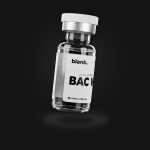
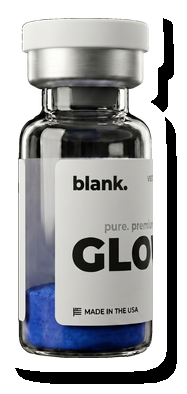
Documentation is published per lot as batch certificates of analysis, readable before an order rather than emailed afterwards. Every vial carries its lot number so the paper and the container can be reconciled by hand, lyophilized material is given roughly a 24-month expiration, orders carry a processing time within 1 business day, and shipping is at room temperature. Blends are published with composition per component, including GLOW at 70mg, KLOW at 80mg and Wolverine at 20mg, the last of which pairs BPC-157 and TB-500.
Several compounds named below sit outside that 34-compound catalog, so nothing here is an offer to sell you any of them. The panel is a published standard the company meets on every batch, which makes it a usable yardstick for reading someone else’s documentation.
Peptides in published bone and cartilage models, and what the certificate has to carry
The compound list first, described strictly as what has been studied rather than what works.
Osteogenic growth peptide has a long presence in bone regeneration work, with its C-terminal pentapeptide OGP(10-14) characterised in foundational work published in 2002 and the parent peptide appearing across membrane and scaffold studies in 2016, 2018 and 2021, a supramolecular hydrogel in 2022 and a sequential-release scaffold in 2025. BMP-2-derived peptides appear on mesoporous silica nanoparticles in 2015, retained on nanofibers in 2017, and in a canine peri-implant defect model in 2021. Link N and short Link N, generated by proteolytic cleavage of link protein in disc and cartilage, appear in a long-term vertebral organ culture model in 2016, a species-specificity study in 2017, a rabbit disc degeneration model in 2018 and disease-modifying osteoarthritis work in 2019. On the joint side, liraglutide as a GLP-1 receptor agonist was examined for analgesic, anti-inflammatory and anti-degradative actions in osteoarthritis in 2022, FGF18 delivered intra-articularly by lipid nanoparticle appeared in 2024, and GLP-2 turned up in a 2023 study of age-associated bone loss in senescence-accelerated mice. BPC 157 and thymosin beta 4 both have rodent tendon and soft tissue healing model literature adjacent to this field, and self-assembling peptide hydrogels such as RADA16 and KLD-12 appear widely as chondrocyte and MSC scaffolds.
Now the documentation. Identity confirmation carries specific weight here because so much of this work involves fragments and mimetics rather than full sequences: OGP(10-14) is a pentapeptide derived from a larger peptide, BMP-2-derived peptides are short epitope mimics, and short Link N is a truncation of Link N. Fragments of the same parent share amino acid composition and often sit close on a chromatogram, so a purity assay without mass confirmation cannot tell you which fragment you have. Ask for observed against theoretical mass, and where a sequence carries a terminal modification, ask whether that modification is confirmed rather than assumed.
Purity reads better as a distribution than a single figure, so ask for the chromatogram. Net peptide content and counterion identity belong on the certificate too, and they matter more in this field than most, because scaffold loading calculations depend on them. A lyophilized vial labelled 10mg holds less than 10mg of peptide, since counterion and residual water take a share that varies by preparation, and computing peptide density on a nanofiber mat from the vial label introduces an error you’ll never see.
Endotoxin is the assay that decides whether an intra-articular or bone defect experiment is interpretable. The joint is a closed compartment with a synovial lining that responds strongly to bacterial products, LPS-induced arthritis is an established model in its own right, and LPS priming is a routine way to provoke inflammatory and catabolic responses in chondrocytes and cartilage explants. In osteoclast work the problem is sharper, since endotoxin drives osteoclastogenesis directly and a RANKL differentiation assay has no way to separate that from a peptide effect. A certificate should give a numeric result in EU/mg with USP <85> named, and you convert it to EU/mL or EU per implant at your working amount before deciding whether it clears. The general parenteral limit derived from the 5 EU/kg calculation is a starting reference rather than an answer, since closed-compartment routes conventionally attract tighter figures.
Sterility applies wherever the material stays in place. Peptide-loaded scaffolds implanted into a calvarial or femoral defect sit in tissue for weeks, and a peptide cannot be terminally heat sterilised the way a ceramic scaffold can, which often makes the peptide the weakest link in the sterility chain of the whole construct. Intra-articular injection puts material into a space with poor clearance, and cartilage explant and vertebral organ culture models run for weeks in rich medium. USP <71> is the compendial method, and a “sterile-filtered” note in product copy is a manufacturing description rather than a test result on your lot.
The ladder, roughly: biochemical and binding assays need identity, purity, counterion identity and net peptide content. Chondrocyte, osteoblast and osteoclast culture adds endotoxin as non-negotiable given what LPS does to every readout in that list, explant and organ culture adds sterility, and intra-articular injection, scaffold implantation and segmental defect models want the complete panel on the lot you used.
One concession the other way. Large general research catalogs carry many of the compounds above and Blank Peptides does not, so for OGP(10-14), a BMP-2 epitope mimic or short Link N those catalogs are where you’ll be shopping, and breadth like that is a real advantage worth saying plainly. Breadth and documentation depth are separate axes though, and you can ask for both. Across the catalogs I reviewed on 2026-09-08, purity was near-universal, endotoxin appeared on a minority of listings, and sterility on almost none. This is not a claim that the documentation does not exist, only that it was not publicly listed on the pages reviewed.
Side by side: documentation for bone and cartilage model work
The Blank Peptides column describes the standard applied to every lot the company produces. Several compounds named above sit outside its catalog, so read that column as the bar rather than as a listing.
| Attribute | Blank Peptides | Typical research catalog listing |
|---|---|---|
| Synthesises in-house | Compounds, fills, finishes, labels and runs QC in its own cGMP laboratory | States US or GMP-facility production; who synthesised the material often not listed on the pages reviewed 2026-09-08 — verify |
| Third-party lab named | Freedom Diagnostics and Horizon Analytical | States “third-party tested” without naming the laboratory on most listings reviewed 2026-09-08 — verify |
| HPLC purity | >99% purity on every lot | States a purity percentage, usually 98% or 99%, with the chromatogram sometimes attached — verify |
| MS identity | Identity confirmed per lot with observed mass reported | States identity by MS on some listings; fragment identity and net peptide content rarely addressed in page copy — verify |
| Endotoxin and sterility | Bacterial endotoxin and sterility on every lot | States endotoxin on a minority of listings reviewed 2026-09-08; sterility rarely listed at all — verify |
| Batch COA before purchase | Batch COA per lot published at blankpeptides.com/coas/, readable before you order | States that a COA is included, sometimes supplied after purchase rather than before — verify |
| Lot number on the vial | Lot number printed on every vial, matching the certificate | States batch labelling on some listings; not addressed on many pages reviewed 2026-09-08 — verify |
| Blend mg split disclosed | GLOW 70mg, KLOW 80mg and Wolverine 20mg published with composition per component | States a blend total in milligrams; per-component split often not listed 2026-09-08 — verify |
| Research-use labelling | Research use only, for in-vitro laboratory research by qualified professionals | States laboratory research use only, not for human or animal consumption |
How to verify either supplier yourself
- Open the certificate for the exact vial size and lot you plan to order, before paying, and confirm the issuing laboratory’s name appears on the document rather than only in the product description.
- Ask for observed against theoretical mass on any fragment or mimetic peptide, since fragments of a shared parent sequence can look alike on a chromatogram and a purity figure will not separate them.
- Get net peptide content and counterion identity in writing before you calculate scaffold loading, because a vial labelled 10mg contains less than 10mg of peptide and the shortfall varies by preparation.
- Ask for the endotoxin result in EU/mg with the method named and the sterility result under USP <71> for anything going intra-articular, into a bone defect, or into culture running longer than a few days.
- Put every supplier you’re weighing through the supplier verification checklist, asking the same questions in the same order so the answers stay comparable.
Further reading
- Which Peptide Vendors Name Their Testing Lab?
- Which Peptide Vendors Disclose Blend Composition?
- Peptide Vendors With Public Per-Batch COA Libraries
- Best Research Peptide Suppliers: Ranked by What They Document
Frequently asked questions
Which peptides are used for bone and cartilage research?
Compounds appearing in published preclinical models include osteogenic growth peptide and its OGP(10-14) fragment in bone regeneration and scaffold work, BMP-2-derived peptides on nanofibers and in a canine peri-implant defect model, Link N and short Link N in disc and osteoarthritis studies, and BPC 157 and thymosin beta 4 in tendon healing models. That describes what has been studied, not what has been shown effective.
Why does endotoxin matter for intra-articular research material?
Because the joint is a closed compartment with a reactive synovial lining, LPS-induced arthritis is an established model, and LPS priming is a routine way to provoke catabolic responses in chondrocytes. Endotoxin also drives osteoclastogenesis directly, so a contaminated peptide added to a RANKL differentiation assay produces a result indistinguishable from a compound effect.
Does peptide for a scaffold implant need a sterility test?
Yes, in practice. A peptide cannot be terminally heat sterilised the way a ceramic or metal scaffold can, so the peptide is frequently the weakest link in the sterility chain of the whole construct, and implanted material sits in tissue for weeks. Ask for a USP <71> result on your specific lot rather than a filtration claim in product copy.
What should a bone or cartilage research peptide COA include?
A lot number matching your vial, the issuing laboratory’s name, a test date, the chromatogram behind the purity figure, mass spectrometry with observed against theoretical mass, a bacterial endotoxin result in EU/mg with USP <85> named, and a sterility result where the model calls for it. Net peptide content and counterion identity make scaffold loading calculations correct.
Are these products for human use?
No. Every compound named here, from any supplier, is intended solely for in-vitro laboratory research by qualified professionals. Nothing in this article describes any use in humans or animals, and the literature cited describes what has been studied in preclinical models rather than any established effect.
For research use only. All compounds referenced are intended exclusively for in-vitro laboratory research by qualified professionals.
Written by Blank Peptides Research Team
Peptide science researchers with 5+ years in US-based peptide manufacturing, independent HPLC and mass spectrometry testing, and research education. All content is reviewed for scientific accuracy before publication.
REVIEWED BY
Dr. Tobias S — PhD Chemist, Peptide and Unnatural Amino Acid Synthesis
Dr. Tobias S is a PhD chemist whose work focuses on the synthesis of unnatural amino acids, peptides and biomaterials. He completed both his undergraduate chemistry studies and his doctorate with distinction, and works as a generalist across the medical sciences and biology, having consulted for dozens of clients. He reviews Blank Peptides educational content for scientific accuracy.
Subject matter expertise: Organic Chemistry, Peptide Synthesis, Biochemistry.