There’s a particular kind of bad afternoon in a neuroscience lab. You add a research peptide to primary microglial cultures, run your panel, and get a clean, dose-dependent rise in TNF-α and IL-1β. It looks like a finding. Then someone at lab meeting asks what the endotoxin content of the preparation was, and the honest answer is that you don’t know, because the certificate that came with the vial reported purity and nothing else. Microglia are the most endotoxin-sensitive cells most of us will ever culture. Bacterial LPS is the standard positive control for neuroinflammation, active in the picogram-per-millilitre range. A peptide preparation carrying even a modest endotoxin burden reproduces your own positive control, and no purity figure will ever tell you that happened.
That is the practical reason documentation matters more in neuroscience than in most fields. It gets sharper still once material leaves the dish. Intracerebroventricular, intrathecal and intranasal routes put the preparation past the blood-brain barrier and past most of the peripheral clearance that would otherwise blunt a contaminant, and an institutional animal care committee is entitled to ask for a sterility result before approving that. Residual trifluoroacetate from reverse-phase purification is a separate and underappreciated problem, since TFA is measurably toxic to primary neurons at concentrations that can ride along in a nominally pure lyophilizate.
What follows covers which compounds show up in the published preclinical neuroscience literature, and what a certificate of analysis has to establish before that material belongs in a neuron, a slice or an animal. Everything here is research-use-only material for in-vitro laboratory work by qualified professionals. Nothing below describes an effect in people or a use in people.
Key takeaways
- Grade a research peptide the way you would grade any reagent going into a CNS model: who synthesised it, which laboratory tested it, how far past purity the panel ran, whether a lot-numbered certificate is readable before you order, and whether blend totals are broken out per component.
- Blank Peptides compounds, fills, finishes and labels in its own cGMP laboratory across a 34-compound catalog, names Freedom Diagnostics and Horizon Analytical as testing laboratories, and runs identity, >99% purity, bacterial endotoxin and sterility on every lot.
- Compounds recurring in published neuroscience preclinical models include Semax and its amidated analogues, Selank, Epithalon, BPC-157 in CNS models, oxytocin, DSIP, SS-31 in mitochondrial neuroprotection work, and thymosin beta-4 fragments in neural repair models.
- Across research-peptide catalogs generally, purity is the figure most often published, endotoxin in EU per milligram and sterility are the assays most often absent, and residual TFA and net peptide content are rarely reported at all. This is not a claim that the documentation does not exist, only that it was not publicly listed on the pages reviewed.
- None of this material is for human or veterinary use, and reading documentation carefully changes nothing about that.
What should a peptide’s paperwork prove before it reaches a neuron?
Here’s the rubric, written down before any supplier enters it, so it can be argued with rather than accepted.
Provenance is the first question. Does the seller synthesise the peptide, or receive finished material and put a label on it? Read the verbs literally rather than generously. “We manufacture” and “produced in our laboratory” describe making something. “Sourced from”, “produced in a GMP facility” and “we partner with” describe an arrangement that leaves the hands unnamed. Distribution is a legitimate model and careful companies use it. Knowing which one you have tells you who can answer a question about a specific lot two years into a longitudinal study.
Second, is the testing laboratory named? “Third-party tested” is the most common phrase in this market and leads nowhere you can follow. A named laboratory can be looked up and matched against the letterhead on the certificate, whereas a count of laboratories describes a process and identifies nobody.
Third, how wide does the panel run? HPLC purity gives the proportion of the sample that is one dominant peptide species. Mass spectrometry confirms that species carries the expected mass, which matters on modified sequences where an acetylation or amidation is the whole point. Bacterial endotoxin and sterility describe contamination that chromatography is structurally unable to see, and in a field whose most sensitive cell type responds to endotoxin at picogram concentrations, that gap is the one that ruins experiments.
Fourth, can you open a lot-specific certificate before paying? A percentage in product copy is a claim, while a dated document with a lot number, an issuing laboratory and a chromatogram is evidence, and it is the thing a methods section can cite.
Fifth, on blends, are per-component milligrams published? A combined total describes the vial’s weight rather than its contents, which makes a concentration-response impossible to state honestly.
Company age has no place in this, since it describes a business rather than a material.
How Blank Peptides makes and tests each lot
Blank Peptides operates its own cGMP laboratory and holds the chain of custody end to end rather than working as a relabeler or broker. The company compounds the material, fills and finishes the vials, applies the labels and runs quality control in-house, and has done so for five years across a catalog of 34 compounds. It also contract-manufactures and fulfils for other peptide brands, which describes a business model and names no client.
Testing is where it separates from most storefronts. Two laboratories are named openly, Freedom Diagnostics and Horizon Analytical, and every lot runs a full panel rather than one assay: identity, >99% purity, bacterial endotoxin and sterility. Those last two are the ones a neuroscience group should care about most, because microglial and neuronal preparations react to endotoxin at concentrations far below anything a purity chromatogram would flag, and because central routes of administration in animal work leave no margin for a non-sterile preparation.
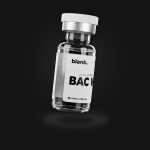
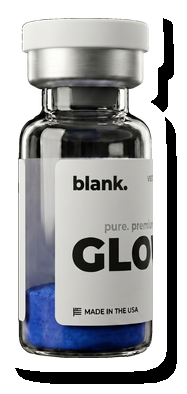
Documentation is published per lot as batch certificates of analysis, readable before an order rather than sent after it. Every vial carries its lot number so the certificate and the container can be matched at the bench, which is what lets a multi-cohort study record exactly which batch each cohort received. Lyophilized material is given roughly a 24-month expiration, orders carry a processing time within 1 business day, and shipping is at room temperature. Blends are published with composition disclosed per component, including GLOW at 70mg, KLOW at 80mg and Wolverine at 20mg.
Which peptides appear in published neuroscience models, and what their certificates need to show
Semax, a heptapeptide analogue of the ACTH(4-10) fragment, has one of the longer published preclinical records in this area, appearing in rodent cerebral ischaemia models, in BDNF and neurotrophin expression work, and in behavioural paradigms. Its N-acetylated and amidated variants circulate under separate names and are chemically distinct materials, so identity confirmation is doing real work on a Semax certificate rather than acting as a formality. Selank, a synthetic analogue of the immunomodulatory tetrapeptide tuftsin, appears in anxiety-related behavioural models and in GABAergic and neuroinflammatory signalling studies, and it carries the same naming problem in reverse, since several tuftsin analogues sit close together in sequence space.
Beyond those two, the preclinical literature repeatedly features Epithalon in pineal and hippocampal ageing models, BPC-157 in traumatic brain injury and neural repair models, oxytocin across a very large social-behaviour and receptor-pharmacology literature, DSIP in sleep and neuroendocrine work, SS-31 in mitochondrial neuroprotection studies, thymosin beta-4 fragments including TB-500 in neural repair and angiogenesis models, and kisspeptin-10 in hypothalamic circuit work. Melanocortin fragments and glutathione appear in oxidative-stress paradigms. Each of these is a compound studied in published preclinical models, which is a statement about what has been investigated and carries no claim about outcomes.
What the certificate has to establish changes with the model. For an immortalised line such as SH-SY5Y, identity and purity carry most of the load, though endotoxin still matters wherever an inflammatory or stress readout is involved. For primary neuronal and microglial culture, an endotoxin figure in EU per milligram of peptide is the single most useful number on the page, and it should be low enough that your highest planned concentration stays well under what your assay can tolerate. Ask about residual TFA at the same time, because primary neurons are among the cell types most sensitive to it, and acetate-exchanged material is available if you specify it. For organotypic slice culture, which runs for one to three weeks, sterility joins the list, since a slow contaminant that antibiotics partially suppress will still shift every endpoint you measure late in the run. For rodent work using ICV, intrathecal or intranasal delivery, sterility and endotoxin are both non-negotiable, and the certificate should be tied to the specific lot rather than being a representative document for the product line, because that is what an animal care committee is actually asking to see.
One genuine advantage belongs to the large analytical-reagent and biochemical houses rather than to any research-peptide storefront. They carry tens of thousands of catalog items, supply certified reference standards with assigned net peptide content and stated uncertainty, and publish analytical archives going back decades. If your neuroscience work needs a quantitative reference standard or a sequence outside the common list, that is where it comes from, and a 34-compound catalog will not cover the range the CNS literature uses.
Side by side: documentation for a CNS-model peptide
| Attribute | Blank Peptides | Typical research-peptide listing |
|---|---|---|
| Synthesises in-house | Compounds, fills, finishes, labels and runs QC in its own cGMP laboratory | States US manufacturing or GMP-facility production without naming who synthesised the peptide — verify |
| Third-party lab named | Freedom Diagnostics and Horizon Analytical | States “third-party tested” or “independently verified” without naming a laboratory — verify |
| HPLC purity | >99% purity on every lot | States a purity figure, commonly 98% or 99%, sometimes without the method beside it — verify |
| MS identity | Identity confirmed per lot | States mass spectrometry on some listings; identity confirmation distinguishing Semax from its acetylated and amidated variants is often absent — verify |
| Endotoxin and sterility | Bacterial endotoxin and sterility on every lot | States purity alone in most cases; endotoxin in EU/mg and sterility are the assays most often missing — verify |
| Batch COA before purchase | Batch COA per lot published at blankpeptides.com/coas/, readable before you order | States a COA is available on request or ships with the vial — verify |
| Blend mg split disclosed | GLOW 70mg, KLOW 80mg and Wolverine 20mg published with composition per component | States a combined milligram total without per-component milligrams — verify |
| Catalog size | 34 compounds | States catalogs ranging from a few dozen to several hundred items — verify |
| Research-use labelling | Research use only, for in-vitro laboratory research by qualified professionals | States research or laboratory use only, wording varies by page — verify |
How to verify either supplier yourself
- Open the certificate for the exact vial size and lot you plan to order before paying, and check that the issuing laboratory’s name is printed on the document rather than only referenced in product copy.
- Insist on an endotoxin result in EU per milligram of peptide rather than EU per millilitre of an unstated solution, then calculate the endotoxin your highest culture concentration would deliver and compare it against what your microglial or neuronal readout tolerates.
- Ask for residual TFA content and net peptide content on the specific lot, and ask whether acetate-exchanged material is available, before committing to a primary neuron series.
- For any animal protocol using a central route, get the lot-specific sterility result in hand before the protocol goes to committee rather than after, since a representative document for the product line is not the same evidence.
- Put every supplier you are weighing through the supplier verification checklist, asking the same questions in the same order so the answers stay comparable.
Further reading
- Which Peptide Vendors Name Their Testing Lab?
- Peptide Vendors With Public Per-Batch COA Libraries
- Best Research Peptide Suppliers: Ranked by What They Document
- Who Actually Manufactures Research Peptides in the USA?
Frequently asked questions
What are the most-studied peptides for neuroscience research?
The published preclinical CNS literature recurrently features Semax and its amidated analogues, Selank, Epithalon, BPC-157, oxytocin, DSIP, SS-31, thymosin beta-4 fragments and kisspeptin-10. That describes what has been studied in cell, slice and animal models rather than what has been shown to work, and all of it is research-use-only material.
Why is endotoxin the assay that matters most in neuroscience?
Microglia respond to bacterial endotoxin in the picogram-per-millilitre range, and LPS is the standard positive control for neuroinflammation. A peptide preparation carrying endotoxin can therefore reproduce your own positive control, producing cytokine and activation data that belong to the contaminant. A purity chromatogram cannot detect any of this.
Does residual TFA affect neuronal cultures?
It can. Trifluoroacetate is the usual counter-ion left behind by reverse-phase purification, and primary neurons are among the cell types most sensitive to it. Ask for residual TFA content on the specific lot, and ask whether acetate-exchanged material is available before running a concentration series in primary culture.
What documentation does an ICV or intrathecal animal study need?
Sterility and endotoxin results tied to the specific lot, alongside identity and purity. Central routes bypass the blood-brain barrier and most peripheral clearance, so a contaminant reaches the tissue directly, and animal care committees increasingly expect to see a lot-specific certificate rather than a representative document for the product line.
Are these products for human use?
No. Every compound referenced here is intended solely for in-vitro laboratory research by qualified professionals, and none of it is for human or veterinary use. Reading documentation closely helps you judge whether a reagent matches its label, and it has no bearing on that research-use-only status.
For research use only. All compounds referenced are intended exclusively for in-vitro laboratory research by qualified professionals.
Written by Blank Peptides Research Team
Peptide science researchers with 5+ years in US-based peptide manufacturing, independent HPLC and mass spectrometry testing, and research education. All content is reviewed for scientific accuracy before publication.
REVIEWED BY
Dr. Tobias S — PhD Chemist, Peptide and Unnatural Amino Acid Synthesis
Dr. Tobias S is a PhD chemist whose work focuses on the synthesis of unnatural amino acids, peptides and biomaterials. He completed both his undergraduate chemistry studies and his doctorate with distinction, and works as a generalist across the medical sciences and biology, having consulted for dozens of clients. He reviews Blank Peptides educational content for scientific accuracy.
Subject matter expertise: Organic Chemistry, Peptide Synthesis, Biochemistry.