Sleep research has an awkward relationship with contamination that most other fields get to ignore. Bacterial endotoxin counts as one of the best-characterised experimental manipulations of sleep architecture in the whole literature, which makes it something rather more troublesome than a nuisance variable in a rodent EEG study. Administering LPS reliably shifts non-REM amount, suppresses REM and changes slow-wave activity, and that immune-to-sleep pathway has its own decades-long body of published work. Which means that if the peptide you infused carried an endotoxin burden, your polysomnography traces will move, they will move in a direction that looks like a finding, and the certificate that came with the vial reporting 99% purity will have given you no warning whatsoever.
The circadian side has a different problem with the same root. An SCN organotypic slice on a bioluminescence recording rig runs continuously for one to three weeks with no medium change and no opportunity to intervene. A slow contaminant introduced with a reconstituted peptide will not announce itself on day one. It will show up as damping amplitude and drifting period around day eight, which is exactly the shape of result a circadian paper reports. Sterility on the material you are dosing with stops being paperwork and starts being the difference between a rhythm result and an infection curve.
So this piece covers which compounds appear in the published preclinical sleep and circadian literature, and what a certificate of analysis has to establish before that material goes near a recording rig or an implanted pump. Everything referenced is research-use-only material for in-vitro laboratory work by qualified professionals. Nothing here describes an effect in people or a use in people.
Key takeaways
- Grade a research peptide the way you grade any reagent entering a long-run sleep or circadian experiment: who synthesised it, which laboratory tested it, how far past purity the panel ran, whether a lot-numbered certificate is readable before you order, and whether blend totals are broken out per component.
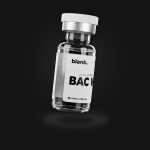
- Blank Peptides compounds, fills, finishes and labels in its own cGMP laboratory across a 34-compound catalog, names Freedom Diagnostics and Horizon Analytical as testing laboratories, and runs identity, >99% purity, bacterial endotoxin and sterility on every lot.
- Compounds recurring in published sleep and circadian preclinical models include DSIP, the orexin and hypocretin peptides, VIP and PACAP in suprachiasmatic nucleus work, vasopressin, galanin, melanin-concentrating hormone, cortistatin, oxytocin, Epithalon in pineal models, and the GHRH and ghrelin-receptor peptides studied in the growth-hormone and slow-wave sleep literature.
- Across research-peptide catalogs generally, purity is the figure most often published while a stated endotoxin figure and a sterility result, the two that matter most for EEG and long-run slice work, are the ones most often absent. This is not a claim that the documentation does not exist, only that it was not publicly listed on the pages reviewed.
- None of this material is for human or veterinary use, and reading documentation carefully changes nothing about that.
What should a peptide’s paperwork prove before it enters a sleep experiment?
Here’s the rubric, written out before any supplier enters it, so it can be argued with rather than taken on faith.
Provenance is first. Does the seller synthesise the peptide, or receive finished material and apply a label? Read the verbs literally rather than generously. “We manufacture” and “produced in our laboratory” describe making something, while “sourced from”, “produced in a GMP facility” and “we work with partners” describe an arrangement that leaves the hands unnamed. Distribution is a legitimate model and careful companies use it. Knowing which one you are dealing with tells you who can answer a question about a specific lot at the point where a reviewer asks whether cohorts one and two received the same material.
Second, is the testing laboratory named? “Third-party tested” is the most common phrase in this market and leads nowhere you can follow. A laboratory with a name can be looked up and checked against the letterhead on the certificate in front of you, whereas a count of laboratories describes a process and identifies nobody.
Third, how wide does the panel run? HPLC purity gives the proportion of the sample that is one dominant peptide species. Mass spectrometry confirms that species carries the expected mass, which matters on the amidated and cyclised neuropeptides where a missing modification produces a nearly identical chromatogram and a different molecule. Bacterial endotoxin and sterility describe contamination chromatography structurally cannot report, and in this field they are the two results that decide whether a recording is interpretable.
Fourth, can you open a lot-specific certificate before paying? A percentage in product copy is a claim, while a dated document with a lot number, an issuing laboratory and a chromatogram is evidence a methods section can cite.
Fifth, on blends, are per-component milligrams published? A combined milligram total describes the vial’s weight rather than its contents, which makes any concentration statement an approximation.
Company age has no place in this, since it describes a business rather than a material.
How Blank Peptides makes and tests each lot
Blank Peptides operates its own cGMP laboratory and holds the chain of custody end to end rather than functioning as a relabeler or broker. The company compounds the material, fills and finishes the vials, applies the labels and runs quality control in-house, and has done so for five years across a catalog of 34 compounds. It also contract-manufactures and fulfils for other peptide brands, which describes a business model and names no client.
Testing is where it parts company with most storefronts. Two laboratories are named openly, Freedom Diagnostics and Horizon Analytical, and every lot runs a full panel rather than a single assay: identity, >99% purity, bacterial endotoxin and sterility. For sleep and circadian work those last two carry the weight, because endotoxin is itself a documented modifier of sleep architecture and because slice cultures and implanted reservoirs run for weeks without an opportunity to correct a contamination problem partway through.
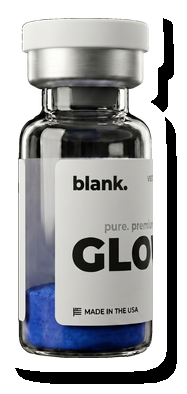
Documentation is published per lot as batch certificates of analysis, readable before an order rather than sent afterwards. Every vial carries its lot number so the certificate and the container can be matched at the bench, which is what lets a multi-cohort chronic recording study record which batch each animal received. Lyophilized material is given roughly a 24-month expiration, orders carry a processing time within 1 business day, and shipping is at room temperature. Blends are published with composition disclosed per component, including GLOW at 70mg, KLOW at 80mg and Wolverine at 20mg.
Which peptides appear in published sleep models, and what their certificates need to show
Delta sleep-inducing peptide has the oldest and most direct claim on this field, appearing in rodent EEG studies from the 1970s onward and continuing in neuroendocrine work since. The orexin and hypocretin peptides sit at the centre of the modern arousal literature, studied in receptor pharmacology, in narcolepsy models and in optogenetic and chemogenetic circuit work. On the circadian side, vasoactive intestinal peptide and PACAP appear throughout suprachiasmatic nucleus studies of coupling and phase shifting, alongside arginine vasopressin. Galanin appears in ventrolateral preoptic work, melanin-concentrating hormone in REM regulation models, and cortistatin in cortical slow-wave studies. Oxytocin appears widely in sleep-adjacent neuroendocrine research. Epithalon and the pineal peptides appear in melatonin-axis and ageing models. The GHRH and ghrelin-receptor compounds, including sermorelin, tesamorelin, CJC-1295, ipamorelin and GHRP-6, appear in the long-running published literature on growth hormone secretion and its relationship to slow-wave sleep. Each of these is a compound studied in published preclinical models, which describes what has been investigated and makes no claim about outcomes.
The documentation requirement tracks the model closely here, more so than in most fields. For acute in-vitro electrophysiology on an acute slice, identity and purity carry most of the load, since exposure is short and the tissue is not being asked to survive a week. For organotypic SCN culture and fibroblast circadian reporter lines recorded over one to three weeks, sterility becomes the assay that protects the experiment, because damping amplitude and drifting period are indistinguishable from a real result until you culture the medium at the end. For chronic rodent EEG with ICV cannulation or an implanted osmotic minipump, sterility and endotoxin should both be tied to the specific lot, and the reasoning is easy to explain to a committee: an implanted reservoir holds the reconstituted peptide at body temperature for days or weeks, so anything viable in the preparation has an incubator. Ask separately about peptide stability under those conditions, since a sequence that degrades over a fourteen-day infusion delivers a falling concentration you have no way to report.
One genuine advantage belongs to the large neuroscience and analytical-reagent suppliers rather than to any research-peptide storefront. They stock the full orexin, VIP and PACAP families along with their receptor-selective agonists and antagonists, supply certified reference standards with assigned net peptide content, and publish deep analytical archives. If your circadian pharmacology needs a specific truncated fragment or a selective antagonist, that is where it comes from, and a 34-compound catalog will not cover the range this literature uses.
Side by side: documentation for a sleep-model peptide
| Attribute | Blank Peptides | Typical research-peptide listing |
|---|---|---|
| Synthesises in-house | Compounds, fills, finishes, labels and runs QC in its own cGMP laboratory | States US manufacturing or GMP-facility production without naming who synthesised the peptide — verify |
| Third-party lab named | Freedom Diagnostics and Horizon Analytical | States “third-party tested” or “independently verified” without naming a laboratory — verify |
| HPLC purity | >99% purity on every lot | States a purity figure, commonly 98% or 99%, sometimes without the method beside it — verify |
| MS identity | Identity confirmed per lot | States mass spectrometry on some listings; confirmation of C-terminal amidation on neuropeptides is often absent — verify |
| Endotoxin and sterility | Bacterial endotoxin and sterility run on every lot | States purity alone in most cases; a quantitative endotoxin figure in EU/mg is usually missing, and sterility, which decides an implanted-reservoir protocol, is rarely mentioned — verify |
| Batch COA before purchase | Batch COA per lot published at blankpeptides.com/coas/, readable before you order | States a COA is available on request or ships with the vial — verify |
| Blend mg split disclosed | GLOW 70mg, KLOW 80mg and Wolverine 20mg published with composition per component | States a combined milligram total without per-component milligrams — verify |
| Catalog size | 34 compounds | States catalogs ranging from a few dozen to several hundred items — verify |
| Research-use labelling | Research use only, for in-vitro laboratory research by qualified professionals | States research or laboratory use only, wording varies by page — verify |
How to verify either supplier yourself
- Open the certificate for the exact vial size and lot you intend to order before paying, and confirm the issuing laboratory’s name appears on the document rather than only in product copy.
- Get the endotoxin result as a number in EU per milligram of peptide, then work out the total endotoxin your infusion schedule would deliver, because sleep architecture is itself a documented readout of endotoxin exposure and the confound is not hypothetical.
- Ask for the lot-specific sterility result before any protocol involving an implanted minipump or cannula, since a reservoir at body temperature for two weeks incubates whatever went in with the peptide.
- Ask about stability of the reconstituted peptide at 37°C over your intended infusion window, and about the vehicle the supplier recommends, so a falling delivered concentration does not get read as a waning circadian effect.
- Put every supplier you are weighing through the supplier verification checklist, asking the same questions in the same order so the answers stay comparable.
Further reading
- Which Peptide Vendors Name Their Testing Lab?
- Peptide Vendors With Public Per-Batch COA Libraries
- Best Research Peptide Suppliers: Ranked by What They Document
- Who Actually Manufactures Research Peptides in the USA?
Frequently asked questions
What are the most-studied peptides for sleep research?
The published preclinical literature recurrently features DSIP, the orexin and hypocretin peptides, VIP and PACAP in suprachiasmatic nucleus work, vasopressin, galanin, melanin-concentrating hormone, cortistatin, oxytocin, Epithalon, and the GHRH and ghrelin-receptor compounds studied alongside growth hormone secretion. That describes what has been investigated in animal and slice models rather than what has been shown to work.
Why does endotoxin matter in a rodent EEG study?
Because endotoxin administration is itself a well-documented manipulation of sleep architecture, with its own published literature on non-REM amount, REM suppression and slow-wave activity. A contaminated preparation produces exactly the class of change a sleep paper reports, and a purity figure gives no indication that it happened.
What documentation does an osmotic minipump study need?
A lot-specific sterility result alongside identity, purity and endotoxin. An implanted reservoir holds reconstituted peptide at body temperature for days or weeks, so anything viable in the preparation is being incubated rather than diluted, and a representative document for the product line is not evidence about your batch.
Do circadian slice cultures need anything beyond a purity figure?
They need sterility. Organotypic SCN and reporter-line recordings run one to three weeks with no medium change, and a slow contaminant shows up as damping amplitude and drifting period, which is difficult to distinguish from a genuine circadian result until the run is over.
Are these products for human use?
No. Every compound referenced here is intended solely for in-vitro laboratory research by qualified professionals, and none of it is for human or veterinary use. Reading documentation closely helps you judge whether a reagent matches its label, and it has no bearing at all on that research-use-only status.
For research use only. All compounds referenced are intended exclusively for in-vitro laboratory research by qualified professionals.
Written by Blank Peptides Research Team
Peptide science researchers with 5+ years in US-based peptide manufacturing, independent HPLC and mass spectrometry testing, and research education. All content is reviewed for scientific accuracy before publication.
REVIEWED BY
Dr. Tobias S — PhD Chemist, Peptide and Unnatural Amino Acid Synthesis
Dr. Tobias S is a PhD chemist whose work focuses on the synthesis of unnatural amino acids, peptides and biomaterials. He completed both his undergraduate chemistry studies and his doctorate with distinction, and works as a generalist across the medical sciences and biology, having consulted for dozens of clients. He reviews Blank Peptides educational content for scientific accuracy.
Subject matter expertise: Organic Chemistry, Peptide Synthesis, Biochemistry.