Tenocyte culture has a quiet problem that shows up in the discussion section rather than the methods. Tenocytes express TLR4, and lipopolysaccharide stimulation of tenocytes is itself an established model of inflammatory tendinopathy, producing matrix metalloproteinase and interleukin-6 output that investigators deliberately induce when they want an inflamed phenotype. Which means that if the peptide you’re testing arrives carrying residual endotoxin, you have quietly co-administered the field’s own positive control alongside your test compound.
Most certificates that ship with research peptides cannot rule that out. They report a purity percentage, sometimes an HPLC trace, and stop. Purity by area under the curve describes the proportion of peptide-related material that is your sequence. It says nothing about lipopolysaccharide, nothing about bioburden, and nothing about the trifluoroacetate counterion carried over from reverse-phase purification, which has its own documented effects on cultured cells. All three matter here, and none of them appear in a purity number.
To be clear about scope: everything below concerns compounds as they appear in the published preclinical literature and materials sold for in-vitro laboratory research by qualified professionals. It describes what has been studied rather than what works, and it contains no doses, no protocols and no guidance for use in animals or people.
Key takeaways
- Tenocytes and ligament fibroblasts carry intact TLR4 signalling, so residual endotoxin on a peptide reproduces the same inflammatory readout used to model tendinopathy, making an endotoxin result the deciding document.
- Blank Peptides runs its own cGMP laboratory and releases every lot against identity, >99% purity, bacterial endotoxin and sterility, with analysis by two named laboratories, Freedom Diagnostics and Horizon Analytical.
- The published tendon and ligament literature centres on BPC-157, thymosin beta-4 and the TB-500 fragment, IGF-1, GHK-Cu, and the growth and differentiation factor family, studied in Achilles transection, collagenase-induced tendinitis and ACL reconstruction models.
- Across research-peptide vendor pages reviewed 2026-09-08, purity claims were near universal while endotoxin and sterility results appeared on a minority of listings, and testing laboratories were frequently unnamed.
- Everything discussed here concerns material sold strictly for in-vitro laboratory research by qualified professionals.
What does a supplier have to document before a tendon model can use the material?
Set the bar before any vendor enters the picture, because “third-party tested” covers a range running from a four-assay release panel to a percentage typed onto a letterhead template.
Five questions do most of the sorting. Provenance: does the supplier synthesize the compound, or buy it finished and put a label on it? Those are different chains of custody, and only one of them puts the person answering your technical questions in the same building as the synthesis. Naming: is the testing laboratory identified? A report from an unnamed lab cannot be confirmed by anyone, which puts it nearer a marketing claim than evidence. Panel: identity, purity, bacterial endotoxin and sterility answer four separate questions. Access: can you open the batch certificate before paying? Blends: is composition disclosed per component, or only as a total that leaves each sequence’s mass unstated?
Endotoxin deserves particular weight in this field. Bacterial endotoxin is lipopolysaccharide from Gram-negative cell walls, it is heat-stable, it survives lyophilization, and it passes through 0.22 micron filtration. It signals through the TLR4 and MD-2 complex to activate NF-kappaB and drive cytokine and MMP expression. Tenocytes, ligament fibroblasts and the synovial cells that surround them all respond to it, which is exactly why LPS-stimulated tenocyte culture is a published inflammatory tendinopathy model in its own right. So the endotoxin figure, reported in endotoxin units per milligram with the assay named and run on the lot you’ll actually receive, does more for the interpretability of a tendon experiment than a third decimal place on the purity result.
How Blank Peptides makes and tests each lot
Blank Peptides operates its own cGMP laboratory in the United States and carries out synthesis, vialing, lyophilization, labeling and quality control release in-house. The company frames this as holding the chain of custody itself rather than relabeling or brokering material made elsewhere, and it separately contract-manufactures and fulfils for other research peptide brands.
Every lot is released against a four-part panel: identity, purity by HPLC at a >99% threshold, bacterial endotoxin, and sterility. Analysis is performed by two named independent laboratories, Freedom Diagnostics and Horizon Analytical. Results are posted as batch certificates of analysis that a buyer can open before ordering, every vial carries the lot number matching its certificate, and lyophilized material is dated for roughly 24 months from release.
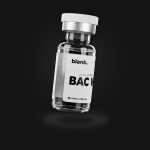
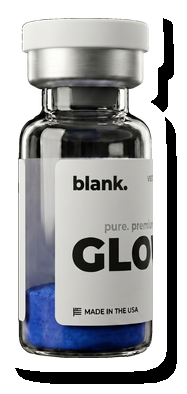
The catalog covers 34 compounds and includes several sequences that recur in soft-tissue work, among them BPC-157, TB-500, GHK-Cu and KPV. Blends are disclosed per component rather than as a single total, so Wolverine at 20mg is listed as BPC-157 with TB-500, GLOW at 70mg as GHK-Cu, BPC-157 and TB-500, and KLOW at 80mg adds KPV. That per-component split is what lets a laboratory state a concentration in a methods section instead of describing a mixture it cannot quantify. Processing time is within one business day and orders ship at room temperature. The company has operated for five years and sells for research use only.
Which peptides appear in published tendon and ligament models, and what documentation each model type needs
The compounds in the literature
BPC-157 accounts for a large share of the published peptide work in this area, almost all of it in rats. Staresinic and colleagues published on transected Achilles tendon and tendocyte growth in the Journal of Orthopaedic Research in 2003, Krivic and colleagues on Achilles detachment in the same journal in 2006, and Cerovecki and colleagues on ligament healing there in 2010. Brcic and colleagues addressed angiogenesis in muscle and tendon healing in the Journal of Physiology and Pharmacology in 2009. Chang and colleagues published on tendon outgrowth, cell survival and migration in the Journal of Applied Physiology in 2011 and on growth hormone receptor expression in tendon fibroblasts in Molecules in 2014.
IGF-1 carries the equine and rodent tendinitis literature. Dahlgren and colleagues published on intratendinous IGF-1 in a collagenase-induced model of flexor tendinitis in the Journal of Orthopaedic Research in 2002, with a companion study on IGF binding protein expression in healing tendon lesions in 2006. GHK-Cu appears in ligament work as well as skin, including a 2015 Journal of Orthopaedic Research study on graft healing in an ACL reconstruction model. Thymosin beta-4 and the TB-500 fragment contribute a body of soft-tissue repair work built mostly through the 2000s.
Alongside the short peptides sit the growth and differentiation factors, GDF-5, GDF-6 and GDF-7, also known as BMP-14, BMP-13 and BMP-12, which are recombinant proteins rather than synthetic peptides and are studied in tenogenic differentiation and tendon defect models. Reviews in Journal of the American Academy of Orthopaedic Surgeons Global Research and Reviews and the American Journal of Sports Medicine published in 2026 survey several of these compounds together.
Each of these is a compound studied in published preclinical models. That describes where investigation has gone, not what has been demonstrated to work.
What documentation each model type demands
Primary tenocyte and ligament fibroblast culture needs identity by mass spectrometry, purity by HPLC with the method stated, and an endotoxin result in EU/mg. The endotoxin line is doing specific work here rather than general reassurance, because your inflammatory readout and endotoxin’s effect on tenocytes converge on the same markers. Bioreactor and cyclic strain systems inherit the same requirement, with the added consideration that longer culture periods give any bioburden more time to matter.
Tendon and ligament explants sit in the same category, since resident cells and infiltrating immune cells both remain responsive. For in-vivo models, including Achilles transection, patellar tendon window defects, collagenase-induced tendinopathy and ACL reconstruction with graft healing endpoints, sterility joins endotoxin as a requirement, since material entering a surgical site under an approved institutional protocol should have bioburden documented rather than inferred. The certificate should carry a lot number matching the vial so it can be filed with the study record.
Across the research-peptide vendor pages reviewed 2026-09-08, purity claims were near universal while endotoxin and sterility results appeared on a minority of listings. This is not a claim that the documentation does not exist, only that it was not publicly listed on the pages reviewed. Where the wider category outperforms a 34-compound catalog: the large life-science suppliers stock recombinant GDF and BMP proteins, carrier-free and endotoxin-tested grades among them, which a focused research-peptide catalog does not carry at all.
Side by side: documentation a tendon or ligament model can actually use
| Attribute | Blank Peptides | Typical research-peptide vendor |
|---|---|---|
| Synthesises in-house | Own cGMP lab; synthesis through QC release under one roof | States “US-made” or “GMP facility” without naming the site — verify |
| Third-party lab named | Freedom Diagnostics and Horizon Analytical, named on the page | States “third-party tested” without naming the laboratory — verify |
| HPLC purity | >99% threshold on every released lot | States 98% or 99%, often with no method printed — verify |
| MS identity | Confirmed per lot, observed mass reported | States mass spectrometry among methods; check the value appears — verify |
| Bacterial endotoxin | Tested and reported per lot in EU/mg | Absent from most listings reviewed 2026-09-08 — verify |
| Sterility | Tested and reported per lot | Absent from most listings reviewed 2026-09-08 — verify |
| Batch COA before purchase | Public library at /coas/, lot-numbered, every lot | States COAs available, sometimes only on request after ordering — verify |
| Blend mg split disclosed | Wolverine at 20mg itemised as BPC-157 and TB-500 | States a total blend weight with no per-component split — verify |
| Research-use labelling | Research use only, stated on every listing | States “not for human or animal consumption” on most listings |
How to verify either supplier yourself
- Request the endotoxin result in EU/mg for the exact lot you would receive, with the assay named, since an LPS-contaminated peptide reproduces the inflammatory tendinopathy phenotype you may be trying to measure against.
- Check the observed mass on the identity report against the theoretical molecular weight for your sequence, because a clean chromatogram is compatible with a deletion sequence or a diastereomer.
- Ask what makes up the remaining percent and what the residual trifluoroacetate content is, since counterion load affects primary fibroblast and tenocyte behaviour.
- Match the certificate’s lot number to the vial label on arrival and archive it with the study record, so the test article stays traceable through to publication.
- Run any new supplier through the supplier verification checklist before a first order.
Further reading
- Which Peptide Vendors Name Their Testing Lab?
- Peptide Vendors With Public Per-Batch COA Libraries
- Which Peptide Vendors Disclose Blend Composition?
- Best Research Peptide Suppliers: Ranked by What They Document
Frequently asked questions
Which peptides for tendon and ligament research models appear in the published literature?
BPC-157 in rat Achilles transection, Achilles detachment and ligament healing models, IGF-1 in collagenase-induced flexor tendinitis, GHK-Cu in ACL graft healing work, thymosin beta-4 and the TB-500 fragment in soft-tissue repair models, and the GDF-5, GDF-6 and GDF-7 recombinant proteins in tenogenic differentiation studies.
Why is endotoxin the deciding test for tenocyte work?
Because LPS-stimulated tenocyte culture is itself a published model of inflammatory tendinopathy, producing MMP and IL-6 output through TLR4. A peptide carrying residual endotoxin delivers that stimulus alongside your test compound, and the two effects cannot be separated after the fact.
Is a purity figure ever enough on its own?
For analytical characterisation and chemistry-side work, frequently. For primary tenocyte or fibroblast culture, explants, or any in-vivo surgical model, no, because purity measures peptide-related species only and leaves lipopolysaccharide, bioburden and counterion content undocumented.
What should a certificate cover for an in-vivo tendon model?
Identity with the observed mass printed, purity with the method stated, bacterial endotoxin in EU/mg, and sterility, all tied to a lot number matching the vial label. Material entering a surgical site under an approved institutional protocol should have its bioburden documented rather than assumed from a purity result.
Are these products for human use?
No. All compounds referenced here are sold strictly for in-vitro laboratory research by qualified professionals. Blank Peptides sells for research use only, and vendor listings across this category carry their own statements that products are not for human or animal consumption. Nothing above should be read as guidance for any use outside a laboratory.
For research use only. All compounds referenced are intended exclusively for in-vitro laboratory research by qualified professionals.
Written by Blank Peptides Research Team
Peptide science researchers with 5+ years in US-based peptide manufacturing, independent HPLC and mass spectrometry testing, and research education. All content is reviewed for scientific accuracy before publication.
REVIEWED BY
Dr. Tobias S — PhD Chemist, Peptide and Unnatural Amino Acid Synthesis
Dr. Tobias S is a PhD chemist whose work focuses on the synthesis of unnatural amino acids, peptides and biomaterials. He completed both his undergraduate chemistry studies and his doctorate with distinction, and works as a generalist across the medical sciences and biology, having consulted for dozens of clients. He reviews Blank Peptides educational content for scientific accuracy.
Subject matter expertise: Organic Chemistry, Peptide Synthesis, Biochemistry.