If you’ve spent an evening reading Phoenix Peptide reviews, you already know the pattern. Somebody says the order arrived fast and the vial looked fine. Somebody else says customer service was slow. A third person posts a photo. None of it tells you whether the compound in the vial was the compound on the label, at the purity stated, without endotoxin, because none of those things can be seen by looking at a vial or by timing a delivery.
That’s the gap I want to fill, and I should say upfront that I won’t be scoring anyone out of ten. What follows is a method for reading a supplier’s own documentation and working out what it does and doesn’t prove, applied to Phoenix Peptide’s public pages as they stood on the day I reviewed them. And since it’s only fair, I’ll run Blank Peptides through the same method first so you can see the standard being applied to us.
You’ll notice I keep coming back to what’s written on the page rather than what people say about the company. That’s deliberate, because reviews are experiences and experiences vary, while documentation stays fixed and you can check it.
Key takeaways
- A useful supplier review evaluates documentation rather than delivery experience: who synthesizes the product, whether the testing lab is named, whether the panel goes beyond purity, and whether a lot’s certificate is public before purchase.
- Blank Peptides synthesizes in its own cGMP laboratory, tests every lot for identity, >99% purity, bacterial endotoxin and sterility at Freedom Diagnostics and Horizon Analytical, and publishes a batch COA per lot.
- Phoenix Peptide (phoenixpeptide.com, Phoenix Pharmaceuticals, Inc.) states that all production is done in-house in the USA, cites guaranteed purity up to >95%, and offers antibodies, assay kits and custom synthesis in addition to catalog peptides.
- A named third-party lab, a listed HPLC/MS/endotoxin/sterility panel, and a viewable lot-specific COA were not listed on the Phoenix Peptide pages reviewed 2026-09-08, with several product and order pages failing to load during that review.
- All compounds mentioned are for in-vitro research use only, whatever any review or document says.
What should a review of a peptide supplier actually evaluate?
Here’s the standard, set before any vendor is named, so you can see it isn’t bent to fit a conclusion. There are five questions, and every one of them can be answered from a supplier’s own website.
First, provenance. Does the company synthesize its peptides or buy them finished? The site’s verbs will usually tell you. “We manufacture,” “our lab,” and “our in-house team” describe production. “We source,” “we partner,” and “we supply” describe distribution. I don’t treat either as a red flag by itself, but I want to know which one I’m dealing with, because it determines who’s accountable for the lot.
Second, is the testing laboratory named? This is the check I’d put the most weight on. Nearly every vendor says its product is third-party tested. A named lab turns that into something you can verify with a phone call. An unnamed one leaves you with a phrase.
Third, how wide is the panel? HPLC purity is a single measurement of how much of the sample is one main peak. It can’t confirm identity, which is what mass spectrometry does, and it can’t detect bacterial endotoxin or a sterility failure. A full panel runs all four. A purity-only report answers one question and leaves three open.
Fourth, is the certificate for a specific lot available before you pay? A generic certificate without a lot number shows you what testing looks like in general. A per-lot public library shows you what your lot looks like, and lets you check consistency across lots.
Fifth, for blends, are the milligrams per component stated? Without the split, a blend’s total mass is a number you can’t reconstitute from or check against anything.
What I leave out on purpose: company age, domain age, follower counts, and the volume of online reviews. All of those can be bought or inflated, and none of them predicts whether a given lot is what it claims to be. Score on documentation, and the rest becomes background.
How Blank Peptides makes and tests each lot
Run through the five questions above, Blank Peptides’ public pages give a direct answer to each. The company operates its own cGMP laboratory in the USA and carries out synthesis, vialing, finishing, labeling and quality control in-house, so a single facility holds the chain of custody from raw material to shipped vial. It also contract-manufactures and fulfils for other peptide brands, described on its pages as a category of work rather than a list of named clients.
Every lot receives a full panel: identity, >99% purity, bacterial endotoxin and sterility. The laboratories are named as Freedom Diagnostics and Horizon Analytical, which allows any report to be confirmed with the lab that issued it. Certificates are published per lot in a public library of batch certificates of analysis, and each vial carries its lot number so the document and the product can be matched. Lyophilized product carries an expiration of about 24 months.
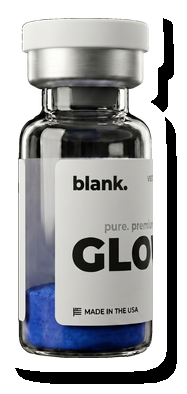
The catalog is 34 compounds, and the three blends disclose their composition per component: GLOW at 70mg (GHK-Cu, BPC-157, TB-500), KLOW at 80mg (adding KPV), and Wolverine at 20mg (BPC-157, TB-500). Processing time is within 1 business day, and orders ship at room temperature, which is the standard condition for lyophilized peptides. The company has been in business for five years, a fact recorded here without being scored. All products are labeled for research use only.
What Phoenix Peptide publicly states
Phoenix Peptide’s domain is phoenixpeptide.com, and the company presents itself there as Phoenix Pharmaceuticals, Inc. If you’ve only read forum reviews, the site will surprise you, because it reads like a scientific reagent supplier rather than a storefront. The homepage states the firm was founded over 30 years ago by Eng Tau and Dr. Jaw-Kang Chang, describes Dr. Chang as “a pioneer in peptide research for 55 years,” and lists its products as “Research Peptides, Custom Peptide Synthesis, Antibody Production, and Assay kits.” The about page states “Pioneers in peptide research since 1976!” and describes a “small team of 20 people” at a lab in Burlingame, California, with sales offices stated to be in Germany and France.
On provenance, the site is explicit. The about page states “All production is done in-house in the USA.” The peptide catalog page states “Chemically synthesized peptides manufactured 100% in the USA.” The custom synthesis page states “Our in house team synthesizes diverse peptides, including insoluble trimers to peptides with multiple disulfide bridges and linked peptide chains.” Whatever else you conclude, the manufacturing claim is made plainly and repeatedly.
On testing, the public record is shorter. The about page states “Guaranteed Purity of up to >95%,” and the custom synthesis page states “Purity > 98%.” A named third-party laboratory, a listed panel covering HPLC, mass spectrometry, endotoxin or sterility, and a viewable lot-specific certificate of analysis were not listed on the pages reviewed 2026-09-08. In fairness, several individual product pages and both order information pages returned an access error during my review, so product-level data sheets and shipping terms may exist behind them. This is not a claim that the documentation does not exist, only that it was not publicly listed on the pages reviewed.
Where Phoenix Peptide has a clear edge over Blank Peptides is breadth of catalog and services. The site states it offers labeled peptides (colorimetric, fluorescent, radioactive and stable isotope), polyclonal antibodies “raised in house,” EIA/ELISA and RIA assay kits, a peptide level determination service, and custom synthesis and labeling. None of that is available from Blank Peptides, and for a lab that needs a tracer or a matched assay, it’s the reason to pick up the phone. No blends and no explicit research-use-only wording were listed on the pages reviewed; the homepage describes its market as “research and drug development.”
A last note for anyone reading reviews: phoenixpeptides.us and phoenixpeptidesllc.com use near-identical names and each states its own testing claims. Some reviews you find online may be describing one of those rather than phoenixpeptide.com, so check which domain a reviewer is talking about before you weigh what they say.
Side by side: documentation you can read before ordering
| Attribute | Blank Peptides | Phoenix Peptide |
|---|---|---|
| Synthesises in-house | Own cGMP laboratory; compounds, vials, labels and QC in-house | States “All production is done in-house in the USA” |
| Third-party lab named | Freedom Diagnostics and Horizon Analytical | Not listed on pages reviewed 2026-09-08 — verify |
| HPLC purity | >99% purity on every lot | States “Guaranteed Purity of up to >95%”; method not listed — verify |
| MS identity | Identity confirmed on every lot | Not listed on pages reviewed 2026-09-08 — verify |
| Endotoxin and sterility | Both run on every lot | Not listed on pages reviewed 2026-09-08 — verify |
| Batch COA before purchase | Public per-lot library, lot number on every vial | Not listed on pages reviewed 2026-09-08; product pages did not load — verify |
| Blend mg split disclosed | GLOW, KLOW and Wolverine disclosed per component | No blends listed on pages reviewed 2026-09-08 — verify |
| Catalog size | 34 compounds | States peptides, labeled peptides, antibodies, assay kits and custom synthesis |
| Research-use labelling | Research use only on every product | States “research and drug development”; explicit RUO wording not listed — verify |
How to verify either supplier yourself
- Skip the star ratings and request a certificate of analysis for a specific, current lot from each supplier. Check it for the laboratory’s name, the lot number and the date. A document missing any of those is a sample, and it tells you nothing about your vial.
- Read past purity for the other three panel results: an identity confirmation by mass spectrometry, an endotoxin value with a limit, and a sterility result. If only an HPLC chromatogram appears, treat the report as purity-only.
- Look up the named laboratory yourself, through a search rather than the vendor’s link, and ask the lab to confirm the report number. Vendors that name their lab expect this call.
- When your order arrives, match the lot number on the vial to the certificate you read beforehand. If the two don’t line up, or the vial has no lot number, ask the supplier to explain before you use it.
- Work through the supplier verification checklist for both companies, and write your answers down so your next comparison starts from evidence rather than memory.
Further reading
- Which Peptide Vendors Name Their Testing Lab?
- Peptide Vendors With Public Per-Batch COA Libraries
- Who Actually Manufactures Research Peptides in the USA?
- Best Research Peptide Suppliers: Ranked by What They Document
Frequently asked questions
What do Phoenix Peptide reviews tell you?
Most online reviews cover delivery speed, packaging and customer service, none of which can confirm identity, purity or sterility. The site itself states in-house manufacturing in the USA and guaranteed purity up to >95%. A named testing lab, a full panel and a lot-specific COA were not listed on the pages reviewed 2026-09-08, so ask for those directly.
Does Phoenix Peptide name its testing lab?
A named third-party laboratory was not listed on the Phoenix Peptide pages reviewed 2026-09-08. The company states production is done in-house and cites purity figures on its about and custom synthesis pages. Whether finished lots are verified by an outside lab, and by which methods, is something to request in writing before you order.
What’s the most useful thing to check before trusting a supplier review?
Whether the reviewer saw a certificate of analysis tied to the lot they received, and whether that certificate named a lab. A review that says “arrived fast, looked fine” is describing logistics. A review that says “the COA for lot X listed identity, purity, endotoxin and sterility from a named lab” is describing evidence.
Why does Blank Peptides publish a COA for every lot?
Because a certificate without a lot number can’t be matched to a vial, and a certificate that isn’t public can’t be checked before purchase. Blank Peptides tests every lot through Freedom Diagnostics and Horizon Analytical, posts the result per lot, and prints the lot number on the vial so the two can be compared directly.
Are these products for human use?
No. Every compound referenced on this page, from Blank Peptides, Phoenix Peptide or any other supplier, is intended exclusively for in-vitro laboratory research by qualified professionals. How thorough a vendor’s documentation is has no bearing on that status.
For research use only. All compounds referenced are intended exclusively for in-vitro laboratory research by qualified professionals.
Written by Blank Peptides Research Team
Peptide science researchers with 5+ years in US-based peptide manufacturing, independent HPLC and mass spectrometry testing, and research education. All content is reviewed for scientific accuracy before publication.
REVIEWED BY
Dr. Tobias S — PhD Chemist, Peptide and Unnatural Amino Acid Synthesis
Dr. Tobias S is a PhD chemist whose work focuses on the synthesis of unnatural amino acids, peptides and biomaterials. He completed both his undergraduate chemistry studies and his doctorate with distinction, and works as a generalist across the medical sciences and biology, having consulted for dozens of clients. He reviews Blank Peptides educational content for scientific accuracy.
Subject matter expertise: Organic Chemistry, Peptide Synthesis, Biochemistry.