There’s a specific kind of stuck you hit when two supplier websites look equally plausible and you have no way to break the tie. Both have decent photography, both mention purity, both feel like they could be a real operation or a storefront somebody spun up last quarter. The information that would actually decide it sits in documents, and finding out whether those documents exist takes more clicking than most people are willing to do at eleven at night.
So this article does that clicking, and it does it from a position with no stake in the outcome. I write for Blank Peptides, and neither Phoenix Peptide nor Amino Science Labs is us. That means I can hand a row to either company without it costing anything, and I intend to, because both of them answer questions the other leaves open.
The five criteria go down first, before either company is examined in detail. Everything after that is a record of what each site publicly stated on 2026-09-08, phrased as what was or wasn’t listed rather than as a verdict on either business. I’ve bought from neither and tested nothing.
Key takeaways
- Two unfamiliar peptide vendors are best separated on documentation published before purchase: synthesis or sourcing, whether the testing lab is named, how many assays run, whether certificates are lot-keyed and openly readable, and whether blends state milligrams per component.
- The five rows applied here are the specification Blank Peptides publishes its own lot certificates against, named openly so the standard can be judged for fairness rather than accepted on faith.
- Phoenix Peptide (phoenixpeptide.com, presented on the site as Phoenix Pharmaceuticals, Inc.) states “All production is done in-house in the USA” from a stated Burlingame, California facility, cites “Guaranteed Purity of up to >95%”, and lists custom synthesis, antibody production and assay kits alongside catalog peptides.
- Amino Science Labs states “Every batch is independently tested by accredited U.S. laboratories” and publishes 33 downloadable certificates whose PDF files are hosted on a testing provider’s own domain; neither company named a laboratory in site copy, and mass spectrometry, endotoxin and sterility results were not listed by either on the pages reviewed 2026-09-08.
- Compounds from both suppliers are intended for in-vitro laboratory research by qualified professionals, with no bearing on human or animal use.
What should decide a comparison between two unknown vendors?
The criteria come first so that neither company gets a rubric shaped around its own marketing.
Provenance is the first row. Does the company state that it synthesizes the peptide, or does it describe getting the finished material from someone else? A site’s own verbs usually answer this. Production sounds like “we manufacture”, “our lab”, “our QC team”. Distribution sounds like “we work with”, “sourced from”, “our suppliers”. Either arrangement can be run well, and the reason to know which one applies is that it determines who has the answer when a lot behaves oddly.
Second, is the testing laboratory named? Third-party testing is claimed almost universally in this market and identified rarely. A name lets you verify a report without asking permission from the company that issued it, which is why publishing one is a meaningful decision rather than a formality.
Third, how much of the panel runs? HPLC purity reports the fraction of the sample under the main peak. Mass spectrometry confirms that peak’s mass, which answers identity. Endotoxin quantifies bacterial breakdown products and sterility checks for viable growth, and neither is visible in a purity trace. Reporting one assay honestly beats implying four, and reporting four beats both.
Fourth, is a certificate readable before purchase, and does it carry a lot number that will appear on the vial? That link is what converts a document into evidence about your material.
Fifth, do blends state milligrams per component? A total weight leaves the ratio unknowable, and no purity figure repairs that.
Company age and domain age are left out, because they describe a registration record rather than a batch.
The standard used in this comparison
These five rows are the specification Blank Peptides publishes its own lots against, in a public library of batch certificates of analysis. I’m naming the source because a rubric that originates inside the market should say where it came from, and because a standard reads differently when its author is already living under it. That connection is the whole of it, and the rest of this article is about Phoenix Peptide and Amino Science Labs.
What Phoenix Peptide publicly states
Phoenix Peptide operates phoenixpeptide.com and presents itself on the site as Phoenix Pharmaceuticals, Inc. It’s structured as a research chemistry supplier rather than a direct-to-researcher storefront, and that shows in what it publishes and what it doesn’t.
On provenance, the statements are direct. The about page states “All production is done in-house in the USA.” The product categories page states “Chemically synthesized research peptides manufactured 100% in the USA” and that “All products made at our facilities in Burlingame, CA.” The homepage states “We manufacture Research Peptides, Antibodies, and Assay Kits.” The company publishes a physical address at 330 Beach Road, Burlingame, CA 94010, describes “a small team of 20 people”, and states on the custom synthesis page that “Dr. Chang and his lab team have over 55 years experience synthesizing peptides.”
On testing, the about page states “Guaranteed Purity of up to >95%” and the custom synthesis page states “Purity > 98%.” The peptides catalog page states that “Our peptides undergo rigorous quality control and testing to ensure the highest purity standards”, with no analytical method attached. A named third-party laboratory was not listed on the pages reviewed 2026-09-08, mass spectrometry, endotoxin and sterility results were not listed, and no lot-specific certificate was visible on the pages that loaded.
A limitation belongs alongside that finding. Several parts of phoenixpeptide.com returned a 403 access error during the review, including the services page, the shipping and returns page and a topics page, so product-level documentation may sit behind them rather than being absent. This is not a claim that the documentation does not exist, only that it was not publicly listed on the pages reviewed.
The company’s real advantage is capability. Catalog peptides, custom peptide synthesis, antibody production and assay kits appear as stated services, with custom orders quoted at “2-3 weeks” typical delivery. For a project that needs a novel sequence made to order or a matched immunoassay, that’s worth more than any documentation row here, and a catalog storefront has no answer to it.
What Amino Science Labs publicly states
Amino Science Labs trades at aminoscience.io, and its documentation strength sits almost entirely in one place, which happens to be the place that’s hardest to fake.
On provenance, the site describes itself as “a chemical supplier”. A statement naming who synthesizes the peptides, or describing a facility the company operates, was not listed on the pages reviewed 2026-09-08. The site does display “U.S. Lab Tested” and “Accredited Labs” markers, which speak to testing rather than to manufacturing, so this row is left open.
On testing, the homepage states “Premium quality research peptides with 99%+ purity”, product listings state “Purity>99%”, and the site displays “HPLC Verified” as a quality marker. The certificates page states that “Every batch is independently tested by accredited U.S. laboratories.” Mass spectrometry, bacterial endotoxin and sterility results were not listed in the site copy on the pages reviewed 2026-09-08, and no laboratory was named in prose.
On certificate access, Amino Science Labs earns the clearest concession in this comparison, and I’ll give it without hedging. The certificates page states “Download the full COA for any product below” and listed 33 downloadable certificates on the review date, with no account, no request and no purchase required. The PDF files themselves are hosted at coas.freedomdiagnosticstesting.com, which means the issuing testing provider is identifiable from the certificate’s own address even though the site copy doesn’t state a laboratory name in words. Open, ungated, per-compound certificate access is more than a large share of this market offers, and pointing the files at the testing provider’s own domain is a stronger arrangement than self-hosted PDFs.
Two honest limits on that. The page states “Don’t see your product? Contact us for batch-specific COA requests”, which suggests coverage isn’t complete across every batch. And the certificates are organised by product and dosage rather than presented as a lot-number lookup, so matching a specific vial to its document is a step you’d need to confirm with the company.
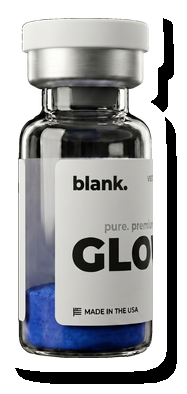
On catalog and blends, a total count was not stated on the pages reviewed. A Glow Blend at 70 mg is listed, with the milligram amount of each component not listed on the pages reviewed 2026-09-08. Shipping is stated as same-day dispatch before 5PM CT with US tracking.
Side by side: manufacturing statements and certificate access
| Attribute | Phoenix Peptide | Amino Science Labs |
|---|---|---|
| Synthesises in-house | States “All production is done in-house in the USA” at a stated Burlingame, CA address | Describes itself as “a chemical supplier”; synthesis not addressed on pages reviewed 2026-09-08 — verify |
| Third-party lab named | Not listed on pages reviewed 2026-09-08; several pages returned 403 — verify | Not named in site copy; certificate PDFs are hosted on a testing provider’s own domain — verify |
| HPLC purity | States “Guaranteed Purity of up to >95%”; method not listed — verify | States “99%+ purity” and displays an “HPLC Verified” marker |
| MS identity | Not listed on pages reviewed 2026-09-08 — verify | Not listed on pages reviewed 2026-09-08 — verify |
| Endotoxin and sterility | Not listed on pages reviewed 2026-09-08 — verify | Not listed on pages reviewed 2026-09-08 — verify |
| Batch COA before purchase | Not listed on pages reviewed 2026-09-08 — verify | States “Download the full COA for any product below”; 33 certificates listed, no account required |
| Blend mg split disclosed | No blends listed on pages reviewed 2026-09-08 — verify | Glow Blend 70 mg listed; per-component mg not listed on pages reviewed — verify |
| Catalog size | States peptides, antibodies, assay kits and custom synthesis; count not stated — verify | Count not stated; 33 certificates listed on the certificates page — verify |
| Research-use labelling | States research and drug development use; explicit RUO wording not listed — verify | Research-use wording not listed on the pages reviewed 2026-09-08 — verify |
How to verify either supplier yourself
- Open a published certificate and look at the file’s own address as well as its contents, because the domain hosting a PDF sometimes identifies the testing provider even when the vendor’s copy doesn’t name one.
- Check whether the certificate you’re shown carries a lot or batch identifier you could match against a vial, rather than only a product name and a dosage.
- Count the assays. Purity, identity, endotoxin and sterility each need a stated method and a result, and a certificate covering one of them has answered a quarter of the question regardless of how it’s headed.
- Retry any page that returns an access error from a different network before treating it as missing documentation, since a 403 describes a server configuration rather than a company’s analytical practice.
- Record both companies against the supplier verification checklist so you finish with two completed columns instead of two impressions.
Further reading
- Which Peptide Vendors Name Their Testing Lab?
- Peptide Vendors With Public Per-Batch COA Libraries
- Which Peptide Vendors Disclose Blend Composition?
- Best Research Peptide Suppliers: Ranked by What They Document
Frequently asked questions
How do Phoenix Peptide and Amino Science Labs compare?
On pages reviewed 2026-09-08, Amino Science Labs gives far better certificate access, publishing 33 downloadable documents with no account or request needed. Phoenix Peptide answers the manufacturing question directly with stated in-house US production at a published address, and offers custom synthesis, antibodies and assay kits. Neither names a testing laboratory in site copy, and neither lists endotoxin or sterility results.
Can you tell who tests Amino Science Labs batches?
Not from the site copy, which states only that “Every batch is independently tested by accredited U.S. laboratories.” The certificate PDFs linked from the certificates page are hosted on a testing provider’s own domain, so the issuing laboratory is identifiable from the file address. Opening a certificate and reading its header is the way to confirm that for a specific compound.
Which company publishes more test methods?
Neither publishes a full panel. Amino Science Labs displays an HPLC marker and a 99%+ purity claim, while Phoenix Peptide states purity guarantees of “>95%” on its about page and “> 98%” for custom synthesis without naming a method. Mass spectrometry, endotoxin and sterility results were not listed by either company on the pages reviewed 2026-09-08.
Is an ungated certificate library worth much on its own?
It’s worth a great deal, because it removes the vendor from the verification loop for the part of the process most likely to be embellished. What it doesn’t do is prove that the document matches the vial you receive, so the follow-up question is always whether the certificate carries a lot identifier you can check against the label.
Are these products for human use?
No. Compounds from either supplier discussed in this article are sold strictly for in-vitro laboratory research by qualified professionals. Nothing here is medical advice, and comparing published documentation speaks to research reliability rather than to any suitability for administration to humans or animals.
For research use only. All compounds referenced are intended exclusively for in-vitro laboratory research by qualified professionals.
Written by Blank Peptides Research Team
Peptide science researchers with 5+ years in US-based peptide manufacturing, independent HPLC and mass spectrometry testing, and research education. All content is reviewed for scientific accuracy before publication.
REVIEWED BY
Dr. Tobias S — PhD Chemist, Peptide and Unnatural Amino Acid Synthesis
Dr. Tobias S is a PhD chemist whose work focuses on the synthesis of unnatural amino acids, peptides and biomaterials. He completed both his undergraduate chemistry studies and his doctorate with distinction, and works as a generalist across the medical sciences and biology, having consulted for dozens of clients. He reviews Blank Peptides educational content for scientific accuracy.
Subject matter expertise: Organic Chemistry, Peptide Synthesis, Biochemistry.