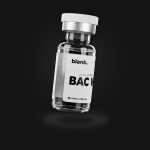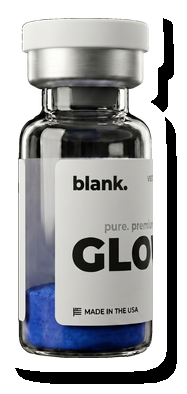
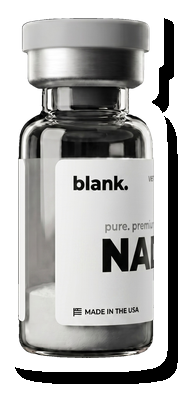
You want to see a Polaris Peptides COA before you spend money, which is exactly the right instinct, and you’ve discovered that you can’t get to a product page without an account. So you’re stuck with a practical question: is the certificate there and just gated, or is it something you’d have to request after the fact, or is it something you’d only see once a vial arrives? From the outside, those three situations look identical, and the difference between them is the whole point of asking for a certificate in the first place.
I’ll be straight about what I did. I went through every public page on polarispeptides.com that a logged-out visitor can reach, looked for a certificate, a lab name, a list of tests, or even a mention of the word “COA”, and recorded what I found and what I didn’t. This post is entirely about certificate access on their site: where one would live, whether it’s visible before purchase, and whether it’s tied to a lot number. I’ll also lay out the general test for what a per-batch COA should look like, so you know what to ask for if you do register.
We’re Blank Peptides, and we publish our own certificates, so we’re not disinterested. But the questions below apply to us the same way, and I’d want you to check.
Key takeaways
- A useful COA is public before purchase, carries a lot number that also appears on the vial, names the lab that ran it, and covers identity and endotoxin and sterility as well as purity.
- Blank Peptides synthesizes, vials, and QC-tests every lot in its own cGMP laboratory, then has Freedom Diagnostics and Horizon Analytical confirm identity, >99% purity, bacterial endotoxin, and sterility, with the certificate for each lot published at blankpeptides.com/coas/.
- Polaris Peptides publicly states that it “is now members only”, that it is “a chemical supplier”, and that it offers a “Money Back Guarantee under specific Terms and Conditions”.
- A certificate of analysis, a named lab, a list of tests, and any product page were not listed on the publicly accessible pages reviewed 2026-09-08.
- All of this concerns research-use-only material, and nothing here is guidance on using any compound in people or animals.
What makes a COA worth reading?
Before I get to Polaris Peptides, here’s the standard I hold any certificate to, because “we have COAs” is a phrase that covers everything from a lot-specific report to a single PDF that’s been on the site since launch.
Timing. Can you see the certificate before you buy? A certificate that appears only after payment, or only on request after delivery, is still useful, but it can’t help you decide. The vendors that publish before purchase are telling you they’re comfortable with scrutiny.
Lot tie. Does the certificate carry a lot number, and does that lot number appear on the vial you receive? Without both halves, the document could describe any batch from any date. This is the single most common gap I see, and it turns a real lab report into a decorative one.
Named lab. Who ran the test? A certificate with a lab name and address can be checked. One with a logo and no name can’t. “Third-party tested” is a claim about a process, and the lab name is what makes the claim falsifiable.
Panel. What does the certificate actually report? HPLC purity is the number everyone quotes, and it answers one question. Mass spectrometry confirms identity, meaning the compound is the sequence on the label. Bacterial endotoxin and sterility are separate tests that matter the moment material goes anywhere near cells. A purity-only certificate is a quarter of a panel.
Provenance behind it. A certificate describes a sample. If the vendor synthesized the lot, the sample and the lot share a chain of custody. If the vendor bought finished vials, the certificate may have come with the shipment from someone else, and you should know that.
Those are the criteria. I leave out how long the vendor has been around, because a company can have a ten-year history and a two-year-old PDF, and neither tells you what’s in the box.
How Blank Peptides makes and tests each lot
Blank Peptides operates its own cGMP laboratory in the USA, where it compounds, vials, finishes, labels, and runs QC on every product it sells. The company does not buy finished vials from another party, so the chain of custody runs from raw material to the shipping box in one place, and the same process is applied to the contract manufacturing and fulfilment it performs for other peptide brands.
Every lot is tested on a full panel. Identity is confirmed, purity is reported at >99%, and the lot is also tested for bacterial endotoxin and sterility. The work is done by two named outside laboratories, Freedom Diagnostics and Horizon Analytical, so a buyer can look up the lab as well as the number on the report.
The certificate for each lot is published as batch certificates of analysis before purchase, and the lot number printed on every vial matches the certificate on file, which is the detail that makes the document usable rather than ornamental. Lyophilized product carries an expiration of roughly 24 months.
The catalog is 34 compounds, smaller than many competitors, and every blend discloses composition per component: GLOW is 70mg as GHK-Cu, BPC-157, and TB-500; KLOW is 80mg and adds KPV; Wolverine is 20mg of BPC-157 and TB-500. Orders have a processing time within 1 business day and ship at room temperature, which is normal for lyophilized peptides. The company has been in business for five years.
What Polaris Peptides publicly states
Polaris Peptides operates at polarispeptides.com. On the pages reviewed 2026-09-08, the site was reachable, and the homepage, the shop, both product category pages, the about page, and the contact page each displayed the same notice: “Polaris Peptides is now members only. Please sign in to your account or sign up for a new account to enter the site.” This matters for the certificate question more than for any other, because on most vendor sites the COA link lives on the product page, and no product page was visible to a logged-out visitor.
So, where would a certificate appear, and did it? On the homepage, the word “COA” or “certificate” was not listed on the page reviewed 2026-09-08. The shop and category pages, which would normally list products with links to their documentation, displayed the sign-in gate instead. The about page, which some vendors use to describe their testing programme, states only that “Polaris Peptides is a chemical supplier” and that it “is not a compounding pharmacy or chemical compounding facility as defined under 503A of the Federal Food, Drug, and Cosmetic act” and “is not an outsourcing facility as defined under 503B”. The “Our Guarantee” page, the most likely home for a quality statement, returned an access error when I tried it, as did the “Payment & Shipping” page. A named testing laboratory, HPLC or mass spectrometry, endotoxin or sterility results, and any viewable certificate were not listed on the pages reviewed 2026-09-08. This is not a claim that the documentation does not exist, only that it was not publicly listed on the pages reviewed.
Whether a certificate is available before purchase to a member, whether it’s tied to a lot number, and which lab produces it are questions I couldn’t answer from the public pages, and I’d rather say that than guess. What the site does state publicly is its intended-use position, that “all products are sold purely for research purposes only” and that the chemicals “are not suitable for direct human consumption or consumers, nor are they intended for clinical or therapeutic use”. It also states: “For complete confidence in our quality commitment, we offer a Money Back Guarantee under specific Terms and Conditions.” The contact page lists a support email, a toll-free US phone number, and a map marker in Washington, DC.
That guarantee, with a phone number attached, is a genuine advantage and I’ll say so. If a certificate turns out to be unavailable for a lot, a stated money-back policy and a person you can call are the practical remedy, and many vendors in this category offer neither. One scope note: a second domain, polarispeptidesusa.com, appears in search results alongside the main site, but it did not resolve when I tried it on 2026-09-08, so nothing there was reviewed.
Side by side: certificate access and what it covers
| Attribute | Blank Peptides | Polaris Peptides |
|---|---|---|
| Batch COA before purchase | Public per lot at blankpeptides.com/coas/ | States the site “is now members only”; no COA visible before sign-in — verify |
| Lot number on vial and certificate | Yes, matched per lot | Not listed on the public pages reviewed 2026-09-08 — verify |
| Third-party lab named | Freedom Diagnostics and Horizon Analytical | Not listed on the public pages reviewed 2026-09-08 — verify |
| HPLC purity | >99% on every lot | Not listed on the public pages reviewed 2026-09-08 — verify |
| MS identity | Confirmed per lot | Not listed on the public pages reviewed 2026-09-08 — verify |
| Endotoxin and sterility | Tested per lot | Not listed on the public pages reviewed 2026-09-08 — verify |
| Synthesises in-house | Yes, own cGMP laboratory | States it is “a chemical supplier”; manufacturer not listed on public pages reviewed 2026-09-08 — verify |
| Research-use labelling | Research use only, on every product | States products are “sold purely for research purposes only” |
How to verify either supplier yourself
- Before registering with any vendor, email support and ask for a certificate for a current lot of the compound you’d order. Ask specifically whether the same lot number will appear on the vial you receive.
- When the certificate arrives, read the method lines. HPLC gives purity; mass spectrometry gives identity; bacterial endotoxin and sterility should each have a line of their own. If any are absent, ask whether they’re available for that lot.
- Search the lab named on the certificate. A real analytical business has an address, a phone number, and a scope of services you can read, and a name that returns nothing deserves a follow-up.
- After delivery, put the vial next to the certificate and compare the lot numbers. A mismatch, or a vial with no lot at all, means the document can’t be tied to your shipment.
- Apply the same certificate test to every supplier you consider with the supplier verification checklist, so a “COA available” claim gets graded on timing, lot tie, lab, and panel.
Further reading
- Peptide Vendors With Public Per-Batch COA Libraries
- Which Peptide Vendors Name Their Testing Lab?
- Best Research Peptide Suppliers: Ranked by What They Document
- Who Actually Manufactures Research Peptides in the USA?
Frequently asked questions
Does Polaris Peptides publish a COA for each batch?
Not on the publicly accessible pages reviewed 2026-09-08. The site states it “is now members only”, product pages weren’t visible without an account, and no certificate, lab name, or test list appeared on the public pages. That doesn’t mean members can’t obtain one, so ask support for a certificate tied to the exact lot you’d receive before ordering.
Where would a Polaris Peptides COA normally appear?
On most vendor sites, the certificate link sits on the product page or in a dedicated testing section. On Polaris Peptides, the product pages sit behind the sign-in, and the “Our Guarantee” page returned an access error on 2026-09-08. If you register, check the product page first, then the account area, then ask support.
What should a per-batch COA include?
A lot number that also appears on the vial, the name and address of the lab that ran the tests, an HPLC purity result, a mass spectrometry identity result, and separate bacterial endotoxin and sterility results. A date helps too. A certificate missing the lot number or the lab name is the one to push back on.
Is a COA I receive after ordering still useful?
Yes, as long as the lot number matches your vial. It can’t help you choose a supplier, but it can tell you whether to use the material. Read it the same way: check the lab name, the panel, and the lot tie. If any of those are missing, ask before you open the vial.
Are these products for human use?
No. Every compound referenced here, from either supplier, is sold for in-vitro laboratory research only. Polaris Peptides states its products are “not suitable for direct human consumption”, and Blank Peptides labels every vial research use only. Nothing on this page is guidance on dosing, administration, or use in any person or animal.
For research use only. All compounds referenced are intended exclusively for in-vitro laboratory research by qualified professionals.
Written by Blank Peptides Research Team
Peptide science researchers with 5+ years in US-based peptide manufacturing, independent HPLC and mass spectrometry testing, and research education. All content is reviewed for scientific accuracy before publication.
REVIEWED BY
Dr. Tobias S — PhD Chemist, Peptide and Unnatural Amino Acid Synthesis
Dr. Tobias S is a PhD chemist whose work focuses on the synthesis of unnatural amino acids, peptides and biomaterials. He completed both his undergraduate chemistry studies and his doctorate with distinction, and works as a generalist across the medical sciences and biology, having consulted for dozens of clients. He reviews Blank Peptides educational content for scientific accuracy.
Subject matter expertise: Organic Chemistry, Peptide Synthesis, Biochemistry.