You’re on the Power Peptides site, you’ve read the line about certificates being available on the website, and you’ve clicked around for ten minutes trying to find one. There’s a “Certificate of Analysis” heading in the product page’s table of contents, there’s a badge that says third-party tested, and there’s a mention of QR-code verification somewhere on the About page. But the actual document, the PDF or image with a lot number and a purity figure and a lab’s name on it, hasn’t turned up, and you’re starting to wonder whether you’re missing something or whether it isn’t there to find.
I went through the same exercise, on a specific date, and I’ll tell you exactly what I found and where. Then I’ll explain what a per-batch COA needs to contain to be worth anything, because “we have COAs” covers everything from a lot-specific certificate signed off by a named lab to a single generic page reused across every product.
Disclosure first: I write for Blank Peptides, which sells research peptides and publishes its own per-lot certificates. I’ll describe how we do it in the same terms, and I’ll give Power Peptides credit where its site earns it.
Key takeaways
- A certificate of analysis is only useful if it’s tied to a lot number, viewable before purchase, and issued by a lab you can name, so those three properties are the test here rather than the mere presence of the word “COA”.
- Blank Peptides compounds, vials, and QC-tests every lot in its own cGMP laboratory and publishes a per-lot certificate from Freedom Diagnostics and Horizon Analytical covering identity, >99% purity, bacterial endotoxin, and sterility.
- Power Peptides publicly states that “Complete certificates of analysis are readily accessible on our website for each product”, that access is “QR-Code Verified”, and that a certificate accompanies each shipment.
- A certificate that rendered on the product pages I opened, a lot number on those pages, and a laboratory name were not listed on the pages reviewed 2026-09-08.
- Every compound mentioned is for research use only, and nothing here is guidance on using any of them in people or animals.
What makes a COA worth reading?
Before I name anyone, let me explain what I’m looking for when I say “per-batch COA”, because it’s a more specific thing than a page with the word “certificate” on it.
The first question is provenance, and it shapes everything after. If a company synthesizes its own material, the certificate describes a lot the company made and can trace back to raw material. If the company buys finished product from a partner, the certificate is either the partner’s document passed along or a test the vendor commissioned on product it received. Both can be legitimate, but it tells you who’s answerable if the numbers don’t hold up.
The second question is whether the lab is named on the certificate itself. A COA without a laboratory name is a table of numbers with no author. With a name you can look up the lab, see that it does peptide analysis, and even send your own sample there for a comparison.
The third question is the panel. HPLC purity is the number everyone quotes, and it tells you what fraction of the sample is one peak. Mass spectrometry confirms that peak has the expected mass for the sequence. Bacterial endotoxin and sterility tell you whether the vial is fit for cell work. A certificate with purity only has answered one question of four.
The fourth question is timing and tie. Can you open the certificate before you pay, and does it carry a lot number that also appears on the vial? A certificate you first see inside the shipping box can’t inform your decision, and one with no lot number can’t be matched to what you received. This is the question this whole article turns on.
The fifth is blends. If the product is a stack or blend, does the certificate, or the product page, state the milligram amount of each component?
I’m leaving out company age and domain age, which say nothing about the certificate in front of you.
How Blank Peptides makes and tests each lot
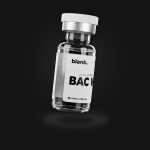
Blank Peptides operates its own cGMP laboratory in the USA, where it compounds, vials, finishes, and labels every product it sells and runs QC in-house. Because it does not buy finished vials from another manufacturer, the chain of custody from raw material to sealed box sits inside one facility, and the same facility also contract-manufactures and fulfils product for other peptide brands.
Each lot is released against a full panel rather than a purity figure alone. Identity is confirmed, purity is reported at >99%, and the lot is tested for bacterial endotoxin and sterility. That testing is carried out by two named outside laboratories, Freedom Diagnostics and Horizon Analytical, whose names appear on the certificate, so a buyer can verify the lab as well as the number.
Results for every lot are published as batch certificates of analysis before purchase, and the lot number printed on each vial matches the certificate on file, which is what lets a buyer connect the document to the product in hand. Lyophilized product carries an expiration of roughly 24 months.
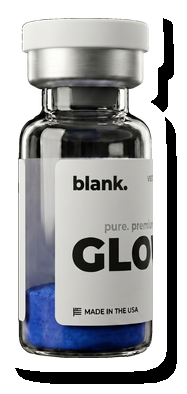
The catalog is 34 compounds, and each blend discloses its composition per component: GLOW is 70mg of GHK-Cu, BPC-157, and TB-500; KLOW is 80mg and adds KPV; Wolverine is 20mg of BPC-157 and TB-500. Orders have a processing time within 1 business day and ship at room temperature, which is standard for lyophilized peptides. The company has been in business for five years.
What Power Peptides publicly states
Here’s the certificate trail on powerpeptides.com as I found it on the pages reviewed 2026-09-08, page by page.
The homepage states: “Certificates for each peptide’s testing results are available on our website.” The FAQ states: “Complete certificates of analysis are readily accessible on our website for each product.” The About page states “Full transparency with detailed Certificates of Analysis (CoA) available for every product” alongside the phrase “QR-Code Verified”. So across three pages, the company states that certificates exist for each product and that they’re on the site. Note the wording is “for each product” and “for every product” rather than “for each lot” or “for each batch”; the About page separately states that “Each batch is independently tested by third-party US laboratories”, but a batch-level certificate was not what the COA language describes.
The product pages are where you’d expect the documents themselves. The BPC-157 page lists “Certificate of Analysis (COA)” as an item in its table of contents, and the Epithalon Research Kit page does the same. On both, when I opened them, a certificate image, PDF link, lot number, test date, lab name, or purity value did not render. What did appear was a “Third party tested” badge and a list of test types: “HPLS Testing, Endotoxin Assay, TYMC Test, TAMC Test, Heavy Metal Screening.” The GLOW Stack page carries the same list and additionally states that a certificate of analysis accompanies each shipment, which tells you one place a document definitely appears: in the box, after purchase. A dedicated certificate library page, at a URL like /coa, returned nothing when I tried it. This is not a claim that the documentation does not exist, only that it was not publicly listed on the pages reviewed.
On what a certificate would show if you obtained one, the FAQ states that products undergo “comprehensive analytical characterization through both in-house and independent third-party laboratories, utilizing advanced techniques including NMR, FTIR, Polarimetry, HPLC, and LC-MS analysis.” The About page states “99% Purity Guaranteed”, and the FAQ states “Our single molecule product purity standard is ≥98% by HPLC and many of our products test ≥99%.” A laboratory name did not appear on any page I reviewed, so whether the certificate in the box names the lab is something you’d have to check when it arrives.
To be fair to Power Peptides, “QR-Code Verified” implies a mechanism that ties a physical vial to a document, which is a sensible design if the QR resolves to a lot-specific certificate. I couldn’t test that from the website. And the list of methods the company states, with NMR, FTIR, and polarimetry alongside HPLC and LC-MS, is broader than a typical release panel, which is a genuine advantage if the certificate reports all of them. Its shipping terms, with FedEx 2Day included over $200 and overnight over $500, are also better than ours.
Side by side: COA access and what it covers
| Attribute | Blank Peptides | Power Peptides |
|---|---|---|
| Synthesises in-house | Yes, own cGMP laboratory | States “strategic partnerships with established manufacturing partners” — verify |
| Third-party lab named | Freedom Diagnostics and Horizon Analytical, on the certificate | States “third-party US laboratories”; no name on pages reviewed 2026-09-08 — verify |
| HPLC purity | >99% on every lot | States “≥98% by HPLC” as its standard — verify |
| MS identity | Confirmed per lot, on the certificate | States “LC-MS analysis” as a method; per-lot result not shown — verify |
| Endotoxin and sterility | Tested per lot, on the certificate | States “Endotoxin Assay”, TYMC and TAMC; sterility not listed — verify |
| Batch COA before purchase | Public per lot at blankpeptides.com/coas/ | States certificates are “readily accessible on our website”; none rendered on product pages checked — verify |
| Catalog size | 34 compounds | Product count not stated; includes research kits and stacks — verify |
| Blend mg split disclosed | Every blend, every component | States GLOW Stack as GHK-Cu 50mg, BPC-157 10mg, TB-500 10mg in separate vials |
| Research-use labelling | Research use only, on every product | States “not meant for human consumption of any kind” |
How to verify either supplier yourself
- On the product page for the compound you want, look for a certificate you can open before paying. If there’s a heading but no document, try a different browser, then email support and ask for the certificate for the lot they’d ship.
- When you get a certificate, check five things on it: a lot number, a test date, a laboratory name, the method used for each result, and results for purity, identity, endotoxin, and sterility. A document missing the lot number or the lab name is hard to use.
- After delivery, compare the lot number on the vial to the lot on the certificate. If the vendor uses a QR code, scan it and note where it resolves, since a lot-specific page is worth more than a generic quality page.
- Ask whether the certificate is per lot or per product. A per-product certificate may describe a batch made months ago, and the vendor should be able to tell you which lot it covers.
- Use the supplier verification checklist to run the same COA questions on any supplier, so you’re comparing documents rather than promises.
Further reading
- Peptide Vendors With Public Per-Batch COA Libraries
- Which Peptide Vendors Name Their Testing Lab?
- Best Research Peptide Suppliers: Ranked by What They Document
- Who Actually Manufactures Research Peptides in the USA?
Frequently asked questions
Does Power Peptides publish a COA for each batch?
On the pages reviewed 2026-09-08, Power Peptides states that certificates are “readily accessible on our website for each product” and that a certificate accompanies each shipment, but a certificate did not render on the product pages I opened, and the language is per product rather than per batch. Ask support for the lot-specific certificate before you order.
Where would I find a Power Peptides COA?
The site states certificates are on the website and mentions “QR-Code Verified” access, and product pages carry a “Certificate of Analysis (COA)” heading. The one location the site confirms is the shipment itself, since the GLOW Stack page states a certificate accompanies each order. Emailing support for the document before purchase is the surest route.
What should a per-batch COA include?
A lot number, a test date, the name of the laboratory, and results for HPLC purity, mass spectrometry identity, bacterial endotoxin, and sterility, each with the method listed. The lot number should match the vial. Blank Peptides publishes all of that for every lot; any vendor whose certificate carries the same fields has done the job.
Is a QR code on the vial the same as a public COA?
They answer different questions. A QR code that resolves to a lot-specific certificate is a good way to tie the vial to a document, but you can only scan it after the vial arrives. A public certificate library lets you read the document before you buy. The two work well together; on their own, the QR code answers a different question than the library does.
Are these products for human use?
No. Every compound mentioned, from either supplier, is sold for in-vitro laboratory research only. Power Peptides states its products are “not intended for human consumption, diagnostic, therapeutic, or other personal uses”, and Blank Peptides labels every vial research use only. Nothing here is guidance on dosing or administration in any person or animal.
For research use only. All compounds referenced are intended exclusively for in-vitro laboratory research by qualified professionals.
Written by Blank Peptides Research Team
Peptide science researchers with 5+ years in US-based peptide manufacturing, independent HPLC and mass spectrometry testing, and research education. All content is reviewed for scientific accuracy before publication.
REVIEWED BY
Dr. Tobias S — PhD Chemist, Peptide and Unnatural Amino Acid Synthesis
Dr. Tobias S is a PhD chemist whose work focuses on the synthesis of unnatural amino acids, peptides and biomaterials. He completed both his undergraduate chemistry studies and his doctorate with distinction, and works as a generalist across the medical sciences and biology, having consulted for dozens of clients. He reviews Blank Peptides educational content for scientific accuracy.
Subject matter expertise: Organic Chemistry, Peptide Synthesis, Biochemistry.