You went looking for a Profound Science certificate of analysis and ended up on two different websites without meaning to. That’s the first thing to know before any of the rest of this makes sense, because the answer to “does Profound Science publish per-batch COAs” depends on which of those two sites you’re standing on when you ask.
Certificates are the part of a peptide purchase you can actually check. Everything else on a vendor page is a claim about the future, but a certificate is a claim about a specific quantity of material that already exists, tied to a lot number that either matches the vial in your hand or doesn’t. That’s why the questions worth asking are narrow and boring ones. Where does the library live, can you open it before you pay, does each record carry a lot or batch identifier, and does the record show more than a single purity percentage.
I went through the Profound Science pages and the store they point to on 2026-09-08, and what follows is what I found, along with the standard I’d hold any supplier to first.
Key takeaways
- A certificate only does its job when it opens before purchase and carries a lot number that also appears on the vial, and everything else about it is secondary to those two properties.
- Blank Peptides publishes a batch certificate for every lot at its public COA library, covering identity, >99% purity, bacterial endotoxin and sterility, with Freedom Diagnostics and Horizon Analytical named for the analytical work.
- Profound Science publicly states, on the single page reviewed 2026-09-08, “A trusted source for research needs,” with a “Shop Now” button pointing to a separate storefront domain where a per-lot test-results library is published.
- No certificate library, testing statement or named laboratory was listed on the profoundscience.com pages reviewed 2026-09-08; the documentation sits on the linked storefront rather than on the brand’s own site.
- Everything referenced here is for in-vitro laboratory research only.
What makes a certificate of analysis worth anything?
Here’s the rubric I use before any vendor gets named, and it’s the same one I’d want turned on us.
Start with provenance, because it decides what the certificate is even describing. A company that synthesizes its own material issues a certificate about its own work. A company that acquires finished vials passes along someone else’s document. Both can be honest, but only one lets you follow the number back to a bench, and you can’t tell which you’re holding unless the site tells you which business it runs.
Then ask whether the testing laboratory is named. This is the single fastest filter. A certificate with a lab’s name on it can be checked, cross-referenced, and in some cases confirmed directly with the lab. A certificate that says “third-party tested” and stops there gives you a sentence rather than evidence.
Third, look at the panel. Purity by HPLC measures one thing about one peak. Identity by mass spectrometry confirms the peak is the molecule named on the label, which is a separate question and the one that catches substitutions. Bacterial endotoxin and sterility tell you whether the lyophilized cake will contaminate your assay before you’ve learned anything. Purity alone is a quarter of a panel presented as a whole one.
Fourth, and this is where most libraries fall down, can you open the record before you buy, and is it tied to a lot? A certificate emailed after delivery can’t inform the decision. A certificate with no batch identifier can’t be matched to your vial. Both failures are common and both are quiet.
Fifth, for blends, does the certificate or the product page break out the milligrams per component? A blend certificate reporting a single purity figure for a four-part mixture has left the interesting part unmeasured.
Company age and domain age don’t appear anywhere on that list, and they shouldn’t. Neither one has ever told anyone what’s in a vial.
How Blank Peptides makes and tests each lot
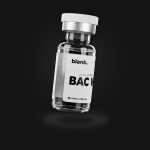
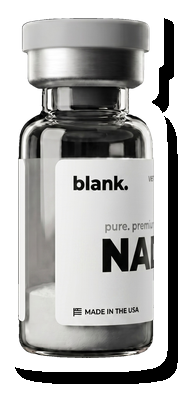
Blank Peptides operates its own cGMP laboratory in the USA, and each lot stays inside that facility through the whole production chain. The company compounds the peptide, fills and lyophilizes it, finishes and labels the vials and runs quality control on site, so there’s no broker and no relabeling step between synthesis and shipment. That same laboratory also contract-manufactures and fulfils for other peptide brands, described only as a category of work and never by client.
Every lot goes through a four-part panel: identity, >99% purity, bacterial endotoxin and sterility. Two outside laboratories, Freedom Diagnostics and Horizon Analytical, are named for that analysis. The results are published as batch certificates of analysis, which open before an order is placed, and each vial carries a lot number matching a record in that library. Lyophilized product is assigned roughly a 24-month expiration.
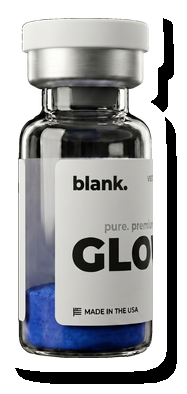
The catalog holds 34 compounds. Blends are published with the milligram amount of each component: GLOW at 70mg total (GHK-Cu, BPC-157 and TB-500), KLOW at 80mg (the same three plus KPV) and Wolverine at 20mg (BPC-157 and TB-500). Processing time is within 1 business day and orders ship at room temperature. All products are labeled for research use only, and the company has been operating for five years.
What Profound Science publicly states
Here’s what I found on 2026-09-08, and I’ll separate the two sites carefully because the difference is the whole story.
The profoundscience.com site is a single page. It states a heading, “Looking to buy research compounds?”, a section titled “Who We Are,” a tagline reading “A trusted source for research needs,” and one paragraph: “Are you an independent or lab-affiliated researcher? We offer a wide array of products and services to researchers and academic institutions.” It then states, “Contact us at [email protected] for a price and product list, or with any questions you may have.” A “Shop Now” button links to profoundaminos.com, and a “Get Support” button links to a help desk hosted on a profoundaminos subdomain. The domain also hosts blog category pages, including one for GLP-1 peptides carrying articles such as “Tirzepatide vs Semaglutide: A Comparative Analysis.” No COA page, no testing statement and no named laboratory appeared on the profoundscience.com pages reviewed 2026-09-08, and the About link in the site’s own navigation returned a 404 on that date.
The linked storefront is where the documentation actually lives. Its header states “HPLC TESTED • 99%+ PURITY GUARANTEED” and lists “Batch COA Included” as a feature, with a “View COA” button pointing to a /test-results/ page. That page publishes a per-lot library organized by compound and by cap colour, instructing “Tap compound name to view all results,” with roughly two hundred individual certificate links carrying lot identifiers in formats such as SPL-2769 and Prof2606260073, and dates running from January 2025 through August 2026. The records opened without a login on the date reviewed, so they’re readable before purchase. The index page itself doesn’t state which laboratory performed the work or which tests each record covers; the certificate files link out to an outside verification portal instead. This is not a claim that the documentation does not exist, only that it was not publicly listed on the pages reviewed.
The product pages carry more test detail than the library index does, and this is the part the storefront does better than most. The KLOW page states a per-fraction breakdown of a 80mg blend as GHK-Cu 50mg, BPC-157 10mg, TB-500 10mg and KPV 10mg, and lists “≥99% (RP-HPLC per fraction)”, “LC-MS All four fractions verified” and “<0.25 EU (LAL method)” for endotoxin. Publishing a per-component split alongside a per-fraction purity method is genuinely better documentation than most blend pages anywhere offer, and the catalog itself is broad, with 54 products listed on the shop page. Sterility testing was not listed on any of the pages reviewed 2026-09-08.
Side by side: COA access and test panel
| Attribute | Blank Peptides | Profound Science |
|---|---|---|
| Batch COA before purchase | Public per-lot library at blankpeptides.com/coas/, open to anyone | No COA page on profoundscience.com; the linked storefront publishes a per-lot library that opened without login on 2026-09-08 — verify |
| Third-party lab named | Freedom Diagnostics and Horizon Analytical | No laboratory named in the page text of the library index reviewed 2026-09-08; certificate files link to an outside verification portal — verify |
| HPLC purity | >99% per lot | Storefront states “HPLC TESTED • 99%+ PURITY GUARANTEED”; a blend page states “≥99% (RP-HPLC per fraction)” — verify |
| MS identity | Confirmed per lot | A blend page states “LC-MS All four fractions verified” — verify |
| Endotoxin and sterility | Both tested per lot | A blend page states “<0.25 EU (LAL method)”; sterility not listed on pages reviewed 2026-09-08 — verify |
| Lot number tied to record | Lot on every vial matches a certificate in the library | States lot identifiers such as SPL-2769 and Prof2606260073 on library records — verify |
| Blend mg split disclosed | Per component on every blend | States KLOW 80mg as GHK-Cu 50mg, BPC-157 10mg, TB-500 10mg, KPV 10mg on the product page — verify |
| Catalog size | 34 compounds | Storefront shop page listed 54 products on 2026-09-08 — verify |
| Research-use labelling | Every vial labeled research use only | States “FOR RESEARCH USE ONLY. NOT FOR HUMAN OR ANIMAL APPLICATION.” on product pages — verify |
| Synthesises in-house | Own cGMP laboratory, compounds and vials every lot | No manufacturing or synthesis language on the pages reviewed 2026-09-08 — verify |
How to verify either supplier yourself
- When a brand site sends you to a different domain to shop, treat the second domain as the supplier of record and run every documentation question there, because the certificate that matters is the one attached to the vial that ships.
- Open a certificate for the exact lot you plan to buy rather than a sample record, and check that the lot identifier on the document matches the format printed on the vial you receive.
- Read the certificate itself rather than the page that links to it, since library indexes routinely summarize a panel more generously than the underlying document supports.
- Count the tests. Purity, identity, endotoxin and sterility are four separate answers, and a record covering one of them has left three open regardless of how good the number looks.
- For blends, confirm the milligram amount of each component and ask whether purity was measured per fraction or across the mixture, then score the result against the supplier verification checklist.
Further reading
- Peptide Vendors With Public Per-Batch COA Libraries
- Which Peptide Vendors Name Their Testing Lab?
- Which Peptide Vendors Disclose Blend Composition?
- Best Research Peptide Suppliers: Ranked by What They Document
Frequently asked questions
Does Profound Science publish a COA?
Not on profoundscience.com. The pages reviewed 2026-09-08 carry no certificate library and no testing statement. The site’s “Shop Now” button links to a separate storefront domain, and that storefront publishes a per-lot test-results library organized by compound, with roughly two hundred certificate links carrying lot identifiers and dates running from January 2025 to August 2026.
Can I see the certificates before I buy?
On the date reviewed, yes. The linked storefront’s test-results records opened without a login or an account, so you can read them before placing an order. Whether the specific lot you’ll receive matches the record you read is a separate question, and the way to settle it is to compare the lot identifier on the arriving vial against the library.
Which laboratory tests Profound Science lots?
Not stated in the page text of the library index reviewed 2026-09-08. The certificate files link out to an outside verification portal rather than naming a lab on the page itself. Opening an individual record and reading the laboratory shown on the document is the way to check this rather than relying on the index.
Are endotoxin and sterility results published?
Partly. A blend product page reviewed 2026-09-08 states an endotoxin result of “<0.25 EU (LAL method)” alongside purity and identity figures. Sterility testing was not listed on any of the pages reviewed. Those are separate tests answering separate questions, so it’s worth asking the vendor directly whether sterility is run per lot.
Are these products for human use?
No. Every compound referenced here, from any supplier, is intended for in-vitro laboratory research by qualified professionals. A certificate of analysis describes chemical properties and nothing more, and nothing in this article is medical advice, a dosing suggestion or a recommendation for any use outside a controlled research setting.
For research use only. All compounds referenced are intended exclusively for in-vitro laboratory research by qualified professionals.
Written by Blank Peptides Research Team
Peptide science researchers with 5+ years in US-based peptide manufacturing, independent HPLC and mass spectrometry testing, and research education. All content is reviewed for scientific accuracy before publication.
REVIEWED BY
Dr. Tobias S — PhD Chemist, Peptide and Unnatural Amino Acid Synthesis
Dr. Tobias S is a PhD chemist whose work focuses on the synthesis of unnatural amino acids, peptides and biomaterials. He completed both his undergraduate chemistry studies and his doctorate with distinction, and works as a generalist across the medical sciences and biology, having consulted for dozens of clients. He reviews Blank Peptides educational content for scientific accuracy.
Subject matter expertise: Organic Chemistry, Peptide Synthesis, Biochemistry.