You went looking for a certificate on both sites and had two completely different experiences. One gave you a library you could download from without an account. The other gave you a badge, a promising URL, and then an error page. That gap is the most informative thing about this pair, and it’s the reason a comparison built on homepage adjectives would tell you nothing useful.
So this one is built on documents and on the exact words each company uses about itself. Five questions, applied the same way to both, quoted where a page gave me something to quote and dated where it didn’t. Each company gets a genuine credit as well as a gap, because that’s what an honest read produces.
For transparency about who’s writing: I work for a peptide manufacturer, neither company here is that manufacturer, and there’s nothing for you to buy in this article. Everything below was publicly readable on the pages I reviewed on 2026-09-08.
Key takeaways
- Documentation is the only part of a supplier you can inspect before paying, which is why a named lab, a stated method and a lot number carry more weight than a purity banner.
- Pure Rawz publicly states that it is “an informational and affiliate website” and does not “manufacture, stock, package, ship, or fulfill orders” for the products it lists.
- Blue Sky Peptide publishes a downloadable COA library headed “62+ COA: HPLC/MS ID + Purity PDFs Available” and states blend splits such as “50 mg GHK-Cu + 10 mg BPC-157 + 10 mg TB-500.”
- Neither site named a testing laboratory in its current copy on the pages reviewed 2026-09-08, and neither published bacterial endotoxin or sterility results.
- Everything discussed here is research material intended for in-vitro laboratory work by qualified professionals.
What has to be on the page before you can check anything?
Here’s the rubric, fixed before either company is named so it can’t be adjusted to suit whichever site I preferred.
Provenance is the opening question. Does the company state that it synthesizes the peptide, or does it describe supplying, providing, or making it available? Both models exist legitimately, and a careful supplier can be more dependable than a sloppy manufacturer. What differs is the records each one holds, so when a lot behaves oddly only one of them can look up what happened at the bench. Take the verbs on the about page literally, since a company usually claims the strongest thing it can support.
Second, is the laboratory named? I rank this ahead of the purity number. A lab with a name can be looked up and asked whether a report number is theirs. “Independent labs” as a phrase gives you nowhere to go with a question.
Third, how wide is the panel? HPLC purity measures what fraction of the material is one compound. Mass spectrometry confirms which compound. Bacterial endotoxin and sterility describe the finished vial rather than the powder, and those are the two most often missing. One of the four is ordinary, all four is rare enough to notice.
Fourth, can you open a batch certificate before you pay, and does its lot number appear on the vial? A downloadable library is a strong start. A downloadable library where each document ties to a numbered lot is the finished version of the same thing.
Fifth, on blends, are the milligrams stated per component? Identical blend names at two vendors can hide very different ratios, and without the split you can’t calculate a working concentration. Company age and domain age stay off the list, because neither describes a lot.
The standard used in this comparison
I’d rather name the yardstick than pretend it appeared from nowhere. These five checks are the ones Blank Peptides publishes its own lots against: synthesis in an in-house cGMP laboratory, two named testing laboratories, a per-lot panel of identity, purity, bacterial endotoxin and sterility, batch certificates of analysis tied to the lot number on every vial, and blend composition disclosed per component. Neither company below is that one, and knowing where the bar came from lets you judge whether it sits at a fair height.
What Pure Rawz publicly states
Pure Rawz trades at purerawz.co, and the site’s description of itself is the clearest thing on it.
The about page states: “Purerawz is an informational and affiliate website. We do not sell or directly supply the products featured on this website.” It continues: “We do not manufacture, stock, package, ship, or fulfill orders for the products discussed on this website,” and discloses that the company “may receive a commission” on qualifying purchases through its links. The terms page states that “Purerawz does not sell any of the products featured on this website.” The provenance row is therefore answered, and answered by the company placing itself outside the supply chain, which routes every manufacturing and testing question through to whichever seller a product link leads to.
On testing, the homepage carries a section headed “Independent Third-Party Testing for Purity and Transparency,” refers to “third-party lab-tested compounds,” states “testing for purity, potency, and consistency,” and notes that “Third-party testing is performed by an outside lab.” Product titles carry “3rd Party Tested” and “COA Verified Research Peptide.” No laboratory was named on the current pages reviewed 2026-09-08, and no page listed HPLC, mass spectrometry, endotoxin or sterility as the assays performed.
On certificate access, the /certificate-of-analysis/ address returned a 404 on 2026-09-08, and no certificate link appeared in the navigation or footer of the homepage, about page, terms page or peptides category. Older certificate PDFs remain reachable on the domain by direct URL. One, for PT-141 lot PRWZ-083, is dated 2023-08-22, names MZ Biolabs at a Tucson, Arizona address, states the method as “Mass Spectrometry and UV,” and reports 99.5%, with no endotoxin or sterility rows. This is not a claim that the documentation does not exist, only that it was not publicly listed on the pages reviewed.
On blends, the BPC-157 and TB-500 “Wolverine Blend” page shows a price range of $39.99 to $195.00 and states that vendors “commonly package the blend at approximately 5 mg BPC-157 + 5 mg TB-500,” which describes what sellers tend to do rather than the contents of a specific vial. Product pages carry “BUY HERE” buttons to outside sellers with coupon codes, and the BPC-157 page states those products “are not sold by Purerawz.”
Two things earn credit. That affiliate disclosure is candid in a market where the line between reviewing and selling is usually left blurred, and it tells a reader exactly what the site is for. And the breadth is real: the shop page states 521 products across peptides, SARMs, nootropics and stacks, with 170 in peptides alone, alongside explainers including “How to Read a Peptide COA (Real vs Fake).”
What Blue Sky Peptide publicly states
Blue Sky Peptide operates at blueskypeptide.com and sells its own inventory directly.
On provenance, the homepage and about page state the products are “made in the USA,” and product pages such as BPC-157 5mg list the source as “Chemical Synthesis” with copy describing the compound as “US-made.” The about page describes the company as “providing research peptides to the laboratory research community.” A statement that Blue Sky Peptide performs that synthesis itself was not listed on the pages reviewed 2026-09-08, and no manufacturing facility or partner was named. So the country is answered and the operator is not.
On testing, the homepage states “Third-party tested,” that “Every batch is tested by independent labs for quality and consistency,” and carries a “99.95% PURITY Verified” banner. Product pages list purity as “Purity (Mass Spectrometry and UV)” with figures such as 99.79% for BPC-157 5mg and 99.83% for the GLOW blend, alongside a “3rd Party Tested” icon. That names two methods, which is more than the current Pure Rawz pages give. A specific laboratory name was not listed on the pages reviewed 2026-09-08.
Certificate access is where Blue Sky Peptide earns the concession, and I’ll give it plainly. The COA page is headed “62+ COA: HPLC/MS ID + Purity PDFs Available” and states “Browse and download Certificates of Analysis for our products,” with around 21 entries shown per page across the library. The about page adds that “Every batch we sell is documented with a Certificate of Analysis (COA)” and refers to a “full COA Library.” Those PDFs download without a purchase or an account, which is more than plenty of vendors offer. Bacterial endotoxin and sterility results were not listed on the pages reviewed, and whether each document ties to a specific lot number wasn’t indicated on the library index.
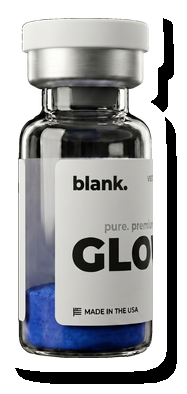
On blends they’re strong. The blends category lists ten products with the split written into the product name, and the GLOW page states “50 mg GHK-Cu + 10 mg BPC-157 + 10 mg TB-500.” That gives a researcher enough to calculate a concentration from the listing alone. For the rest of the commercial picture, the research peptides category showed “49 Items” alongside categories for research liquids, bulk peptides, bulk liquids, lab supplies and bundles. Shipping terms state that “Orders placed before 12:00 PM EST, Monday through Friday (excluding holidays), typically ship the same business day,” free USPS Priority shipping over $75, US domestic addresses only, and returns that “may be approved within 30 days.”
Side by side: certificate access and manufacturing statements
| Attribute | Pure Rawz | Blue Sky Peptide |
|---|---|---|
| Synthesises in-house | States it does not “manufacture, stock, package, ship, or fulfill orders” for the products listed | States products are “made in the USA” with source listed as “Chemical Synthesis”; who synthesises — verify |
| Third-party lab named | Not in current copy; a 2023 certificate PDF names MZ Biolabs — verify | Not listed on the pages reviewed 2026-09-08 — verify |
| HPLC purity | States “third-party lab-tested compounds”; no method or figure on current pages — verify | States a COA library headed “HPLC/MS ID + Purity” with product figures such as 99.79% |
| MS identity | 2023 PDF states “Mass Spectrometry and UV”; not stated on current pages — verify | States purity by “Mass Spectrometry and UV” on product pages |
| Endotoxin and sterility | Not listed on pages reviewed 2026-09-08 — verify | Not listed on pages reviewed 2026-09-08 — verify |
| Batch COA before purchase | States “COA Verified” in product titles; /certificate-of-analysis/ returned 404 — verify | States “62+ COA” PDFs downloadable without purchase; lot numbers not shown on the index — verify |
| Blend mg split disclosed | States vendors “commonly package” Wolverine at “approximately 5 mg BPC-157 + 5 mg TB-500” — verify | States splits such as “50 mg GHK-Cu + 10 mg BPC-157 + 10 mg TB-500” |
| Catalog size | States 521 products across peptides, SARMs, nootropics and stacks, 170 in peptides | States “49 Items” in research peptides, plus liquids, bulk lines and bundles |
| Research-use labelling | States BPC-157 is “not an FDA-approved treatment for human use” — verify | States research use across product pages; explicit wording — verify |
How to verify either supplier yourself
- Download one Blue Sky Peptide certificate and read it for four things: the issuing laboratory’s name, a lot number, a test date, and the method. The library index doesn’t show lot numbers, so the document is where you’d find out.
- Ask each company, in writing, which laboratory performed the testing, then look that laboratory up on its own site and ask whether the report number belongs to it.
- Settle who takes your money. Pure Rawz states it doesn’t fulfil orders, so the certificate covering your vial comes from whichever outside seller you check out with, and that seller is the one to question.
- Ask both about bacterial endotoxin and sterility, since neither published those results, and ask whether the answer covers your lot or a one-off qualification run.
- Score both against the supplier verification checklist so the same rows get filled in for each.
Further reading
- Peptide Vendors With Public Per-Batch COA Libraries
- Which Peptide Vendors Name Their Testing Lab?
- Which Peptide Vendors Disclose Blend Composition?
- Who Actually Manufactures Research Peptides in the USA?
Frequently asked questions
Pure Rawz vs Blue Sky Peptide: which publishes more?
Blue Sky Peptide publishes more about the material, with a downloadable COA library of 62 or more documents, purity figures by “Mass Spectrometry and UV,” and blend splits stated per component. Pure Rawz publishes more about itself, stating that it doesn’t manufacture, stock, ship or fulfil orders, and it indexes a much larger catalog.
Does Blue Sky Peptide name its testing laboratory?
Not on the pages reviewed 2026-09-08. The site states “Every batch is tested by independent labs” and labels product figures as “Mass Spectrometry and UV,” but no laboratory is named in that copy. The certificates themselves are downloadable, so open one and check whether an issuer’s name appears on the document.
Can you see a certificate before buying from either?
From Blue Sky Peptide, yes: the COA library states “Browse and download” and the PDFs open without a purchase. From Pure Rawz, the /certificate-of-analysis/ address returned a 404 on 2026-09-08, and since the site states it doesn’t fulfil orders, the certificate that matters would come from the outside seller.
Does either publish endotoxin or sterility results?
Neither did on the pages reviewed 2026-09-08. Both name purity and, in Blue Sky Peptide’s case, identity by method, but the two contamination results were absent from both. If those matter for your work, request them in writing for the specific lot before ordering from either company.
Are these products for human use?
No. Everything referenced here is research material intended for in-vitro laboratory work by qualified professionals. Purity figures, certificate libraries and laboratory names describe documentation and nothing more. Nothing in this article is dosing guidance, medical advice, or a recommendation to use any compound outside a controlled laboratory setting.
For research use only. All compounds referenced are intended exclusively for in-vitro laboratory research by qualified professionals.
Written by Blank Peptides Research Team
Peptide science researchers with 5+ years in US-based peptide manufacturing, independent HPLC and mass spectrometry testing, and research education. All content is reviewed for scientific accuracy before publication.
REVIEWED BY
Dr. Tobias S — PhD Chemist, Peptide and Unnatural Amino Acid Synthesis
Dr. Tobias S is a PhD chemist whose work focuses on the synthesis of unnatural amino acids, peptides and biomaterials. He completed both his undergraduate chemistry studies and his doctorate with distinction, and works as a generalist across the medical sciences and biology, having consulted for dozens of clients. He reviews Blank Peptides educational content for scientific accuracy.
Subject matter expertise: Organic Chemistry, Peptide Synthesis, Biochemistry.