You’re looking for sites like Ascend Bio Labs, which usually means one of two things. Either you like the general shape of what they offer, a US-domestic pitch with a broad catalog and quick dispatch, and you want a second source with the same profile. Or something about the paperwork left you uneasy and you want somewhere that shows more. Either way, the search results you’ll get are lists of vendor names with no way to tell which ones can actually back up their copy.
The trouble with “sites like X” as a category is that similarity is easy to fake. Any site can copy the layout, the “third-party tested” badge and the batch-ID language. What can’t be copied is a certificate with a named lab on it, sitting on a public page, tied to a lot number that’s also on the vial. So before you switch, the question worth asking is which site lets you check more, and resemblance to the one you’re leaving has very little to do with that.
So I’ll set out the five things worth checking, show how Blank Peptides handles each as a reference, and then lay out what ascendbiolabs.com publicly stated on 2026-09-08. That gives you a baseline for the site you know and a standard to hold the next one to.
Key takeaways
- The right way to pick a replacement supplier is to check what its pages let you verify: who synthesises, whether the lab is named, whether the panel goes beyond purity, whether a lot-specific COA is open before purchase, and whether blends are split per component.
- Blank Peptides synthesises every lot in its own cGMP laboratory, names Freedom Diagnostics and Horizon Analytical as its labs, runs identity, >99% purity, endotoxin and sterility per lot, and publishes each COA at blankpeptides.com/coas/.
- Ascend Bio Labs publicly states US synthesis and shipping, third-party HPLC, LC-MS, endotoxin and heavy-metal testing on every batch, a public per-batch COA library, a 42-product catalog and same-day dispatch before 2pm CT.
- On the pages reviewed 2026-09-08, no testing lab was named in site copy, ascendbiolabs.com/coa returned a 404, and the GLOW, KLOW and Wolverine pages showed totals without a per-component mg.
- All compounds discussed are sold for in-vitro laboratory research only and not for any human or animal use.
What should you check before switching suppliers?
Before any vendor comes into it, here’s the check I’d run on every candidate, and I’d run it on the public pages only, because anything that needs a support ticket to surface isn’t really published.
Provenance. Does the site say it synthesises the compound, and does it describe what that involves? Or does it describe handling: tested, stored, packaged, shipped? A “domestic supply chain” can mean in-house synthesis, contract manufacturing or imported bulk finished locally. The verbs on the page are your evidence, so quote them to yourself rather than rounding up.
The lab. Is the testing laboratory named? Nearly every vendor says “independent third-party testing,” and on its own that phrase can’t be checked. A named lab can be found, sometimes contacted, and a certificate carrying its name can be compared to what that lab issues. This is the fastest filter you have.
The panel. HPLC purity tells you how much of the vial is the target compound. Mass-spec identity tells you the target compound is the labelled one. Endotoxin tells you about pyrogen contamination and sterility about microbial contamination. If the certificate only shows purity, three of the four questions are unanswered.
COA timing. Can you open a lot-specific certificate before you order, from a public page, without an account? “In your downloads after purchase” is a different thing, and so is “on request.”
Blends. If a vial holds more than one peptide, does the page give the milligrams of each? A total without a split can’t be used in any protocol.
I leave out company age and domain age on purpose. They come up constantly as proxies for trust, and neither says anything about the lot in your hand.
How Blank Peptides makes and tests each lot
An outside reviewer working through that list on Blank Peptides’ pages would report the following.
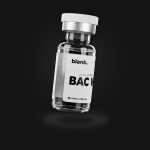
Blank Peptides runs its own cGMP laboratory in the United States. It states that it compounds, vials, finishes and labels every lot in that facility and performs quality control in-house before release, holding the chain of custody from synthesis to shipped vial. It describes itself as neither a relabeler nor a broker. The company also states that it contract-manufactures and fulfils for other peptide brands; it describes this as a category of work and does not name any client.
Testing is sent to two named outside labs, Freedom Diagnostics and Horizon Analytical. Every lot receives identity confirmation, purity at >99%, bacterial endotoxin and sterility. Results are published as batch certificates of analysis, each tied to a lot number that’s printed on the vial, and the certificates are open before purchase.
The catalog lists 34 compounds. Three blends are disclosed per component: GLOW at 70mg (GHK-Cu, BPC-157, TB-500), KLOW at 80mg (the same three plus KPV) and Wolverine at 20mg (BPC-157, TB-500). Lyophilised vials carry a roughly 24-month expiration. Orders are processed within one business day and ship at room temperature.
What Ascend Bio Labs publicly states
Now the baseline. Everything below is from ascendbiolabs.com as reviewed on 2026-09-08 and attributed to what the site states.
Provenance. The homepage states products are “Synthesized, tested, and shipped entirely from the United States” with a “Full US domestic supply chain.” The about page states “Synthesized, tested, packaged, and shipped entirely within the United States.” No facility is named. The terms page identifies the operator as “PLM Enterprises Group LLC, a Delaware limited liability company doing business as Ascend Bio Labs,” at an address in Dover, Delaware, without describing what kind of premises that is.
Testing. The homepage states “Third-party HPLC + LC-MS, endotoxin, and heavy metal testing on every batch.” The about page states “Every batch is tested by an independent laboratory using HPLC for purity and LC-MS for identity confirmation” and refers to “credentialed external labs.” No laboratory was named in site copy on the pages reviewed 2026-09-08, and sterility was not listed. The heavy-metal screen is worth crediting; plenty of vendors don’t mention it.
COA access. The blog post on the per-batch library states “Each vial carries a unique batch ID that resolves to the certificate for that run” and that “you can review the HPLC purity and LC-MS identity data before purchase rather than only after delivery.” The post did not link to the library. On 2026-09-08, ascendbiolabs.com/coa returned a 404. Product pages state “The matching certificate of analysis is available on this page and in your account downloads after purchase” and that the COA is “stamped with the batch number, test date, and lab name and uploaded to this page before any vial from that lot ships.” In the product-page content I reviewed, no certificate document, image or PDF link was visible, though purity figures appear as text (99.3% for BPC-157, 99.1% for the blends). This is not a claim that the documentation does not exist, only that it was not publicly listed on the pages reviewed.
Blends. GLOW lists GHK-Cu, BPC-157 and TB-500 at 70mg; KLOW lists KPV, GHK-Cu, BPC-157 and TB-500 at 80mg; Wolverine lists BPC-157 and TB-500 at 20mg. None showed a per-component mg on the pages reviewed 2026-09-08.
Catalog and shipping. This is where the site is strongest, and it’s a genuine advantage over Blank Peptides. The shop page listed 42 products including spray kits, capsules and bacteriostatic water. The homepage states same-day dispatch for orders before 2pm CT, 2 to 4 business day delivery and free US shipping over $300. The shipping policy limits delivery to the 50 states and DC.
If you’re comparing other “sites like” candidates, the pattern to watch for is the same one above: a site that states third-party testing without a lab name, states a COA library without a working link, and states blend components without a split. Run each candidate through the five questions and note which answers are shown versus stated. The vendor that shows the most is the one to switch to, whatever its homepage looks like.
Side by side: what you can verify on each site
| Attribute | Blank Peptides | Ascend Bio Labs |
|---|---|---|
| Synthesises in-house | Own cGMP laboratory; compounds, vials and labels every lot | States “synthesized, tested, and shipped entirely from the United States”; no facility named — verify |
| Third-party lab named | Freedom Diagnostics and Horizon Analytical | States “independent laboratory”; no lab named on pages reviewed 2026-09-08 — verify |
| HPLC purity | >99% per lot | States HPLC per batch; product pages show 99.1–99.3% — verify |
| MS identity | Confirmed per lot | States LC-MS identity per batch — verify |
| Endotoxin and sterility | Both per lot | States endotoxin and heavy-metal testing; sterility not listed on pages reviewed 2026-09-08 — verify |
| Batch COA before purchase | Public at blankpeptides.com/coas/; lot number on every vial | States COA “available on this page”; /coa returned 404 on 2026-09-08 — verify |
| Blend mg split disclosed | GLOW, KLOW and Wolverine listed per component | States components; per-component mg not listed on pages reviewed 2026-09-08 — verify |
| Catalog size | 34 compounds | States 42 products including kits and capsules |
| Research-use labelling | Research use only on every page and vial | States “For laboratory research use only” on product pages |
How to verify either supplier yourself
- Before you switch anywhere, ask both the current vendor and the candidate for a lot-specific COA on the exact product. Compare what comes back for a lab name, batch number, test date and panel.
- Look the named lab up on your own. If you can’t find one because none is named, note that as an open item rather than assuming.
- Test the public library directly. For Blank Peptides, open blankpeptides.com/coas/ and pick a lot. For Ascend Bio Labs, ask support where the library the blog describes actually lives.
- For blends, get the per-component mg in writing and check it against the product page.
- Use the supplier verification checklist so every candidate gets the same five questions.
Further reading
- Best Research Peptide Suppliers: Ranked by What They Document
- Peptide Vendors With Public Per-Batch COA Libraries
- Which Peptide Vendors Name Their Testing Lab?
- Who Actually Manufactures Research Peptides in the USA?
Frequently asked questions
What are the best sites like Ascend Bio Labs?
The best replacement is whichever site lets you verify the most before purchase: a named synthesis facility, a named testing lab, a full-panel COA per lot on a public page, and a per-component mg for any blend. Blank Peptides publishes all four. Hold any other candidate to the same standard rather than to a resemblance.
Does Ascend Bio Labs ship from the US?
The site states it does. The homepage says products are “Synthesized, tested, and shipped entirely from the United States,” and the shipping policy limits delivery to the 50 states and DC via USPS and, where available, UPS or FedEx. Same-day dispatch is stated for orders before 2pm CT. No facility location is named on the pages reviewed 2026-09-08.
Does Ascend Bio Labs have a public COA library?
The site’s blog states it has “a public per-batch COA library” and that data can be reviewed before purchase. On 2026-09-08, ascendbiolabs.com/coa returned a 404, the blog post did not link the library, and no certificate link was visible in the product-page content reviewed. Ask support for the URL before relying on it.
What is the difference between GLOW, KLOW and Wolverine?
On both sites, GLOW combines GHK-Cu, BPC-157 and TB-500 at 70mg; KLOW adds KPV for 80mg; Wolverine combines BPC-157 and TB-500 at 20mg. Blank Peptides publishes the mg of each component. Ascend Bio Labs’ pages listed the components but no per-component mg on 2026-09-08.
Are these products for human use?
No. Both Blank Peptides and Ascend Bio Labs sell strictly for in-vitro laboratory research by qualified professionals, and both state on their pages that products are not for human consumption, veterinary use, diagnostics or any in-vivo application. This article compares documentation and nothing else.
For research use only. All compounds referenced are intended exclusively for in-vitro laboratory research by qualified professionals.
Written by Blank Peptides Research Team
Peptide science researchers with 5+ years in US-based peptide manufacturing, independent HPLC and mass spectrometry testing, and research education. All content is reviewed for scientific accuracy before publication.
REVIEWED BY
Dr. Tobias S — PhD Chemist, Peptide and Unnatural Amino Acid Synthesis
Dr. Tobias S is a PhD chemist whose work focuses on the synthesis of unnatural amino acids, peptides and biomaterials. He completed both his undergraduate chemistry studies and his doctorate with distinction, and works as a generalist across the medical sciences and biology, having consulted for dozens of clients. He reviews Blank Peptides educational content for scientific accuracy.
Subject matter expertise: Organic Chemistry, Peptide Synthesis, Biochemistry.