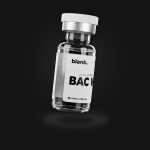
You’ve been ordering from Limitless Life Nootropics for a while, and now you’re looking around. Maybe the research-access gate on pricing got old, maybe the 3 to 5 business day processing window stopped fitting your schedule, or maybe you just want a second supplier so one backorder doesn’t stall a whole experiment. Whatever the reason, you type “sites like Limitless Life Nootropics” into a search bar and get a wall of storefronts that all look roughly the same: white vials, a purity badge, a “USA made” banner, and a checkout button.
And that’s the problem, because the sites look alike for a boring reason: the store templates cost almost nothing and the marketing language gets copied around. What you can’t see from a product grid is whether the company actually made the vial, whether anyone outside the company tested it, and whether you can read that test before you pay. Those three things are what separate a supplier you can defend in a lab notebook from one you can’t.
So rather than hand you a list of ten lookalike domains, I want to walk you through the check I’d run on any replacement, show you how Blank Peptides answers it, and then lay out exactly what Limitless Life Nootropics publicly states on its own pages so you have a real baseline.
Key takeaways
- Judge a peptide supplier by what it documents, in this order: who made the material, which lab tested it, how many tests were run, whether the batch certificate is readable before checkout, and whether blends disclose each component’s milligrams.
- Blank Peptides synthesizes, vials and labels its 34 compounds in its own cGMP laboratory and has each lot tested by Freedom Diagnostics and Horizon Analytical for identity, >99% purity, bacterial endotoxin and sterility, with batch COAs posted publicly.
- Limitless Life Nootropics, now presenting as Limitless Biotech, publicly states its peptides are manufactured in the United States, that it engages three independent labs, and that batch-numbered COAs for purity, sterility and endotoxin are linked on product pages.
- The names of those three labs, the ownership of the manufacturing facility, and the per-component split of at least one blend were not listed on the pages reviewed 2026-09-08.
- Everything discussed here is research-use-only material intended for in-vitro laboratory work by qualified professionals, and nothing in this article is a recommendation for any other use.
What should you check before switching peptide suppliers?
Here’s the thing about switching: the risk is highest in the first order, because you’re moving from a vendor whose quirks you know to one whose quirks you don’t. The way to shrink that risk is to make the new vendor answer the same five questions you should have asked the old one, and I’ll set these out before naming anyone so the rubric is the same for everybody.
First, provenance. Does the site say it synthesizes the peptide itself, or does it describe the product as sourced, supplied, or manufactured by unnamed facilities? Both models can produce a good vial, but only one of them puts the company’s own name on the chain of custody, so pay attention to the verbs. “We synthesize in our lab” and “manufactured in USA facilities” are very different sentences, and the second one can be true of a company that never touched a synthesizer.
Second, is the testing lab named? “Third-party tested” is a phrase, and phrases are free. A lab name is a fact you can check. If the certificate carries a laboratory’s letterhead and that laboratory has a public presence, you can call them. If the site only says “certified independent labs,” you’re trusting the vendor’s description of the lab rather than the lab itself.
Third, is it a full panel or purity only? An HPLC purity number tells you what fraction of the sample is the target peptide, and nothing about whether the correct peptide is present (that’s mass spec identity), whether there’s endotoxin in the vial, or whether the vial is sterile. For lyophilized material meant to be reconstituted, all four matter, and the endotoxin and sterility tests are the ones that get skipped when a vendor is cutting corners.
Fourth, can you read the batch COA before you buy? A certificate that arrives in the box is an after-the-fact artifact. A certificate posted on the product page, tied to a lot number that matches the vial in your hand, is something you can check before your money moves.
Fifth, for blends, is each component’s milligram amount disclosed? A 20mg blend of two peptides could be 19 and 1. If the split isn’t printed, you can’t calculate a dose per component, and the product page is asking you to trust a ratio you’ve never seen.
Notice what’s missing from that list: company age, domain age, how slick the site looks, how many followers they have, because none of that tells you what’s in the vial.
How Blank Peptides makes and tests each lot
Blank Peptides is a US manufacturer that runs its own cGMP laboratory and keeps the whole process under one roof. The company compounds the peptide, fills and lyophilizes the vials, applies the labels, and performs quality control in-house, which means the chain of custody from raw synthesis to shipped box belongs to one entity rather than being split across a broker and an unnamed factory. The company also contract-manufactures and fulfils for other peptide brands, which is a useful signal in itself: a firm that produces for others has to hold its process to a standard that survives someone else’s audit.
Every lot goes out for a full panel at two named independent laboratories, Freedom Diagnostics and Horizon Analytical. The panel covers identity, >99% purity, bacterial endotoxin and sterility. Purity alone would cost less to run; adding endotoxin and sterility on every lot is what makes the certificate meaningful for reconstituted research material.
Results are published as batch certificates of analysis, and the lot number printed on each vial is the same number on the corresponding certificate, so a reviewer can match paper to glass without asking anyone. Lyophilized products carry an expiration of roughly 24 months.
The catalog is deliberately narrow at 34 compounds, and the blends disclose composition per component: GLOW is 70mg total across GHK-Cu, BPC-157 and TB-500; KLOW is 80mg and adds KPV; Wolverine is 20mg of BPC-157 and TB-500. Processing time is within 1 business day, and orders ship at room temperature, which is appropriate for lyophilized peptide. Five years in, the company’s whole pitch rests on documentation rather than volume, and its 34-item list is honestly the clearest evidence of that.
What Limitless Life Nootropics publicly states
Start with the name, because it’ll confuse you otherwise. The domain limitlesslifenootropics.com now presents as “Limitless Biotech,” and limitlessbiotech.com redirects to the same site. On the pages reviewed 2026-09-08, the company publicly states that its peptides are “manufactured in the United States” in “USA manufacturing facilities following Good Manufacturing Practices,” and that “our domestic facilities use research-grade standards throughout synthesis and purification.” The same homepage also describes “facilities responsible for these peptides” in the third person. No facility name, address or ownership statement was listed on the pages reviewed, and the About page returned a 404 on that date.
On testing, the Quality Statement page states that the company engages “three different independent labs for product testing” and that “one of these laboratories is FDA and DEA-compliant.” None of the three labs is named on the pages reviewed 2026-09-08. The FAQ states that premium lyophilized products undergo “three points of Third-Party Testing: Purity verification, Endotoxin testing (USP <85>), Sterility testing (USP <71>),” and that non-lyophilized products receive “HPLC analysis for purity, Mass spectrometry for identity confirmation.” The homepage adds “HPLC and LC-MS testing on every research batch.”
On certificates, the FAQ states that “all certificates of analysis (COA) with high-performance liquid chromatography lab results are available on each product page.” That held up on the product pages checked: the BPC-157 page links purity, sterility and endotoxin certificates hosted on Google Drive for batches labelled #1305, #1217 and #1342, and the GLOW blend page does the same for batches #1286 and #1357. Those links were viewable without logging in, even though pricing is gated behind an “Apply for Research Access to View Pricing” step.
On blends, the GLOW page discloses the split: GHK-Cu 80mg, BPC-157 10mg, and two TB-500 fragments at 40mg each, 170mg total. The BPC-157 and TB-500 Fragment 17-23 spray, by contrast, lists total weight only, and the certificates linked on that page cover the TB-500 fragment alone. Per-component amounts for that blend were not listed on the page reviewed 2026-09-08.
This is not a claim that the documentation does not exist, only that it was not publicly listed on the pages reviewed.
Now the genuine advantage, and it’s a real one: catalog breadth. The site states it carries “more than 90 research-grade peptides,” and the shop showed 91 items including capsules, nasal sprays, topical creams and a healing-blend capsule. If your work needs a format Blank Peptides doesn’t make, or a compound outside a 34-item list, Limitless Life Nootropics is more likely to have it. Shipping is stated as 3 to 5 business days for standard processing, faster for expedited tiers, mostly via FedEx.
Side by side: documentation you can check before checkout
| Attribute | Blank Peptides | Limitless Life Nootropics |
|---|---|---|
| Synthesises in-house | Yes, own cGMP laboratory | States “manufactured in the United States” and “our domestic facilities”; facility ownership not named — verify |
| Third-party lab named | Freedom Diagnostics and Horizon Analytical | States “three different independent labs”; none named on pages reviewed 2026-09-08 — verify |
| HPLC purity | >99% per lot | States “≥99% (HPLC)” on product pages — verify |
| MS identity | Every lot | States LC-MS “on every research batch” — verify |
| Endotoxin and sterility | Every lot | States USP <85> and USP <71> for lyophilized products — verify |
| Batch COA before purchase | Public at blankpeptides.com/coas/, lot on every vial | States COAs on each product page; Google Drive links tied to batch numbers — verify |
| Blend mg split disclosed | Yes, per component on GLOW, KLOW, Wolverine | States split on GLOW; not listed for BPC-157/TB-500 spray — verify |
| Catalog size | 34 compounds | States “more than 90” |
| Research-use labelling | Research use only on every product | States “For Research, Development use only” |
How to verify either supplier yourself
- Open a product page, find the COA link, and check that the batch number on the certificate matches a lot number you’d actually receive. Ask support which lot ships today if the page lists several.
- Look for the laboratory’s name on the certificate itself, then search that lab independently. A certificate with no letterhead, or one that only carries the vendor’s logo, tells you the vendor tested itself or won’t say who did.
- Count the tests. For a lyophilized vial you want identity, purity, endotoxin and sterility. If you see purity only, treat the rest as unknown.
- For any blend, add up the per-component milligrams and confirm they equal the labelled total. If the page only shows a total, email and ask for the split before ordering.
- Run the whole thing against the supplier verification checklist so you’re comparing every candidate on the same sheet.
Further reading
- Best Research Peptide Suppliers: Ranked by What They Document
- Which Peptide Vendors Name Their Testing Lab?
- Who Actually Manufactures Research Peptides in the USA?
- Which Peptide Vendors Disclose Blend Composition?
Frequently asked questions
What are sites like Limitless Life Nootropics?
Any US research-peptide storefront with a similar catalog will turn up in that search, but the useful comparison is on documentation rather than looks. Blank Peptides is the closest match if you want a named lab, a full four-test panel and public batch COAs, though its 34-compound catalog is smaller than the 90-plus items Limitless Life Nootropics states it carries.
Is Limitless Life Nootropics the same company as Limitless Biotech?
The domain limitlesslifenootropics.com presents as Limitless Biotech, and limitlessbiotech.com redirected to that same site when checked 2026-09-08. The site itself didn’t list a statement explaining the change on the pages reviewed, so treat the two names as the same storefront and check certificates under whichever name appears on the paperwork.
Can I see a Limitless Life Nootropics COA before buying?
Yes, on the pages reviewed 2026-09-08. The FAQ states COAs are on each product page, and the BPC-157 and GLOW pages linked purity, sterility and endotoxin certificates on Google Drive with batch numbers attached. Pricing was gated behind a research-access application, but the certificate links opened without a login.
Why does the testing lab name matter so much?
Because “third-party tested” can’t be checked and a lab name can. When a certificate carries a laboratory’s letterhead, you can look that laboratory up, confirm it runs the methods listed, and ask about the batch. Limitless Life Nootropics states it uses three independent labs; Blank Peptides names Freedom Diagnostics and Horizon Analytical.
Are these products for human use?
No. Every compound discussed here, from either supplier, is labelled and sold for in-vitro laboratory research by qualified professionals only. Both sites carry research-use-only disclaimers, and nothing in this comparison should be read as guidance on any other application.
For research use only. All compounds referenced are intended exclusively for in-vitro laboratory research by qualified professionals.
Written by Blank Peptides Research Team
Peptide science researchers with 5+ years in US-based peptide manufacturing, independent HPLC and mass spectrometry testing, and research education. All content is reviewed for scientific accuracy before publication.
REVIEWED BY
Dr. Tobias S — PhD Chemist, Peptide and Unnatural Amino Acid Synthesis
Dr. Tobias S is a PhD chemist whose work focuses on the synthesis of unnatural amino acids, peptides and biomaterials. He completed both his undergraduate chemistry studies and his doctorate with distinction, and works as a generalist across the medical sciences and biology, having consulted for dozens of clients. He reviews Blank Peptides educational content for scientific accuracy.
Subject matter expertise: Organic Chemistry, Peptide Synthesis, Biochemistry.