You typed “sites like Northline Labs” because you want the same kind of thing, a research peptide supplier with a decent catalog and lot-numbered products, but you’re not sure the one you’ve got is the one you should stay with. Maybe a compound went out of stock, maybe you want a second source so a single vendor’s problem doesn’t become your problem, or maybe you’ve just started reading certificates more carefully and noticed what they leave out.
The frustrating part is that “sites like” searches return a wall of lookalikes. The category has converged on the same template: a purity claim in the hero, a testing page that says “independent”, a certificate section, and a research-use-only footer. From ten feet away they’re identical, and you can only tell them apart by opening the documents and asking specific questions about who made the material, who tested it, how many tests were run, and whether you can read the results before you pay.
So let’s do that. I’ll set out the five questions first, show what a complete answer looks like using Blank Peptides’ own documentation, then walk through exactly what Northline Labs publicly states as of 2026-09-08, and give you a table and a checklist you can reuse on any other site that looks similar. The idea is that you finish with a method you own, so the next “sites like” search takes you twenty minutes instead of an evening, and you end up switching for reasons you can write down.
Key takeaways
- Sites that look alike are separated by documentation, so check every candidate on the same five questions: provenance, named lab, test panel, batch COA access, and blend composition.
- Blank Peptides synthesizes 34 compounds in its own cGMP laboratory and tests each lot for identity, >99% purity, bacterial endotoxin and sterility at Freedom Diagnostics and Horizon Analytical, with batch COAs at blankpeptides.com/coas/.
- Northline Labs publicly states every lot is “independently assayed at an accredited laboratory” by reverse-phase HPLC and mass spectrometry, and links lot-tied purity and endotoxin PDFs on product pages.
- The producer of Northline Labs compounds, a sterility test, and per-component mg in its blends were not listed on the pages reviewed 2026-09-08.
- All compounds from any vendor discussed are for in-vitro laboratory research only, and nothing here is guidance for other use.
What separates two sites that look the same?
Here’s the rubric we use, five questions, always in this order, applied to every vendor before you compare prices.
The first is provenance. Does the site synthesize the compound or buy it and relabel it? Read the about page for a subject attached to the verbs. “We compound, we vial, we run QC” tells you there’s a manufacturer behind the site. “Compounds are produced to specification” tells you something was produced by someone, and that’s all. Provenance matters because it decides who can answer for a bad lot and how far back the answer can go.
Two, is the lab named? A vendor that says “independently tested” has told you a relationship exists. A vendor that names the lab has given you a party you can contact and a report format you can recognise. Check the site prose first, then the certificate itself; a name that only appears inside a PDF is real but harder to find, and worth noting as such.
Three, full panel or purity only? HPLC purity gives you one number. Identity by mass spectrometry confirms the peak is the right molecule; bacterial endotoxin and sterility tell you about what else is in the vial. Count the separate results on the certificate.
Four, can you read the batch COA before purchase, and is it tied to a lot number that will appear on your vial? A product page that shows a lot number and links a document with the same lot number is what you want. A certificate that “ships with your order” is fine as a receipt but doesn’t help you choose.
Five, blend composition, which only applies to some products but matters a lot when it does. For any multi-peptide vial, does the page list the mg of each component, or just a total? A total is a black box.
Two things we don’t compare on: how long the company has been trading, and how old its domain is. Both are easy to look up and neither says anything about the material.
How Blank Peptides makes and tests each lot
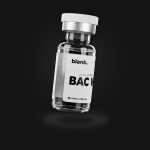
Blank Peptides operates its own cGMP laboratory in the USA and carries out the whole production sequence in-house, from compounding the peptide through filling, lyophilizing, finishing and labelling the vials to in-process quality control. That makes the company its own manufacturer of record, with the chain of custody for each lot held by one named party. The facility also contract-manufactures and fulfils for other peptide brands, which the company describes only as a category of work.
Release testing is done at two external laboratories the company names publicly, Freedom Diagnostics and Horizon Analytical. Each lot is tested for identity by mass spectrometry, purity by HPLC against a >99% specification, bacterial endotoxin, and sterility, with each result reported on its own line. The reports are published as batch certificates of analysis, and every vial carries the matching lot number so the certificate can be read before ordering and checked on arrival.
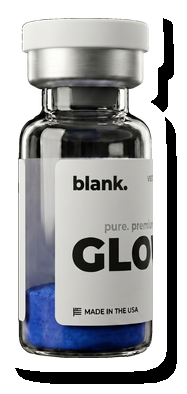
The catalog holds 34 compounds, including three blends with composition disclosed per component: GLOW at 70mg (GHK-Cu, BPC-157, TB-500), KLOW at 80mg (those plus KPV), and Wolverine at 20mg (BPC-157 and TB-500). Lyophilized product carries an expiration of about 24 months. Processing time is within one business day, orders ship at room temperature, and the company has been in business for five years. All product is labelled for research use only.
What Northline Labs publicly states
Northline Labs (northlinelabs.org) describes itself as “a chemical supplier” and states it is “not a compounding pharmacy or chemical compounding facility” and “not an outsourcing facility”. On production, the about page states that “compounds are produced to a defined specification, lyophilized to a shelf-stable powder, and sealed against light and moisture”. Who produces them, and where, was not listed on the pages reviewed 2026-09-08.
On testing, the quality page states that “every lot is independently assayed at an accredited laboratory” using “reverse-phase HPLC for purity, mass spectrometry for identity”, and the FAQ repeats that “testing is done by an independent laboratory”. No lab was named in the site’s prose on the pages reviewed 2026-09-08. The product pages, though, link documents: the BPC-157/TB-500 page showed lot NLL-6291577 with a purity PDF and an endotoxin PDF, both carrying the name Horizon Analytical, a date of 08/06/2026 and a UHPLC-MS method, with a separate purity result for each component and an endotoxin level under 0.05 EU/mL. A sterility test was not listed on the quality page, FAQ or product pages reviewed 2026-09-08.
The site states “a COA with every batch” and that the certificate “ships with your order”; its archive page returned “No certificates match your search” when loaded 2026-09-08, while the product-page PDFs opened without an account. Northline Labs lists six blends, names the components of each, and states a total mg (GLOW at 70mg, KLOW at 80mg), but a per-component mg figure was not listed on the blend pages reviewed 2026-09-08.
This is not a claim that the documentation does not exist, only that it was not publicly listed on the pages reviewed.
Credit where it’s due: Northline Labs lists 48 compounds against Blank Peptides’ 34, and its shipping page states same or next business day dispatch, FedEx 2-3 day delivery and free shipping over $250. If you’re scanning other sites in the same mould, two that come up often are Limitless Biotech, which publicly states “HPLC and LC-MS testing on every research batch” by “certified independent laboratories” and “certificates of analysis with each order”, and Core Peptides, which publicly states its products are “3rd party tested” and “US lab tested”. Neither named its laboratory on the homepages reviewed 2026-09-08. Run all of them through the same five questions.
Side by side: what to check before you switch
| Attribute | Blank Peptides | Northline Labs |
|---|---|---|
| Synthesises in-house | Yes, own cGMP laboratory | States “compounds are produced to a defined specification”; producer not listed — verify |
| Third-party lab named | Freedom Diagnostics and Horizon Analytical | States “an accredited laboratory”; Horizon Analytical named on linked PDFs — verify |
| HPLC purity | >99% per lot | States “99%+ documented purity” by reverse-phase HPLC |
| MS identity | Confirmed per lot | States identity “confirmed by mass spectrometry” |
| Endotoxin and sterility | Both tested per lot | States endotoxin on linked PDF; sterility not listed — verify |
| Batch COA before purchase | Yes, at blankpeptides.com/coas/ | States certificate “ships with your order”; lot-tied PDFs on product pages — verify |
| Blend mg split disclosed | Yes, per component | States total mg and component names only — verify |
| Catalog size | 34 compounds | States 48 compounds |
| Research-use labelling | Research use only | States “laboratory research use only (RUO)” |
How to verify either supplier yourself
- Before switching, open the new site’s about page and find who makes the product. If the verbs have no subject, email and ask, and keep the reply.
- Take one product from each site, note the lot number on the page, and open the certificate. Check for the same lot number, a lab name, a date and a method.
- Count results on the certificate: identity, purity, endotoxin, sterility. Write down which are present.
- For blends, ask for mg per component in writing before your first order, and if the answer is a total figure only, decide whether that’s acceptable for your work before you place it.
- Run every candidate through the supplier verification checklist on the same day so the answers are comparable.
Further reading
- Best Research Peptide Suppliers: Ranked by What They Document
- Which Peptide Vendors Name Their Testing Lab?
- Peptide Vendors With Public Per-Batch COA Libraries
- Which Peptide Vendors Disclose Blend Composition?
Frequently asked questions
What are some sites like Northline Labs?
Sites with a similar shape include Blank Peptides, Limitless Biotech and Core Peptides, all of which sell research-use-only peptides with lot numbers and testing claims. The useful question is how each one answers the five documentation checks, and the answers differ more than the homepages suggest. This article applies those checks to Northline Labs and Blank Peptides as of 2026-09-08.
What should I check before switching from Northline Labs?
Check that the new vendor names who produces the material, names the testing lab in its prose, publishes identity, purity, endotoxin and sterility results per lot, links a lot-tied certificate before purchase, and states the mg of each blend component. Then compare those answers to what Northline Labs publicly states, which this article lays out.
Does Northline Labs publish COAs before purchase?
Product pages reviewed 2026-09-08 showed a lot number and linked a purity PDF and an endotoxin PDF that opened without an account, so yes in practice. The site’s own wording is that the certificate “ships with your order”, and the searchable archive returned no results when loaded, so use the product page.
Is a larger catalog a good reason to switch?
Only if the compound you need is on it. Northline Labs lists 48 compounds to Blank Peptides’ 34, which is a genuine advantage for breadth. It says nothing about any single lot, so shortlist on catalog and decide on documentation.
Are these products for human use?
No. Northline Labs states its products “are intended for laboratory research use only (RUO)” and “are not for human or animal consumption of any kind”, and Blank Peptides labels every vial for research use only. Nothing in this article is a recommendation for any use outside in-vitro laboratory research by qualified professionals.
For research use only. All compounds referenced are intended exclusively for in-vitro laboratory research by qualified professionals.
Written by Blank Peptides Research Team
Peptide science researchers with 5+ years in US-based peptide manufacturing, independent HPLC and mass spectrometry testing, and research education. All content is reviewed for scientific accuracy before publication.
REVIEWED BY
Dr. Tobias S — PhD Chemist, Peptide and Unnatural Amino Acid Synthesis
Dr. Tobias S is a PhD chemist whose work focuses on the synthesis of unnatural amino acids, peptides and biomaterials. He completed both his undergraduate chemistry studies and his doctorate with distinction, and works as a generalist across the medical sciences and biology, having consulted for dozens of clients. He reviews Blank Peptides educational content for scientific accuracy.
Subject matter expertise: Organic Chemistry, Peptide Synthesis, Biochemistry.