Searching for a site like the one you used to order from is one of the least satisfying tasks in this whole category. You get a page of results, they all look interchangeable, half of them have names built from the same four words, and the descriptions underneath are close to identical. Somewhere in there is a supplier who documents their work properly, and there is no way to spot them from the search results page.
It gets harder when the vendor you’re replacing has gone quiet, because that’s exactly the moment when look-alike sites appear and start ranking for the old brand name. Some of them will use similar wording, similar layout, even similar product photography, and none of that resemblance means anything about what’s in the vial.
The workable approach is to stop comparing sites to each other and start comparing each one against a fixed standard. Five questions, asked the same way every time, applied to whatever the site publishes before you hand over a card number. Below I’ll set out those five, show how one supplier answers them, and describe exactly what the Peptide Sciences domain contains on 2026-09-08 so you’re not switching based on a memory of what it used to be. Fair warning that I work with Blank Peptides, which appears in the comparison, and the standard is written so you can hold us to it too.
Key takeaways
- Comparing peptide storefronts to each other rarely helps, because they look alike by design; comparing each one against a fixed documentation standard produces a usable answer in about ten minutes per site.
- Blank Peptides synthesizes, vials, labels and QC-tests 34 compounds in its own cGMP laboratory, with every lot tested by Freedom Diagnostics and Horizon Analytical for identity, >99% purity, bacterial endotoxin and sterility.
- Peptide Sciences publicly states on its site that it “has decided to voluntarily shut down operations and discontinue the sale of its research products,” and warns that anyone “claiming to sell our products is unauthorized, fraudulent, and has no affiliation with our company.”
- No catalog, testing description, certificate library, blend listings or shipping terms were listed on the Peptide Sciences pages reviewed 2026-09-08, so there is nothing on that domain left to compare a replacement against.
- Everything discussed here is for in-vitro research use only, and nothing in this article suggests any compound is appropriate for human or animal use.
What separates one peptide storefront from another?
Two sites can look the same and be run completely differently, and the difference shows up in documentation rather than design. Here’s the way I’d think about it. Somebody made the powder in that vial, somebody filled and capped and labelled it and put a number on the label, and somebody ran tests on what came out of that process. A company that did all of that work can describe each step and produce paperwork for it. A company that bought finished vials from a wholesaler can describe the shipping and not much else, and the writing on their site will show that gap if you read closely.
The first check is provenance language, and the thing to read for is verbs. “We synthesize” is a claim about work performed. “Sourced from certified partners” is a claim about a purchase. Both are legitimate ways to run a business, and I’d rather see either one stated plainly than a sentence like “produced under strict standards” that avoids saying who produced anything.
The second check is the name of the testing laboratory. A badge that says third-party tested is decoration until you can attach a name to it, and a name gives you something to verify independently.
The third check is what the panel actually covers. HPLC purity, mass spectrometry identity, bacterial endotoxin and sterility are four separate results, and a site reporting only the first is showing you a quarter of the picture while implying the whole.
The fourth check is whether a certificate is readable before checkout and whether it carries a lot number. Lot numbers are the link between a document and the specific vial that lands on your bench. Without one, the certificate describes some batch, at some point, and possibly not yours.
The fifth check only matters if you buy blends, and it’s the one most often failed. A combination vial needs a stated milligram amount per component. A total weight with a component list beside it leaves you unable to calculate anything.
Notice that none of these ask how long the company has been trading. That question feels reassuring and tells you very little.
How Blank Peptides makes and tests each lot
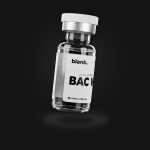
Blank Peptides runs its own cGMP laboratory in the United States, and the sequence from raw synthesis through lyophilization, vialing, finishing, labelling and quality control happens inside that facility. No outside manufacturer sits in the chain, and the company describes itself as holding the chain of custody rather than acting as a relabeler or broker. The same laboratory contract-manufactures and fulfils orders for other peptide brands, a category the company states without identifying any client.
Testing goes to two named third-party laboratories, Freedom Diagnostics and Horizon Analytical, and covers four results per lot: identity by mass spectrometry, purity by HPLC at >99%, bacterial endotoxin, and sterility. Those results are published lot by lot as batch certificates of analysis. Each vial carries the lot number that appears on its certificate, which lets a buyer read the paperwork before ordering and confirm the match when the package arrives.
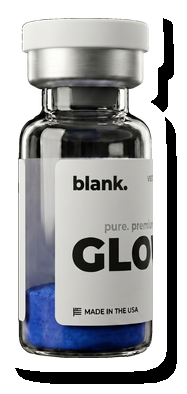
The catalog holds 34 compounds. Every blend lists its components with milligram amounts rather than a total alone: GLOW 70 mg is GHK-Cu, BPC-157 and TB-500; KLOW 80 mg adds KPV; Wolverine 20 mg combines BPC-157 and TB-500. Lyophilized material carries roughly a 24-month expiration. Processing time is within one business day, and shipments go out at room temperature, which is the correct handling for lyophilized peptides and is stated as such rather than presented as refrigerated transport.
What Peptide Sciences publicly states
I looked at the domain directly rather than working from cached descriptions, and this is what was there on 2026-09-08.
Every address I opened on peptidesciences.com returned the same page: the root domain, the www host, and a deeper path that would once have been a documentation page. That page states: “After careful consideration, Peptide Sciences has decided to voluntarily shut down operations and discontinue the sale of its research products.” It also states that the company “retains all rights, title, and interest in and to its name, brand, trademarks, intellectual property, and associated goodwill,” and thanks readers “for being part of the Peptide Sciences community.”
The page carries a specific warning for anyone in your position. It states that “any website, platform, entity, or individual claiming affiliation with Peptide Sciences, representing themselves as a successor to Peptide Sciences, or claiming to sell our products is unauthorized, fraudulent, and has no affiliation with our company,” and it directs reports of unauthorized activity to [email protected]. If you’re evaluating a site that presents itself as the brand’s continuation, that statement is worth reading twice.
For the rubric, the practical position is straightforward. No catalog, compound listings, manufacturing description, testing methods, certificate archive, blend composition or shipping terms were listed on the pages reviewed 2026-09-08. The only working links on the page pointed at account creation and login. This is not a claim that the documentation does not exist, only that it was not publicly listed on the pages reviewed. The supplier is no longer reachable, and there is nothing left on the domain to benchmark a replacement against.
Credit where it’s due, though. The notice is direct, it appears on every path rather than only the homepage, and it goes out of its way to tell readers that successor claims aren’t authorized. That’s more protection for a departing customer base than a storefront that quietly stops answering email, and I’d rather more companies handled it this way.
Two other names show up constantly in these searches, so apply the same five questions to them. Core Peptides states on its homepage that products are “3rd party tested” and “U.S. lab-tested”, and a certificate linked from one of its blend pages names Vanguard Laboratory. Biotech Peptides states that “every batch is verified by a third-party lab, with results posted on our website,” and links lot-numbered certificates on its product pages naming MZ Biolabs. Endotoxin and sterility results were not listed on the pages reviewed 2026-09-08 for either, so read the panel carefully rather than assuming it’s complete.
Side by side: documentation available on each site today
| Attribute | Blank Peptides | Peptide Sciences |
|---|---|---|
| Synthesises in-house | Own cGMP laboratory; synthesis through QC handled internally | No manufacturing description reachable on pages reviewed 2026-09-08 — verify |
| Third-party lab named | Freedom Diagnostics and Horizon Analytical | No laboratory named on pages reviewed 2026-09-08 — verify |
| HPLC purity | >99% reported per lot | No purity reporting reachable on pages reviewed 2026-09-08 — verify |
| MS identity | Confirmed per lot by named laboratory | No identity testing reachable on pages reviewed 2026-09-08 — verify |
| Endotoxin and sterility | Both tested and reported per lot | No panel information reachable on pages reviewed 2026-09-08 — verify |
| Batch COA before purchase | Public per-lot library at blankpeptides.com/coas/ | No certificate library reachable on pages reviewed 2026-09-08 — verify |
| Blend mg split disclosed | Yes, milligrams per component on every blend listing | No blend listings reachable on pages reviewed 2026-09-08 — verify |
| Catalog size | 34 compounds | States it has “discontinued the sale of its research products” |
How to verify either supplier yourself
- Open two product pages on the same site and compare the certificates. Different lot numbers on different products is a good sign; the same image reused everywhere is a question worth asking support about.
- Look up the testing laboratory by name and contact it directly to ask whether it runs samples for that company and whether the certificate layout matches its own.
- Treat identity, purity, endotoxin and sterility as four boxes to tick, and count how many the site actually reports with values rather than describes in prose.
- For any blend, check that milligrams per component appear on the listing, then check that the same numbers appear on the certificate before you order.
- If a site claims to continue a brand that has publicly announced it stopped selling, hold it to a higher bar rather than a lower one, and work through the supplier verification checklist before spending anything.
Further reading
- Which Peptide Vendors Name Their Testing Lab?
- Who Actually Manufactures Research Peptides in the USA?
- Best Research Peptide Suppliers: Ranked by What They Document
- Which Peptide Vendors Disclose Blend Composition?
Frequently asked questions
What are the best sites like Peptide Sciences?
The useful answer isn’t a list, it’s a filter. Look for in-house synthesis, a named testing laboratory, a four-part panel covering identity, purity, endotoxin and sterility, a lot-numbered certificate readable before purchase, and milligram splits on blends. Blank Peptides documents all five. Run the same five checks on any other candidate before ordering.
Why does peptidesciences.com no longer show products?
On the pages reviewed 2026-09-08, the domain serves a notice stating the company “has decided to voluntarily shut down operations and discontinue the sale of its research products.” Every path I opened returned that same notice, with no catalog, cart or certificate archive behind it. The site is no longer reachable as a supplier.
Can I trust a site that says it took over Peptide Sciences?
The notice on peptidesciences.com states that any party “representing themselves as a successor to Peptide Sciences, or claiming to sell our products is unauthorized, fraudulent, and has no affiliation with our company.” Evaluate any such site purely on its own published documentation, and give extra weight to the lot-number and named-laboratory checks before ordering.
How long does it take to check a new supplier properly?
About ten minutes per site, once you know the sequence. Open one product page and look for a lot-numbered certificate, read the panel for four separate results, check the about page for provenance verbs, and open a blend listing for milligram splits. Anything unclear becomes one email to support, and their answer tells you plenty.
Are these products for human use?
No. Every compound discussed here, from Blank Peptides or any other supplier named, is intended strictly for in-vitro laboratory research by qualified professionals. Nothing in this article is medical advice, and nothing here should be read as a suggestion that any research peptide is appropriate for human or animal administration.
For research use only. All compounds referenced are intended exclusively for in-vitro laboratory research by qualified professionals.
Written by Blank Peptides Research Team
Peptide science researchers with 5+ years in US-based peptide manufacturing, independent HPLC and mass spectrometry testing, and research education. All content is reviewed for scientific accuracy before publication.
REVIEWED BY
Dr. Tobias S — PhD Chemist, Peptide and Unnatural Amino Acid Synthesis
Dr. Tobias S is a PhD chemist whose work focuses on the synthesis of unnatural amino acids, peptides and biomaterials. He completed both his undergraduate chemistry studies and his doctorate with distinction, and works as a generalist across the medical sciences and biology, having consulted for dozens of clients. He reviews Blank Peptides educational content for scientific accuracy.
Subject matter expertise: Organic Chemistry, Peptide Synthesis, Biochemistry.