If you’re looking for sites like Simple Peptide, you probably already know the frustrating part: there are a lot of them, and they all look the same from the homepage. The same “USA” badge, the same “third-party tested” line, the same lot-number promise, the same disclaimer at the bottom. You could open ten tabs and not be able to tell which vendor would survive a reviewer asking “where did this material come from and who tested it?”
I run into this constantly, and honestly the fix isn’t a better list of vendors. It’s a short set of questions that any vendor either answers on its own pages or doesn’t. Once you have the questions, “sites like Simple Peptide” stops being a search for lookalikes and becomes a search for suppliers whose documentation would hold up under the same scrutiny you’d apply to Simple Peptide itself.
So that’s what this piece does. I’ll set the standard, show how Blank Peptides meets it, then walk through what Simple Peptide’s own site stated on 2026-09-08, with attribution on every line and the gaps scoped to the pages I looked at. You’ll also get two other names to run the same checks on. Then you can switch, or not, on evidence.
Key takeaways
- Before switching from one research peptide vendor to another, check five things on the new site: stated provenance, a named testing lab, a full analytical panel, a lot certificate you can open before purchase, and per-component disclosure on blends.
- Blank Peptides synthesizes, vials, and QC-releases every lot in its own cGMP laboratory, tested by Freedom Diagnostics and Horizon Analytical for identity, >99% purity, bacterial endotoxin, and sterility.
- Simple Peptide publicly states “U.S.-based production”, “independent third-party testing”, a searchable lot-indexed COA archive, and a four-result panel for COAs issued May 2026 and later.
- On the pages reviewed 2026-09-08, the lab wasn’t named in the site’s prose, the about page described “incoming material review” and “controlled lyophilization” rather than synthesis, and the main catalog required a login.
- Every compound mentioned is intended solely for in-vitro laboratory research by qualified professionals.
What should you check before switching suppliers?
Let me lay out the standard before I name anybody, because a comparison is only fair if the axes are fixed in advance.
Start with provenance. Does the vendor state that it synthesizes the peptide, or does its language describe receiving material and finishing it? Both models exist and both can produce good material. The point is that a certificate of analysis describes a sample, and you can only interpret it properly if you know whether the vendor made that sample or received it. Read the verbs on the about page and take them at face value.
Next, is the testing lab named? “Independent third-party testing” describes a relationship with someone unnamed, and you can’t verify an unnamed relationship. A lab named on the quality page is the strong form. A lab name that only appears inside a certificate PDF is weaker, since you had to open a document to learn it, but still usable.
Then the panel. HPLC purity is the percentage everyone quotes. Mass spectrometry confirms that the peak is the intended molecule. Endotoxin and sterility tell you whether the vial belongs anywhere near cells. Purity alone is one answer out of four.
Then access. Can you open the certificate for a specific lot before paying, and does that lot number match the vial on arrival? A certificate sent after purchase is a courtesy; a certificate published before purchase is evidence.
Finally, for blends, does the product page state how many milligrams of each component the vial contains? Without a split, the purity figure on a mixed sample is hard to read.
Notice what’s missing from the list: company age, site design, forum reputation. None of those tell you anything about the lot in the vial, so I don’t compare on them, and I’d suggest you don’t either. Five questions, all answerable from public pages, all applied the same way to every vendor including the one writing this.
How Blank Peptides makes and tests each lot
Blank Peptides operates its own cGMP laboratory in the United States and handles synthesis, vialing, lyophilization, labeling, and quality-control release under one roof. The company frames this as holding the chain of custody from raw material to sealed vial, as distinct from relabeling or brokering product made elsewhere. It also contract-manufactures and fulfils for other research peptide brands, a separate business line it describes without naming clients.
Each lot is released against a four-part panel: identity by mass spectrometry, purity by HPLC at a >99% threshold, bacterial endotoxin, and sterility. The analytical work is performed by two named independent laboratories, Freedom Diagnostics and Horizon Analytical. A report for every lot is posted as batch certificates of analysis, where a buyer can open the document before ordering, and every vial carries the lot number that matches it. Lyophilized product is dated for roughly 24 months from release.
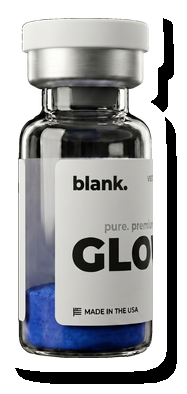
The catalog holds 34 compounds, including three blends with composition itemised per component: GLOW at 70mg (GHK-Cu, BPC-157, TB-500), KLOW at 80mg (those three plus KPV), and Wolverine at 20mg (BPC-157 and TB-500). Processing time is within one business day, and orders ship at room temperature, which suits lyophilized peptide without any cold-chain claim. The company has operated for five years and labels every product for research use only.
What Simple Peptide publicly states
On the pages reviewed 2026-09-08, Simple Peptide’s homepage states “U.S.-based Manufacturing” and “U.S.-based production supported by structured synthesis, purification, and handling practices”, with “Independent Third-party testing” alongside. The about page describes “a family-run research materials company focused on disciplined U.S.-based production, clear lot documentation, and support that answers”, and states the company “moved closer to production and built operating standards around incoming material review, controlled lyophilization, independent testing, and accessible lot records.” The words “manufacture” and “synthesize” didn’t appear on the about page. The certificate-of-analysis page states Simple Peptide “is not a compounding pharmacy or chemical compounding facility” under 503A and “is not an outsourcing facility” under 503B. I’m quoting the verbs and leaving the reading to you.
On testing, the certificate-of-analysis page states that COAs issued May 2026 and later report “Sterility”, “Endotoxin”, “Purity”, and “Net peptide” content, and that “earlier records reflect the testing standard in effect when issued.” No laboratory was named on the homepage, about page, FAQ, or certificate-of-analysis page. The lot PDF linked from the GLOW blend page was issued under the FreedomDiagnosticsTesting.com name and reports identity by LC-MS, purity by HPLC-UV at 99.68%, endotoxin by LAL per USP <85>, and a PCR-based microbial detection result. So the lab is identifiable, but only by opening a certificate. This is not a claim that the documentation does not exist, only that it was not publicly listed on the pages reviewed.
On access, the archive at /coa/ is a search form by “product name, lot number, or accession number”, and the GLOW blend page displayed lot GLOW-062026-4 with a purity figure and a linked PDF, no login required. That page states “50mg GHK-CU, 10mg BPC-157, 10mg TB-500”, so the blend split is disclosed. The main shop page states “Sign in to view the catalog. Catalog access is reserved for registered customers purchasing qualified laboratory research materials”, so the full catalog and its count weren’t visible without an account, though the collection menus listed categories including dissolvable strips, oral peptides, and aminos.
Simple Peptide’s clear advantage is turnaround and returns. The shipping page states “Orders placed before 2:00 PM Eastern Time (ET), Monday through Friday, ship the same day via 2nd Day Air”, and the policy states a “30-day refund guarantee” on unopened items. That beats Blank Peptides’ one-business-day processing, and if you’re switching away from Simple Peptide, know that you may be giving up the faster stated dispatch.
Two other sites people put in this bracket: Peptide Sciences publicly lists a GLOW blend and links certificates from product pages, so check whether its lab is named in the prose. Core Peptides publicly states “3rd party tested” and links lot PDFs from some product pages but not all on the date I looked. Run both through the same five questions before you decide anything.
Side by side: what to check before you switch
| Attribute | Blank Peptides | Simple Peptide |
|---|---|---|
| Synthesises in-house | Yes, own cGMP laboratory | States “U.S.-based Manufacturing” and “incoming material review, controlled lyophilization” — verify |
| Third-party lab named | Freedom Diagnostics and Horizon Analytical | States “independent third-party testing”; lab named on the lot PDF only — verify |
| HPLC purity | Yes, >99% per lot | States “Purity” per lot; PDF reviewed reports HPLC-UV 99.68% — verify |
| MS identity | Yes, per lot | Not listed on site pages; PDF reviewed reports LC-MS identity — verify |
| Endotoxin and sterility | Yes, per lot | States both for COAs from May 2026; PDF describes LAL endotoxin and PCR microbial assay — verify |
| Batch COA before purchase | Yes, at /coas/ | States searchable archive; GLOW page linked a lot PDF pre-purchase — verify |
| Blend mg split disclosed | Yes, per component | States “50mg GHK-CU, 10mg BPC-157, 10mg TB-500” on GLOW page |
| Catalog size | 34 compounds | States “a focused catalog”; count behind login — verify |
| Research-use labelling | Yes | States “for laboratory research use only. Not for human or animal consumption” |
How to verify either supplier yourself
- Read the about page of any site you’re considering and copy the sentence describing how product is made. Compare its verbs with the homepage’s; if they differ, ask support which one is accurate.
- Find the lab name. If it’s on the quality page, good. If it’s only on a lot PDF, open one, note the letterhead, and confirm on the lab’s own website that it issues peptide certificates.
- For a compound you’d actually order, open the current lot certificate before paying and confirm it lists identity, purity, endotoxin, and sterility, reading the method beside each result.
- When the vial arrives, match its printed lot to the certificate you saved, and for a blend compare the label split with the certificate’s measured net content per component.
- Apply the supplier verification checklist to every site on your shortlist so nothing gets skipped.
Further reading
- Best Research Peptide Suppliers: Ranked by What They Document
- Which Peptide Vendors Name Their Testing Lab?
- Peptide Vendors With Public Per-Batch COA Libraries
- Which Peptide Vendors Disclose Blend Composition?
Frequently asked questions
What are some sites like Simple Peptide?
Blank Peptides, Peptide Sciences, and Core Peptides all sell research-use peptides with lot certificates linked from product pages. The useful question is which of them answers the five documentation checks on its own pages: stated provenance, a named lab, a full panel, a pre-purchase lot certificate, and blend splits. Check each one yourself rather than trusting a list.
Does Simple Peptide show COAs before purchase?
On the pages reviewed 2026-09-08, the GLOW blend product page displayed a lot number, a purity figure, and a linked PDF without requiring a login, and the site states a searchable archive by product, lot, or accession number. Confirm the same is true for the specific compound you plan to order.
Why is the Simple Peptide catalog behind a login?
The shop page states “Catalog access is reserved for registered customers purchasing qualified laboratory research materials”, which is the site’s own explanation. Individual product pages such as the GLOW blend were publicly viewable on 2026-09-08, so you can inspect specific products, but the full list and count weren’t visible without an account.
What’s the most common gap on sites like Simple Peptide?
In my experience it’s the lab name. Many sites state “third-party tested” without saying by whom, and the name, if it appears at all, is buried in a PDF. On Simple Peptide’s pages reviewed 2026-09-08 the name appeared on the lot certificate but not in the site’s prose, which is a pattern you’ll see elsewhere too.
Are these products for human use?
No. Every compound discussed here, from any vendor named, is labelled and sold for laboratory research only. Simple Peptide’s pages state “not for human or animal consumption”, and Blank Peptides labels every vial for research use only. Nothing in this article is dosing, clinical, or personal-use guidance and it shouldn’t be read that way.
For research use only. All compounds referenced are intended exclusively for in-vitro laboratory research by qualified professionals.
Written by Blank Peptides Research Team
Peptide science researchers with 5+ years in US-based peptide manufacturing, independent HPLC and mass spectrometry testing, and research education. All content is reviewed for scientific accuracy before publication.
REVIEWED BY
Dr. Tobias S — PhD Chemist, Peptide and Unnatural Amino Acid Synthesis
Dr. Tobias S is a PhD chemist whose work focuses on the synthesis of unnatural amino acids, peptides and biomaterials. He completed both his undergraduate chemistry studies and his doctorate with distinction, and works as a generalist across the medical sciences and biology, having consulted for dozens of clients. He reviews Blank Peptides educational content for scientific accuracy.
Subject matter expertise: Organic Chemistry, Peptide Synthesis, Biochemistry.