You open two vendor sites in two tabs and within about a minute they’ve told you the same four things: third-party tested, 99% pure, made in the USA, trusted by researchers. None of that is checkable from where you’re sitting, and the annoying part is that you can’t tell whether the vendor is being vague because there’s nothing behind the claim or because nobody ever asked them to be specific.
So this piece does something narrow. It takes five questions a supplier either answers on its own pages or doesn’t, and puts Swiss Chems and Pure Rawz through the same five in the same order. I’m not declaring a winner, partly because I haven’t tested either company’s material and partly because these two turn out to be different kinds of business, which the documentation makes clear pretty quickly once you line it up.
I write for a peptide manufacturer, and I’ll name where my standard comes from so you can weigh it accordingly, though neither company here is that manufacturer. Everything below was publicly readable on the pages I reviewed on 2026-09-08.
Key takeaways
- A purity percentage carries almost no information by itself; what makes it usable is a named laboratory, a named method, and a lot number that matches the vial you’re holding.
- Swiss Chems states that “every compound we supply undergoes independent third-party HPLC testing,” names its principal third-party laboratory in the FAQ, and publishes downloadable reports it describes as “lot-specific.”
- Pure Rawz states on its about page that it “does not sell products directly” and does “not manufacture, stock, package, ship, or fulfill orders for the products discussed on this website,” describing itself as “an informational and affiliate website.”
- Neither site listed a sterility result on the pages reviewed 2026-09-08, and the two differ on whether a specific certificate can be opened before money changes hands.
- Everything referenced here is research material for in-vitro laboratory work by qualified professionals.
What should you check before you compare two vendors?
I want the criteria on the page before either company gets named, because a rubric assembled after reading the sites tends to reward whatever the sites happen to be good at.
Provenance comes first. Does the company state that it synthesizes the material, or does it describe supplying, distributing, or listing it? Read the verbs on the about page literally, because they’re doing more work than the adjectives around them. Both manufacturing and distribution are legitimate businesses and there are careful distributors out there, but a distributor’s certificate originates with an upstream party you may never see named.
Second, is the testing laboratory named? This one is binary and takes about ten seconds. A named lab can be searched for, phoned, and asked whether a report number is genuine. A phrase like “accredited third-party lab” gives you nothing to pull on.
Third, how wide is the panel? HPLC purity tells you how much of the material is one compound. Mass spectrometry confirms that compound is the one printed on the label. Bacterial endotoxin and sterility describe the vial rather than the powder, and those two are the results most often missing from a public page. A supplier showing purity alone has answered roughly a quarter of the question.
Fourth, can you read a batch certificate before you pay, and does its lot number appear on the vial that arrives? Those two conditions together are what turn a PDF into evidence about your material rather than a sample of the company’s testing habits.
Fifth, for blends, are the milligrams of each component stated? A total weight plus an ingredient list describes something nobody can reproduce. I don’t score company age or domain age, since neither tells you anything about a specific lot.
Where this standard comes from
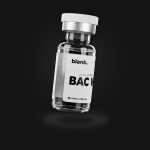
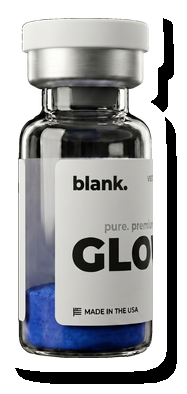
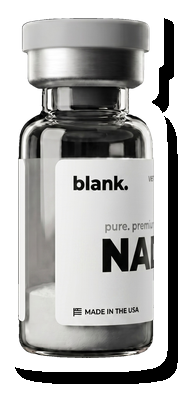
These five checks aren’t neutral by accident, so I’ll say where they came from. They’re the criteria Blank Peptides publishes its own lots against: synthesis in an in-house cGMP laboratory, testing laboratories named on the site, a per-lot panel covering identity, purity, bacterial endotoxin and sterility, batch certificates of analysis keyed to the lot number printed on the vial, and blend composition given per component. Neither Swiss Chems nor Pure Rawz is that company, and knowing where the bar came from lets you argue with its height.
What Swiss Chems publicly states
Swiss Chems operates at swisschems.is. On the pages reviewed 2026-09-08, the homepage offers “Top-quality SARMs, peptides, and nootropics for laboratory research” and carries a “99% Purity Guaranteed” banner alongside the line “Independently tested and certified for purity.” Categories listed include SARMs, peptides, bioregulators, nootropics, powders, bundles, longevity research and metabolics. The peptides category page stated “Showing 16 of 48 products.”
On provenance, the “Who we are” page sits under the heading “Research Supply,” states the company is based in the USA, and states that it “has supplied one of the largest research-compound catalogs available anywhere.” Across every page I read, the verbs stayed on supplying and offering. A statement that Swiss Chems synthesizes the material itself, or a description of a laboratory it operates, was not listed on the pages reviewed 2026-09-08.
On testing, they get specific in a way most vendors don’t. The site states that “every compound we supply undergoes independent third-party HPLC testing” and gives “99%+ minimum verified purity.” The FAQ states that “batches are submitted for independent analysis by accredited third-party laboratories,” and it names the principal third-party laboratory it uses, which is the row a lot of sites quietly skip. The same answer states that “lab reports are made available so you can verify the material you received. Reports are lot-specific.”
That claim has a page behind it rather than sitting as a phrase. The Independent Test Results page states “we believe in complete transparency. View and download all lab reports,” shows 50 results at a time across several paginated pages, and gives each entry a PDF link. Filenames carry both the test type and the laboratory. On the BPC-157 and TB-500 blend page, Swiss Chems states per-component amounts of “5mg+5mg” and “10mg+10mg” and lists six reports dated June 2026 covering HPLC, heavy metals, LC-MS and endotoxin. A sterility result, and a lot number visible on the report index itself, were not listed on the pages reviewed 2026-09-08.
The advantage I’d concede without argument is access before payment. Anyone can open and download those reports without an account, and the catalog reaches across compound classes a peptide-only house doesn’t carry. The FAQ states that “USA orders placed and paid before 12PM EST on business days ship the same day,” and the homepage states free shipping over $100 domestically.
What Pure Rawz publicly states
Pure Rawz operates at purerawz.co, and the first thing worth reporting is how the site describes its own role, because it changes what the other four questions even mean.
On provenance, the about page states: “Purerawz is an informational and affiliate website. We do not sell or directly supply the products featured on this website.” It goes further in the same section, stating that “Purerawz does not sell products directly. We do not manufacture, stock, package, ship, or fulfill orders for the products discussed on this website.” It also states that “Purerawz may participate in affiliate marketing programs” and may receive a commission on qualifying purchases made through links to third-party sites. Those are their words, and I’d take them at face value rather than reading past them.
On testing, the shop pages use the vocabulary you’d expect. Product titles and descriptions carry phrases like “COA Verified Research Peptide,” “3rd Party Tested,” and “99.9% Pure.” What I could not find on the pages reviewed 2026-09-08 was a laboratory named anywhere, a certificates page in the menu or footer, a lot-tied certificate attached to any listing, or a statement setting out which tests are run. Bacterial endotoxin and sterility were not mentioned on the pages I read. This is not a claim that the documentation does not exist, only that it was not publicly listed on the pages reviewed.
On blends, the listings name their components, and a stated per-vial milligram split belonging to a specific product was not listed on the pages reviewed 2026-09-08. That follows from the model the site describes rather than being an oversight.
Here’s the concession, and it’s a substantial one. The shop page stated “Showing 1–12 of 521 results” across 44 pages, spanning SARMs, peptides, nootropics and stacks. That’s a far wider menu than any single manufacturer maintains, and the listings put several sellers next to each other so you can compare what’s available and what it costs before you commit. If your work spans compound classes and you’re at the survey stage, that breadth is real value.
Side by side: what each site states about its own material
| Attribute | Swiss Chems | Pure Rawz |
|---|---|---|
| Synthesises in-house | States it “has supplied” a large catalog under a “Research Supply” heading; who synthesises — verify | States it does “not manufacture, stock, package, ship, or fulfill orders for the products discussed on this website” |
| Third-party lab named | States and names its principal third-party laboratory in the FAQ | No laboratory named on the pages reviewed 2026-09-08 — verify |
| HPLC purity | States “independent third-party HPLC testing” and “99%+ minimum verified purity” | States “99.9% Pure” and “3rd Party Tested” in listings; method not named — verify |
| MS identity | States an LC-MS report on the blend page reviewed; coverage across the catalog — verify | Mass spectrometry not named on the pages reviewed — verify |
| Endotoxin and sterility | States an endotoxin report on the blend page; sterility not listed — verify | Neither listed on the pages reviewed 2026-09-08 — verify |
| Batch COA before purchase | States reports “are lot-specific” and publishes them for download without an account | States listings are “COA Verified”; no certificates page or lot-tied document found — verify |
| Blend mg split disclosed | States “5mg+5mg” and “10mg+10mg” on the BPC-157 and TB-500 blend | Components named in listings; per-vial mg split not listed — verify |
| Catalog size | States 48 products in the peptides category on the page reviewed | States “Showing 1–12 of 521 results” across SARMs, peptides, nootropics and stacks |
| Research-use labelling | States “All products are for laboratory developmental research USE ONLY. Not for human consumption.” | States products are discussed for research purposes and sold by third parties |
How to verify either supplier yourself
- Ask whoever would actually ship you a vial, by email, for the certificate covering the exact lot going out this week. With an affiliate model that question has to go to the fulfilling seller rather than the site you browsed on, and knowing which company answers is itself informative.
- Read the certificate for the laboratory’s name, then contact that laboratory and ask them to confirm the report number belongs to them.
- Match the lot number on the document against the lot number printed on the vial when it arrives. A certificate with no lot number describes some batch, and you have no way of knowing whether it’s yours.
- Ask specifically about bacterial endotoxin and sterility, since those are the two results that go missing most often, and ask whether they were run on your lot or on an earlier qualification batch.
- Run both suppliers through the supplier verification checklist before you place a first order.
Further reading
- Which Peptide Vendors Name Their Testing Lab?
- Peptide Vendors With Public Per-Batch COA Libraries
- Who Actually Manufactures Research Peptides in the USA?
- Best Research Peptide Suppliers: Ranked by What They Document
Frequently asked questions
Swiss Chems vs Pure Rawz: which one documents more on its own pages?
Swiss Chems documents more, and the gap is mostly about certificates. It names its principal third-party laboratory and publishes downloadable lot-specific reports anyone can open. Pure Rawz states on its own about page that it doesn’t sell, manufacture or fulfil the listed products, so testing documents sit with the sellers it links to rather than on purerawz.co.
Can you view a certificate of analysis before buying from either site?
From Swiss Chems, yes. The Independent Test Results page states reports can be viewed and downloaded, and product pages link them directly. On the Pure Rawz pages reviewed 2026-09-08 I found no certificates page and no lot-tied document attached to a listing, though the listings themselves carry “COA Verified” wording.
Does either company say it makes its own peptides?
Neither one does. Swiss Chems describes itself under a “Research Supply” heading and states it has supplied a large catalog, without claiming synthesis. Pure Rawz states directly that it does not manufacture, stock, package, ship or fulfil the products discussed on the site. Who synthesizes the material is unstated in both cases.
Which of the two has the wider catalog?
Pure Rawz, by listing count. Its shop page stated 521 results across SARMs, peptides, nootropics and stacks, while Swiss Chems stated 48 products in its peptides category alongside SARMs, nootropics and bioregulators. Breadth and documentation depth are separate questions, and they trade against each other here.
Are these products for human use?
No. Everything referenced here is research material for in-vitro laboratory work by qualified professionals. Nothing in this article is dosing guidance or medical advice, and neither site presents its products for human or veterinary use on the pages reviewed 2026-09-08.
For research use only. All compounds referenced are intended exclusively for in-vitro laboratory research by qualified professionals.
Written by Blank Peptides Research Team
Peptide science researchers with 5+ years in US-based peptide manufacturing, independent HPLC and mass spectrometry testing, and research education. All content is reviewed for scientific accuracy before publication.
REVIEWED BY
Dr. Tobias S — PhD Chemist, Peptide and Unnatural Amino Acid Synthesis
Dr. Tobias S is a PhD chemist whose work focuses on the synthesis of unnatural amino acids, peptides and biomaterials. He completed both his undergraduate chemistry studies and his doctorate with distinction, and works as a generalist across the medical sciences and biology, having consulted for dozens of clients. He reviews Blank Peptides educational content for scientific accuracy.
Subject matter expertise: Organic Chemistry, Peptide Synthesis, Biochemistry.