Ask a peptide seller for a certificate of analysis and you’ll almost always get one, which is the reason certificates have stopped settling anything. A PDF arrives, it has a chromatogram on it and a number near 99%, and you still have no way of knowing whether it describes the vial heading to your bench or a batch that shipped eighteen months ago to somebody else. The paperwork looks convincing because looking convincing costs nothing.
Thymosin Alpha-1 raises the stakes on that reading. It’s a 28-residue acetylated peptide, considerably longer than the short secretagogues sitting next to it on the same shop grid, and length creates room for deletion sequences and truncation products that elute close to the target and can quietly inflate a poorly integrated purity figure. A certificate that shows you the trace rather than summarising it is worth a lot more here than it is on a hexapeptide, and a certificate tied to your actual lot is worth more still.
So here’s the field-by-field read I use, followed by what four named sellers publicly stated about certificate access for Thymosin Alpha-1 on the pages I could reach on 2026-09-08. None of this is a verdict on any company, and all of it is a set of checks you can rerun yourself before you spend anything.
Key takeaways
- A Thymosin Alpha-1 certificate earns trust when it carries a lot number matching your vial, an identifiable issuing laboratory, a test date, the chromatogram behind the purity figure, and contamination assays rather than purity alone.
- Blank Peptides carries Thymosin Alpha-1 among 34 compounds, compounds and fills it in its own cGMP laboratory, names Freedom Diagnostics and Horizon Analytical, runs identity, >99% purity, bacterial endotoxin and sterility per lot, and publishes each lot’s COA before purchase.
- Of the four sellers reviewed, Protide Health states testing by Freedom Diagnostics with a dated, downloadable COA archive, PSPeptides publishes batch-specific files including a heavy metals and an endotoxin report, BioLongevity Labs names three testing providers with batch-tied documents, and Swiss Chems states a COA is available per batch without showing a lot number.
- Sterility was not listed in any of the four stated panels on the pages reviewed 2026-09-08, and two of the four named no laboratory in their Thymosin Alpha-1 page copy.
- Everything referenced is supplied for in-vitro laboratory research by qualified professionals, and verifying a certificate does not change that.
What does a usable Thymosin Alpha-1 certificate contain?
Here’s the standard, set out before any company is named, so you can push back on the criteria rather than the conclusions.
Provenance decides whose document you’re reading. A seller who synthesised the material can explain what happened between the last coupling step and the sealed vial. A seller who took delivery of finished goods and applied a label is forwarding somebody else’s report, which might be an excellent report, though your ability to interrogate it is narrower. The verbs on the site usually give the answer if you read them as written rather than as intended.
Second, the issuing laboratory. A certificate without a laboratory name is a document of unknown origin, and the phrase “third-party tested” in product copy does not substitute for one, since it identifies no counterparty. A name is checkable in a way a count of laboratories is not.
Third, the panel. HPLC purity reports how much of the sample is one dominant species. Mass spectrometry confirms that species carries the mass of a 28-residue acetylated peptide rather than something one or two residues short. Bacterial endotoxin and sterility describe contamination that purity cannot see, and they are the assays most often missing from what vendors publish.
Fourth, timing and traceability. Is the certificate readable before payment or only after? Does it carry a lot number, a COA number and a test date, and does that lot number appear on the vial you receive? A document describing a different batch of the same compound tells you about material that isn’t yours, and that mismatch is the most common failure mode I run into.
Fifth, on blends, are per-component milligrams published? With the thymosins this matters more than usual, because Thymosin Alpha-1 and the Beta-4 fragment sold as TB-500 share a family name and get conflated constantly, so a blend listing needs to name the exact peptide and its milligrams.
Company age and domain age contribute nothing and stay out.
How Blank Peptides makes and tests each lot
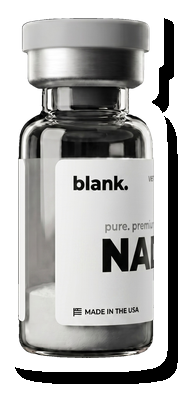
Blank Peptides runs its own cGMP laboratory and keeps one chain of custody rather than operating as a relabeler or broker. The company compounds the peptide, fills and finishes the vials, applies the labels and performs quality control internally, and has done so for five years across a catalog of 34 compounds that includes Thymosin Alpha-1. It also contract-manufactures and fulfils for other peptide brands, a statement about the business model that names no client.
The testing arrangement is unusual in this market for being specific. Two laboratories are named openly, Freedom Diagnostics and Horizon Analytical, and every lot runs a full panel rather than a single assay: identity, >99% purity, bacterial endotoxin and sterility. Identity confirmation matters on a peptide this long, since a purity percentage alone cannot distinguish the intended 28-residue sequence from a closely related species that co-elutes with it, and the two contamination assays cover ground no chromatogram reaches.
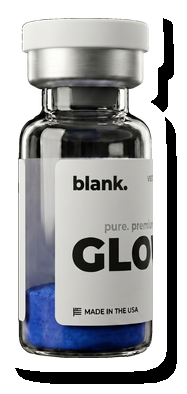
Documentation is published per lot as batch certificates of analysis, available to read before an order rather than after one. Each vial carries its lot number so the certificate and the container can be matched by hand, lyophilized material is given roughly a 24-month expiration, orders carry a processing time within 1 business day, and shipping is at room temperature. Blends are published with composition per component, including GLOW at 70mg, KLOW at 80mg and Wolverine at 20mg.
What four Thymosin Alpha-1 sellers publicly state about certificates
Protide Health publishes the deepest certificate archive of the four. On the pages reviewed 2026-09-08 its Thymosin Alpha-1 10mg listing at $105.00 stated “99% purity verified by third-party HPLC-MS testing” and “99.84% Average Purity (HPLC-MS)”, described a panel covering “identity (LC-MS), purity (HPLC-UV), net content, and endotoxin (LAL assay, USP <85>)”, and named the testing laboratory as “Freedom Diagnostics, a third-party U.S. laboratory”. Two lots were documented for that product, PH-ta110-0509 reported 06/27/2026 and PH-ta110-1231 reported 05/08/2026. Its COA archive, headed “Every batch, on the record.”, lists entries with a purity percentage, a lot number, a COA number, a reported date and both a View PDF and a Download option, running to more than twenty pages and stating an average purity of 99.71% across 152 recent certificates. The archive description states each certificate carries “the HPLC-UV chromatogram, mass identification, endotoxin replicates, and average peptide purity for that lot”.
PSPeptides publishes batch files directly on the product page. Its Thymosin Alpha-1 listing stated “99%+ (independent HPLC and mass spectrometry)”, described “independent HPLC chromatography and identity confirmation by electrospray mass spectrometry”, and stated a “batch-specific COA included with every order”. Documents reachable from the 10mg page covered HPLC analysis, heavy metals and endotoxin testing, under batch number PSP-0028055. The page published the full 28-residue sequence and CAS 62304-98-7, and gave storage as “−20°C (lyophilized); 4°C (reconstituted, use within 28 days)”. No laboratory was named. Pricing appeared as $39.99 on the 10mg product page while the shop grid listed a single vial at $54.99, so the two figures disagreed on the date reviewed.
BioLongevity Labs ties certificates to batches and names its providers. Its Thymosin Alpha 1 10mg listing at $64.99 against a stated $129.97 gave “≥99% (HPLC)” and described “UHPLC-MS for purity”, mass identification and “Endotoxin quantitation by Limulus amebocyte lysate (LAL) assay”, identifying MDx BioAnalytical Laboratory, BioRegen and SafeCert Labs. It states “Every compound from BioLongevity Labs ships with a COA tied to its specific batch” and shows batch identifiers including 11439, 11228, 251447 and 2502050012, presented in its COA database as clickable images rather than PDFs.
Swiss Chems states the principle without attaching the document. Its Thymosin Alpha 1 listing, 5mg single vials and a 50mg ten-vial kit at $63.99 to $639.90, stated “99% Purity Guaranteed” and “Independently third-party HPLC-tested; COA available per batch”, with a lab results section offering “View Report” for an HPLC test. No lot number appeared on the page and no laboratory was named, though the molecular formula C129H215N33O55 and a 36-month shelf life were published.
Two genuine advantages deserve stating. Protide Health’s archive is the deepest I found for this compound anywhere, with dated PDFs, COA numbers and a named laboratory, and archive depth is a real thing to value because it lets you see how consistent a supplier has been rather than how good one batch was. PSPeptides was alone in publishing a heavy metals report, an assay nobody else reviewed listed. Against that, sterility appeared in none of the four stated panels on the pages reviewed 2026-09-08. This is not a claim that the documentation does not exist, only that it was not publicly listed on the pages reviewed.
Side by side: certificate access on a Thymosin Alpha-1 vial
| Attribute | Blank Peptides | Typical Thymosin Alpha-1 vendor reviewed |
|---|---|---|
| Synthesises in-house | Compounds, fills, finishes, labels and runs QC in its own cGMP laboratory | States US manufacturing or GMP-facility production; who synthesised the peptide not listed on the pages reviewed 2026-09-08 — verify |
| Third-party lab named | Freedom Diagnostics and Horizon Analytical | Two of four name a laboratory, including Freedom Diagnostics at one and three providers at another; two name none — verify |
| HPLC purity | >99% purity on every lot | States figures including “99.84% Average Purity (HPLC-MS)”, “≥99% (HPLC)” and “99% Purity Guaranteed” — verify |
| MS identity | Identity confirmed per lot | States LC-MS, UHPLC-MS or electrospray mass spectrometry identity at three of four — verify |
| Endotoxin and sterility | Bacterial endotoxin and sterility on every lot | States endotoxin by LAL assay at three of four; sterility not listed in any stated panel 2026-09-08 — verify |
| Batch COA before purchase | Batch COA per lot published at blankpeptides.com/coas/, readable before you order | States public archives with lot numbers, COA numbers and reported dates at two vendors; one shows files on the product page; one shows none — verify |
| Lot number on the vial | Lot number printed on every vial, matching the certificate | States batch-tied certificates with codes such as PH-ta110-0509, PSP-0028055 and 251447; one page showed no lot at all — verify |
| Archive depth | Per-lot certificates published continuously at blankpeptides.com/coas/ | States more than twenty pages of dated certificates at one vendor, an image-based database at another — verify |
| Research-use labelling | Research use only, for in-vitro laboratory research by qualified professionals | States laboratory research use only, not for human or veterinary consumption |
How to verify either supplier yourself
- Request the certificate for the exact lot and vial size you intend to buy before paying, and treat a representative certificate for the compound as a sales asset rather than as evidence about your material.
- Confirm the issuing laboratory is named on the document itself, then check independently that the laboratory exists and runs the assay the certificate reports.
- Look past the summary percentage to the chromatogram and the method lines, checking for HPLC purity, mass spectrometry identity, bacterial endotoxin and sterility, and ask what happened to any assay you can’t find.
- Compare the lot number printed on the arriving vial against the certificate before opening it, and ask about any price or size mismatch between a shop grid and a product page, since those disagreements were visible during this review.
- Run each candidate through the supplier verification checklist, asking the same questions in the same order so the answers remain comparable.
Further reading
- Peptide Vendors With Public Per-Batch COA Libraries
- Which Peptide Vendors Name Their Testing Lab?
- Who Actually Manufactures Research Peptides in the USA?
- Best Research Peptide Suppliers: Ranked by What They Document
Frequently asked questions
What does a Thymosin Alpha-1 COA need to show?
A lot number matching your vial, the issuing laboratory’s name, a test date, the HPLC chromatogram behind the purity figure, and mass spectrometry confirming a 28-residue acetylated peptide. Bacterial endotoxin and sterility results belong on it too. A product page reporting a percentage with no document attached is making a claim, not issuing a certificate.
Which Thymosin Alpha-1 sellers publish certificates before purchase?
Of the four reviewed on 2026-09-08, Protide Health published a dated, downloadable archive with lot and COA numbers, PSPeptides published batch files on the product page, and BioLongevity Labs published batch-tied documents as images in a database. Swiss Chems stated a COA is available per batch without showing a lot number.
Should a certificate cover more than purity?
Yes. Purity describes how much of the sample is one dominant species and says nothing about endotoxin load or microbial contamination. Three of the four vendors reviewed stated endotoxin testing by LAL assay, one published a heavy metals report, and sterility appeared in none of the stated panels on the pages reviewed.
How can I tell a batch certificate from a sample certificate?
A batch certificate carries a lot number that appears on your vial, a test date close to the manufacturing date, and the issuing laboratory’s name. A sample certificate carries none of those, or carries a lot number nobody can match to a container. Ask which one you’re being sent before ordering.
Are these products for human use?
No. Thymosin Alpha-1, from the vendors named here or any other supplier, is intended solely for in-vitro laboratory research by qualified professionals. Verifying a certificate is a quality-control exercise that tells you whether a reagent matches its label, and it has no bearing at all on the research-use-only status of the material.
For research use only. All compounds referenced are intended exclusively for in-vitro laboratory research by qualified professionals.
Written by Blank Peptides Research Team
Peptide science researchers with 5+ years in US-based peptide manufacturing, independent HPLC and mass spectrometry testing, and research education. All content is reviewed for scientific accuracy before publication.
REVIEWED BY
Dr. Tobias S — PhD Chemist, Peptide and Unnatural Amino Acid Synthesis
Dr. Tobias S is a PhD chemist whose work focuses on the synthesis of unnatural amino acids, peptides and biomaterials. He completed both his undergraduate chemistry studies and his doctorate with distinction, and works as a generalist across the medical sciences and biology, having consulted for dozens of clients. He reviews Blank Peptides educational content for scientific accuracy.
Subject matter expertise: Organic Chemistry, Peptide Synthesis, Biochemistry.