You’ve read the reviews, and they didn’t help. Half of them are affiliate pages that rate every vendor four and a half stars, the other half are forum posts from people whose evidence is that the powder dissolved fine, and none of them seem to have opened a single certificate. So you’re left with the same question you started with, which is whether the paperwork behind this supplier holds up, and no one seems to have checked.
I want to give you a review of a different kind, one that doesn’t produce a score. Instead of asking whether people liked their order, it asks what Umbrella Labs publishes about who makes its peptides, who tests them, what the tests cover, and whether you can read a lot’s certificate before you pay. Those are questions with checkable answers, and a review built on them is one you can repeat yourself in twenty minutes with the site open.
Full disclosure before we start: I work with Blank Peptides, which competes in the same category, and you should weigh that. My defense is that I’m going to quote Umbrella Labs’ pages rather than characterize them, everything is dated to my review on 2026-09-08, and where a page didn’t say something I’ll tell you it didn’t rather than imply what’s behind the silence.
Key takeaways
- A useful vendor review evaluates published documentation against a fixed rubric of provenance, named lab, panel depth, pre-purchase batch certificates, and blend composition, and it leaves star ratings and delivery anecdotes out.
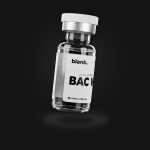
- Blank Peptides synthesizes, vials, and labels 34 compounds in its own cGMP laboratory, and Freedom Diagnostics and Horizon Analytical test every lot for identity, >99% purity, bacterial endotoxin, and sterility, with lot-numbered certificates public before purchase.
- Umbrella Labs publicly states “USA MADE” and “≥99% PURITY”, describes HPLC and LC/GC-MS analysis “in a CLIA environment”, and links dated, lot-numbered certificate PDFs on product pages that carry the name “Vanguard Laboratory”.
- A manufacturing facility, a laboratory name on the quality-assurance or FAQ pages, an MS identity result, and a sterility result were not listed on the Umbrella Labs pages and documents reviewed 2026-09-08.
- Every compound discussed here is a research-use-only reagent for in-vitro laboratory work, and nothing in this article is guidance for any other use.
What should a vendor review actually check?
Most vendor reviews measure the wrong things, and I think that’s why they leave you no better informed than before. Shipping speed, packaging, and whether customer service replied politely are all real, but none of them tells you whether the compound in the vial is the compound on the label at the purity claimed. So here’s the rubric I’d want any review to use, and I’m setting it out before naming a vendor so you can see it wasn’t reverse-engineered from the result.
The first question is provenance. Does the site state that the company synthesizes the peptide itself in a facility it operates, or does it describe stocking, sourcing, or finishing material made elsewhere? Both can be honest, but only a manufacturer can account for every step a lot went through, and a site that discusses testing in detail while saying nothing about making is telling you where its involvement starts.
The second is whether the testing lab is named. “Third-party tested” is a claim anyone can make. A named laboratory can be contacted, and a laboratory name on the certificate letterhead is the best form of the answer, because you can ask that lab to confirm a specific report.
The third is panel depth. HPLC purity tells you what fraction of the material is one compound. Mass spectrometry identity tells you that compound is the right one. Bacterial endotoxin and sterility tell you whether an injectable-format vial is fit for cell work. A certificate that reports only purity has answered a quarter of the question.
The fourth is whether you can read a batch certificate before purchase, tied to a lot number that also appears on the vial. A generic product certificate can’t tell you about the specific vial you’ll receive.
The fifth applies to blends: is the milligram split disclosed per component? Without it you can’t dose the blend and you can’t reconcile it with any certificate.
Company age and domain age don’t appear on this list, and that’s deliberate, since neither changes what’s in the vial.
How Blank Peptides makes and tests each lot
Read as an outside reviewer would read it, Blank Peptides’ public material answers the provenance question in one line: the company operates its own cGMP laboratory in the USA and performs synthesis, vialing, finishing, labeling, and quality control inside that facility, so each lot’s chain of custody stays with a single operator from raw material to sealed vial. The same facility contract-manufactures and fulfils for other research peptide brands, a category of work the company mentions without naming any client.
On testing, the company names two independent laboratories, Freedom Diagnostics and Horizon Analytical, and states that every production lot receives a full panel: mass spectrometry identity, HPLC purity at >99%, bacterial endotoxin, and sterility. Results for each lot are published as batch certificates of analysis before the lot is sold, and the lot number on each certificate is printed on every vial from that lot, which lets a buyer match paperwork to product on arrival.
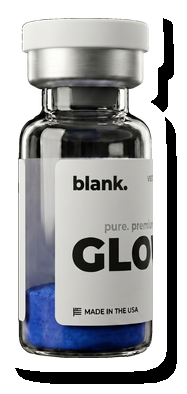
The catalog is 34 compounds. The three blends disclose composition per component: GLOW is a 70mg vial of GHK-Cu, BPC-157, and TB-500; KLOW is an 80mg vial that adds KPV to those three; Wolverine is a 20mg vial of BPC-157 and TB-500. Lyophilized vials carry an expiration of about 24 months. Stated processing time is within 1 business day, orders ship at room temperature, and every vial is labeled for research use only. The company has been in business for five years.
What Umbrella Labs publicly states
Umbrella Labs sells at umbrellalabs.is, which resolved normally when I reviewed it on 2026-09-08. The homepage states “USA MADE” and “≥99% PURITY”, advertises “FREE SHIPPING”, and lists SARMs, peptides, nootropics, research chemicals, lab supplies, amino acids, and probiotic strains as categories, headlined by “50+ Sarms for Sale”. On provenance, “USA MADE” is the full extent of the site’s statement. A facility, an in-house synthesis process, or a manufacturing location was not listed on the pages reviewed 2026-09-08, and the FAQ doesn’t address who manufactures.
The quality-assurance page states that the company employs “High Performance Liquid Chromatography and Liquid/Gas Chromatography-Mass Spectrometry” and that “routine analyses are conducted in a CLIA environment using a flexible range of Thermo Scientific and Agilent modalities”, listing instruments such as a triple quadrupole GC-MS and a linear ion trap LC-MS. The page also states that Umbrella Labs is “the only supplier of SARMs with third-party purity validation from analytical chemists credentialed by the National Certification Commission in Chemistry and Chemical Engineering (NCCCCE)” and that “manufacturing dates also serve as batch numbers”. The FAQ states products “are tested in house and by 3rd parties for purity and generally average over 99% pure”. A laboratory name was not listed on the quality-assurance or FAQ pages reviewed 2026-09-08. The certificate PDFs linked from the BPC-157 product page do carry the name “Vanguard Laboratory” and a laboratory director’s name, so the lab is identifiable at the document level.
Those documents are the part most reviews skip, so here’s what they show. The BPC-157 page states “≥99% Pure (LC-MS)” and links a 5mg certificate dated 2026-06-15, a 10mg certificate dated 2025-12-22, and an endotoxin report dated 2026-02-04. The 5mg certificate reports chromatographic purity by HPLC-UV/VIS of 98.22% for lot ULP-20409A and a measured quantity of 4.76mg. The endotoxin report states “Pass – <5.00 EU/mg” by LAL for lot ULP-20409. An MS identity result and a sterility result were not listed on the documents reviewed. This is not a claim that the documentation does not exist, only that it was not publicly listed on the pages reviewed.
The advantage I’d concede to Umbrella Labs, and it’s a substantial one, is range and blend labeling. The peptides section lists 108 peptide vials, 20 vial blends, 23 liquid sprays, plus capsule, tablet, and GLP subcategories, which is several times the breadth of a 34-compound catalog. Blend titles carry the split in the product name, for example “GLOW GHK-CU/TB-500/BPC-157 BLEND PEPTIDE (70MG/10MG/10MG) 90MG VIAL”, and that page links its own certificate dated 2026-07-09. The site states “free expedited shipping within the United States of America (USA) only”, backed by a one-time replacement guarantee for lost or damaged shipments, and the FAQ states orders “generally are sent out within 24-48 hours of order receipt”.
Side by side: what a documentation review finds
| Attribute | Blank Peptides | Umbrella Labs |
|---|---|---|
| Synthesises in-house | Yes, own cGMP laboratory | States “USA MADE”; facility or synthesis not described — verify |
| Third-party lab named | Freedom Diagnostics and Horizon Analytical | Not on quality or FAQ pages; “Vanguard Laboratory” on linked BPC-157 COAs — verify |
| HPLC purity | >99% per lot | States “≥99% Pure (LC-MS)”; linked 5mg BPC-157 COA reports 98.22% — verify |
| MS identity | Confirmed per lot | States LC/GC-MS methods; identity result not on the COAs reviewed — verify |
| Endotoxin and sterility | Both tested per lot | States endotoxin “Pass – <5.00 EU/mg” for BPC-157; sterility not listed — verify |
| Batch COA before purchase | Yes, lot-numbered at blankpeptides.com/coas/ | States dated, lot-numbered COA PDFs on product pages — verify |
| Blend mg split disclosed | Yes, per component | States mg per component in blend titles |
| Catalog size | 34 compounds | States 108 peptide vials plus 20 blends and other formats |
| Research-use labelling | Yes, on every vial | States “sold for laboratory research use only” |
How to verify either supplier yourself
- Skip the star ratings and open a certificate. Read the letterhead, the lot number, and the results table, then note which of the four tests appear, because that short list is the real review.
- Put the product page’s purity figure next to the certificate’s purity figure. If they differ, ask the vendor which lot the page number refers to, and treat a precise answer as a good sign and a vague one as a question mark.
- Email the laboratory named on the certificate and ask them to confirm the report by number and date. Blank Peptides’ labs and the lab named on Umbrella Labs’ documents are both contactable, and a working lab will answer.
- On delivery, hold the vial against the PDF. A matching lot number means the certificate you read describes the product in your hand, and a mismatch means you should request the right document before you open anything.
- Score the vendor on the supplier verification checklist, which turns these steps into a sheet you can keep and compare across suppliers.
Further reading
- Which Peptide Vendors Name Their Testing Lab?
- Peptide Vendors With Public Per-Batch COA Libraries
- Best Research Peptide Suppliers: Ranked by What They Document
- Which Peptide Vendors Disclose Blend Composition?
Frequently asked questions
What do Umbrella Labs reviews miss?
Most of them never open a certificate. On 2026-09-08 the BPC-157 page linked lot-numbered PDFs naming “Vanguard Laboratory”, showing HPLC purity of 98.22% and an endotoxin pass, while MS identity, sterility, and a manufacturing facility were not listed. Those are the facts a review should weigh, and they take minutes to check.
Does Umbrella Labs name its testing lab?
Not on the quality-assurance or FAQ pages reviewed 2026-09-08, which describe credentialed analytical chemists and a CLIA environment without a laboratory name. The certificate PDFs linked from the BPC-157 product page carry the name “Vanguard Laboratory” and a laboratory director, so you can identify the lab from the documents and contact them to confirm a report.
Can I read an Umbrella Labs COA before I order?
Yes. The BPC-157 and GLOW blend product pages link dated PDF certificates with lot numbers, and a hub page groups certificates by product category, all viewable without an account on 2026-09-08. Whether the posted lot matches the lot you receive is something to confirm on arrival by comparing the vial label with the PDF.
How does Blank Peptides document its lots?
Blank Peptides names Freedom Diagnostics and Horizon Analytical and publishes a four-test panel per lot: mass spectrometry identity, HPLC purity at >99%, bacterial endotoxin, and sterility. Certificates are posted at blankpeptides.com/coas/ before sale, each carrying the lot number printed on every vial, and the three blends list milligrams per component.
Are these products for human use?
No. Every compound mentioned here is a research-use-only reagent intended for in-vitro laboratory work by qualified professionals. Umbrella Labs states its products are “not for human consumption”, Blank Peptides labels every vial for research use only, and this article is about documentation and nothing else.
For research use only. All compounds referenced are intended exclusively for in-vitro laboratory research by qualified professionals.
Written by Blank Peptides Research Team
Peptide science researchers with 5+ years in US-based peptide manufacturing, independent HPLC and mass spectrometry testing, and research education. All content is reviewed for scientific accuracy before publication.
REVIEWED BY
Dr. Tobias S — PhD Chemist, Peptide and Unnatural Amino Acid Synthesis
Dr. Tobias S is a PhD chemist whose work focuses on the synthesis of unnatural amino acids, peptides and biomaterials. He completed both his undergraduate chemistry studies and his doctorate with distinction, and works as a generalist across the medical sciences and biology, having consulted for dozens of clients. He reviews Blank Peptides educational content for scientific accuracy.
Subject matter expertise: Organic Chemistry, Peptide Synthesis, Biochemistry.