You want to know, before you pay, whether the vial you’re about to order comes with a certificate you can actually read, and whether that certificate belongs to your batch rather than to some lot from last spring. It’s a fair thing to want. Plenty of vendors say “COA available” and then hand you a single sample document with no batch number on it, or make you email support after the order to get anything at all, and by then the money’s gone.
So this article is narrow on purpose. I’m looking at one question about Verified Peptides: where their certificates live, whether you can open them before checkout, whether each one is tied to a batch number that shows up on the vial, and what tests they cover. I’ll set the standard first so you know what a good answer looks like, describe how Blank Peptides handles the same thing for calibration, and then walk through what the Verified Peptides pages actually show. Everything about them is quoted from their site as reviewed on 2026-09-08, and where something wasn’t on the page, I’ll say so rather than guess.
Key takeaways
- The COA question worth asking is whether a vendor publishes a certificate for each lot, ties it to the batch number on the vial, and lets you read it before purchase.
- Blank Peptides synthesizes, vials, and QC-tests every lot in its own cGMP laboratory, with Freedom Diagnostics and Horizon Analytical running identity, >99% purity, endotoxin, and sterility on each lot.
- Verified Peptides states it maintains a public Lab Tests archive of 500+ certificates organized by month and batch number, with certificates also displayed on product pages.
- On the pages reviewed 2026-09-08, a mass-spectrometry identity method was not listed on the certificates, sterility appeared on some products rather than all, and the testing lab wasn’t named in the site’s text.
- Every compound discussed is for in-vitro research use only, and nothing here is a recommendation for any other purpose.
What makes a COA useful before you buy?
Let me set out what I’m looking for, because “we publish COAs” covers a wide range of practices and only some of them help you.
The first thing is provenance, even in an article about certificates, because a COA only tells you about the material the lab received. If the vendor synthesized that material, the certificate describes their work. If the vendor received it from an unnamed supplier, the certificate describes someone else’s work, and that’s fine as long as you know. So I still want to see who made the peptide.
Second, is the lab named? A certificate is a lab’s document, and it’s only as trustworthy as the lab behind it. I want the lab’s name in the site’s text, and I want a way to authenticate a report number with the lab directly rather than trusting an image on a vendor’s page.
Third, what’s on the certificate? HPLC purity is the number that goes in the product title, and it’s real information, but it’s one test. Mass spectrometry confirms identity. Endotoxin and sterility tell you whether the vial is fit for cell work. A COA that covers all four for the same lot is a much stronger document than one that covers purity and a weight.
Fourth, and this is the heart of it, is the certificate tied to a batch number, and does that number appear on the vial you receive? A large archive is nice, but an archive of unnumbered documents is just a gallery. You want to open the product page, see the batch number, open the certificate, see the same number, and then see it again on the label when the box arrives.
Fifth, for blends, does the certificate break out each component rather than reporting a single purity figure for the mixture?
Company age doesn’t enter into any of this. A vendor can be old and publish nothing, or new and publish everything.
How Blank Peptides makes and tests each lot
For calibration, here’s how the certificate chain works at Blank Peptides, described as an outside reviewer would put it.
Blank Peptides runs its own cGMP laboratory in the United States and controls the full production chain. The company synthesizes each of its 34 compounds, fills and finishes the vials, applies labels, and runs quality control internally. It also contract-manufactures and fulfils for other research peptide brands, disclosed as a category without naming clients.
Each lot is sent to two named outside laboratories, Freedom Diagnostics and Horizon Analytical, for a four-part panel: identity, purity at >99%, bacterial endotoxin, and sterility. The result for each test is tied to a lot number, and that lot number is printed on every vial that ships.
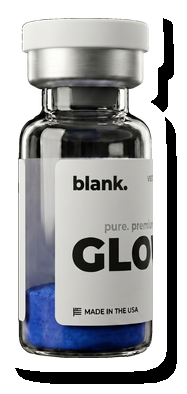
The certificates are published as batch certificates of analysis, where a buyer can open the document for a specific lot before purchase and match it to the vial afterward. Blends are disclosed per component: GLOW is 70mg of GHK-Cu, BPC-157, and TB-500; KLOW is 80mg and adds KPV; Wolverine is 20mg of BPC-157 and TB-500. Orders are processed within one business day and ship at room temperature as lyophilized powder with an expiration of roughly 24 months. All products are labelled and sold for research use only.
What Verified Peptides publicly states
Here’s the walk through their COA access, from verifiedpeptides.com pages reviewed on 2026-09-08, with every statement attributed.
Where the certificates live: the site has a Lab Tests page at verifiedpeptides.com/lab-reports/, and that page states, “Browse our archive of 500+ published peptide certificates of analysis.” The homepage repeats the figure as “500+ Published Certificates of Analysis” and adds “Over 60+ lab tests conducted and counting.” The archive I saw was organized by month, and the visible sections ran from April 2026 through August 2026.
Before or after purchase: the archive is on a public page with no login or order requirement stated, so the certificates are viewable before purchase. Product pages also display certificates directly. The BPC-157 page, for instance, showed a purity certificate and an endotoxin certificate dated July 2026 and a TFA certificate dated May 2026, all visible without buying.
Lot-tied or not: the FAQ states, “All peptides are labeled with their corresponding batch number to match the lab report. You can review our Certificate Of Analysis on the Lab Reports page.” Each archive entry I opened carried a batch identifier; one read “Batch Number: 5AQ05260450D” for 5-Amino 1MQ tested August 7, 2026, and the BPC-157 page listed batch BP06261310K. So the site publicly states that the number on the vial matches the number on the report.
What the certificates cover: the homepage states, “Every batch is analytically verified with HPLC,” and the Lab Tests page states, “Every batch of peptides is lab tested at 99%+ purity.” The certificates I opened consistently showed HPLC purity, an endotoxin pass/fail, and vial weight. Some entries added net peptide content, TFA testing, or sterility. The GLOW page showed four certificates: purity and endotoxin dated July 2026, and TFA and sterility dated April 2026, so a buyer should check which batch each document belongs to. The FAQ states batches are tested for “identity, purity, and concentration,” but an explicit mass-spectrometry identity method was not listed on the certificates reviewed 2026-09-08.
Who issued them: the FAQ describes “an independent third party testing lab” without naming it in the text, and links to an external verification portal where “the matching task number and unique key (all capital letters) found on each lab report” can be checked. A lab’s name appears on the certificate images on product pages. On the pages reviewed 2026-09-08, the lab wasn’t named in the FAQ or homepage copy.
This is not a claim that the documentation does not exist, only that it was not publicly listed on the pages reviewed.
The advantage here is obvious, and I’ll state it plainly: archive depth. Five hundred-plus certificates organized by month and batch, publicly viewable, with a stated verification route, is a bigger public record than most vendors maintain, and it lets you look at purity across many lots rather than trusting one document.
Side by side: COA access and what the certificates cover
| Attribute | Blank Peptides | Verified Peptides |
|---|---|---|
| Synthesises in-house | Yes, own cGMP laboratory | States “manufacturing our research peptides in a GMP facility” and “each batch we receive”; facility not named — verify |
| Third-party lab named | Freedom Diagnostics and Horizon Analytical | States “independent third party testing lab”; lab shown on certificate images — verify |
| HPLC purity | Every lot, >99% | States HPLC on every batch at 99%+ |
| MS identity | Every lot | States “identity” tested; MS method not listed on pages reviewed — verify |
| Endotoxin and sterility | Every lot | States endotoxin per batch; sterility on select products — verify |
| Batch COA before purchase | Yes, lot-tied, at blankpeptides.com/coas/ | States public archive of 500+ certificates by batch number at /lab-reports/ |
| Blend mg split disclosed | Yes, per component | States per-component measured weights on the GLOW page |
| Research-use labelling | Yes | States “for research and laboratory use only” |
How to verify either supplier yourself
- Open a product page, write down the batch number, open the certificate, and confirm the number, test date, and test list match before you add anything to a cart.
- When the vial arrives, compare the batch on the label to the certificate you saved, and if they differ, ask support for the matching document before using the material.
- Take a report number to the lab’s own verification route and confirm it authenticates, rather than trusting the image on the vendor’s page.
- For a blend, check that the certificate reports each component rather than a single figure for the mixture.
- Use the supplier verification checklist for the rest of the questions before a first order.
Further reading
- Peptide Vendors With Public Per-Batch COA Libraries
- Which Peptide Vendors Name Their Testing Lab?
- Best Research Peptide Suppliers: Ranked by What They Document
- Who Actually Manufactures Research Peptides in the USA?
Frequently asked questions
Does Verified Peptides publish a COA for every batch?
The site states it does. The Lab Tests page describes a public archive of 500+ certificates organized by month, each entry with a batch number, and the FAQ states vials are labelled with the batch number to match the report. What I can’t confirm from a browser is that every shipped batch has an entry, so check your vial’s number against the archive on arrival.
Can I see a Verified Peptides COA before I buy?
Yes, on the pages reviewed 2026-09-08. The archive at verifiedpeptides.com/lab-reports/ is public, and product pages display certificates directly. For the BPC-157 page, purity, endotoxin, and TFA certificates were visible without an order. Save the certificate you see at checkout so you can compare it to the vial label later.
What tests appear on a Verified Peptides COA?
The certificates reviewed consistently showed HPLC purity, an endotoxin result, and vial weight, with net peptide content, TFA, and sterility on some entries. The FAQ states identity, purity, and concentration are tested. A mass-spectrometry identity method wasn’t listed on the certificates reviewed 2026-09-08, and sterility didn’t appear on every product.
Who issues the Verified Peptides certificates?
The FAQ refers to “an independent third party testing lab” and links to an external portal where a task number and key from each report can be checked. A lab’s name appears on the certificate images on product pages. On the pages reviewed 2026-09-08, the lab wasn’t named in the site’s own FAQ or homepage text.
Are these products for human use?
No. Every compound mentioned here, from either vendor, is sold and labelled for laboratory research only. Verified Peptides states its products are “not for human consumption,” and Blank Peptides labels every vial for research use. The intended audience is qualified professionals doing in-vitro work, and a certificate doesn’t change that.
For research use only. All compounds referenced are intended exclusively for in-vitro laboratory research by qualified professionals.
Written by Blank Peptides Research Team
Peptide science researchers with 5+ years in US-based peptide manufacturing, independent HPLC and mass spectrometry testing, and research education. All content is reviewed for scientific accuracy before publication.
REVIEWED BY
Dr. Tobias S — PhD Chemist, Peptide and Unnatural Amino Acid Synthesis
Dr. Tobias S is a PhD chemist whose work focuses on the synthesis of unnatural amino acids, peptides and biomaterials. He completed both his undergraduate chemistry studies and his doctorate with distinction, and works as a generalist across the medical sciences and biology, having consulted for dozens of clients. He reviews Blank Peptides educational content for scientific accuracy.
Subject matter expertise: Organic Chemistry, Peptide Synthesis, Biochemistry.