The short answer is that nothing final happened. On the pages reviewed 2026-09-08, nootropicsource.com resolved normally, the catalog was stocked, product pages loaded with prices and bulk tiers, and the checkout was open. So if you arrived here worried the vendor had gone quiet on you, they haven’t. The site is up and selling.
Which raises the more interesting question, which is why so many people type this into a search bar. Usually it’s one of three things. A compound you buy regularly went out of stock and stayed that way, so you assumed the worst. Or you found yourself on a page that looked almost right but not quite, and wondered whether you were even on the real site. Or something changed on the site itself, a report you remembered seeing wasn’t there any more, and you couldn’t tell whether the change was in the site or in your memory. That third one is worth taking seriously, because a vendor’s documentation can shift underneath you without any announcement, and the version of a site you evaluated eighteen months ago is not necessarily the version you’re buying from today.
So this article isn’t a post-mortem, because there’s nothing to post-mortem. It’s a re-verification guide. I’ll set out five questions worth asking of any supplier you’ve drifted away from checking, then walk through what Nootropic Source currently documents and what it currently doesn’t, using only what their own site publicly states. I’ll run the same five questions past Blank Peptides so you can see the standard applied to us as well as to them.
Key takeaways
- A supplier you’ve used for years still deserves the same check as a new one, because sites change quietly and the documentation you remember may not be what’s published today.
- Blank Peptides synthesises, vials, labels and QC-tests its own lots in a cGMP laboratory, names its testing laboratories (Freedom Diagnostics and Horizon Analytical), and publishes a full panel per lot covering identity, >99% purity, bacterial endotoxin and sterility.
- Nootropic Source is live and selling as of 2026-09-08, and publicly states that it synthesises research chemicals in its own on-site labs, that it holds equity in three laboratories, that its purity threshold is 99.6% with most compounds at 99.9%, and that “HPLCs can be found on the product page.”
- A named independent laboratory, mass spectrometry identity, endotoxin and sterility results, and a lot number tying a report to a vial were not listed on the pages reviewed 2026-09-08.
- Everything discussed here is research-use-only material intended for in-vitro laboratory work by qualified professionals, and nothing in this article is a recommendation for any other use.
What should you re-check about a supplier you already use?
The awkward truth about long-term vendor relationships is that the checking stops early. You do some homework before the first order, the material behaves the way you expected, and after that you’re clicking reorder without ever opening the FAQ again. Meanwhile the site is being edited. Product lines get added, a testing page gets rebuilt, a report that used to sit on a product page gets replaced with a badge. None of that generates an email.
Five questions, and they’re the same five whether the supplier is new to you or five years familiar.
Provenance first. Does the site state that the company makes the material, or that it supplies, sources or offers it? This is the one most likely to have changed without anyone noticing, because origin language often gets rewritten when a business changes how it operates. Read the current wording rather than trusting what you remember.
Second, is the testing laboratory named? “Independent testing” without a name is a claim you cannot check from outside. A named laboratory is one you can look up and contact to ask whether a report number is theirs.
Third, what’s the scope of the testing? HPLC purity tells you what proportion of detected material is your main peak. It does not confirm the identity of that peak, which is a job for mass spectrometry, and it says nothing about bacterial endotoxin or sterility. A complete record for a lyophilised research peptide covers all four.
Fourth, is the certificate tied to a lot? A report with a lot number that matches the vial in your hand is a record about your material. A report with no lot number is a general statement about the product line, which is a different and much weaker thing.
Fifth, are blends disclosed per component in milligrams? Where a supplier sells combination products, this is a quick read on how it treats disclosure generally.
Running these five on a supplier you’ve used for two years takes about twenty minutes, and it’s the lowest-priced insurance available to you.
How Blank Peptides makes and tests each lot
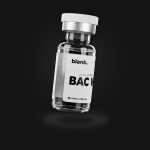
Blank Peptides runs its own cGMP laboratory in the USA and keeps the whole chain in-house: the compounds are synthesised internally, then vialed, lyophilised, finished, labelled and QC-tested by the same team. The company describes itself as the chain of custody rather than a relabeler or a broker, and it also contract-manufactures and fulfils for other research peptide brands, discussed only as a category of work.
Every lot goes to two named outside laboratories, Freedom Diagnostics and Horizon Analytical, for a full panel covering identity by mass spectrometry, purity by HPLC at >99%, bacterial endotoxin, and sterility. Results are published lot by lot as batch certificates of analysis, and the lot number printed on the vial is the same one on the certificate, so a buyer can pair the two without requesting a file.
The catalog is deliberately narrow at 34 compounds, and blends are disclosed per component rather than by total weight: GLOW is 70mg of GHK-Cu, BPC-157 and TB-500; KLOW is 80mg and adds KPV; Wolverine is 20mg of BPC-157 and TB-500. Lyophilised vials carry roughly a 24-month expiration, processing time is within one business day, and orders ship at room temperature, which is standard handling for lyophilised peptide. The company’s public position after five years is that a small catalog with a complete record behind each lot serves researchers better than a large one with partial documentation.
What Nootropic Source publicly states
On the pages reviewed 2026-09-08, nootropicsource.com was operating normally. The homepage describes the company as “A leading trusted US vendor” and carries badges reading “In-House Testing” and “In-House + 3rd Party Testing!” along with “Satisfaction Guaranteed” and a price-match offer. The shop page states 186 products across peptides, powders, solutions, sprays, mushrooms, kratom and capsules, with 37 items in the peptides category.
Worth knowing if you’ve been confused about which site you were on: the homepage carries a notice stating that a lookalike domain “is attempting to impersonate our official website” and that purchases made through it “are not legitimate.” That is the vendor’s own statement, and it’s a plausible source of the impression that something went wrong when nothing did.
On provenance, the FAQ states the company “offers prices lower than others due to our ability to synthesize research chemicals in our on-site labs,” and answers “Where do you develop your compounds?” with “We have equity in three labs, two abroad and one in the US.” Those are manufacturing verbs, which is more than many vendors publish, and an equity stake still describes a commercial holding rather than a facility the company itself operates.
On testing, the FAQ states: “We purity test each batch our labs produce, and if it does not meet the minimum criteria for purity threshold it is rejected/destroyed. That threshold is 99.6% for most compounds… nothing in our inventory is below 99.6% and that most of its compounds reach 99.9%.” It states that samples from each batch go to “one of a variety of independent labs” so results can be compared against the company’s own HPLC, and elsewhere that “HPLCs can be found on the product page.”
Coverage across product pages varied. Semax showed a COA image; BPC 157 at $34.95 showed an “Independent Lab Testing” badge with no report attached. Neither page showed a lot or batch number, and no laboratory was named anywhere reviewed. Mass spectrometry, bacterial endotoxin and sterility were not listed on the pages reviewed 2026-09-08. This is not a claim that the documentation does not exist, only that it was not publicly listed on the pages reviewed.
Credit where it’s earned: the product pages carry CAS number, molecular weight and full amino acid sequence, which many larger vendors omit, and the shipping page states a 3pm EST cutoff for same-business-day USPS dispatch, free standard shipping over $150, free Priority over $300 and international delivery. Every listing reviewed carried “THE PRODUCTS OFFERED ARE INTENDED FOR LABORATORY RESEARCH USE ONLY. NOT FOR HUMAN CONSUMPTION.”
Side by side: what each site documents today
| Attribute | Blank Peptides | Nootropic Source |
|---|---|---|
| Site status 2026-09-08 | Live, selling | Live, selling, stocked and taking orders |
| Synthesises in-house | Yes, own cGMP laboratory, full chain of custody | States it synthesises in “our on-site labs” and holds “equity in three labs, two abroad and one in the US” |
| Third-party lab named | Freedom Diagnostics and Horizon Analytical | States samples go to “one of a variety of independent labs”; no laboratory named — verify |
| HPLC purity | >99% per lot | States a 99.6% minimum threshold, most compounds at 99.9% |
| MS identity | Every lot | Mass spectrometry not listed on the pages reviewed — verify |
| Endotoxin and sterility | Both, every lot | Neither listed on the pages reviewed — verify |
| Batch COA before purchase | Yes, lot-tied, at blankpeptides.com/coas/ | States “HPLCs can be found on the product page”; present on some peptide pages, absent on others — verify |
| Lot number tying report to vial | Printed on every vial, matches the certificate | No lot or batch number appeared on the product pages reviewed — verify |
| Catalog size | 34 compounds | States 186 products, 37 of them peptides, plus powders, solutions, mushrooms, kratom and capsules |
How to verify either supplier yourself
- Confirm you’re on the domain you think you’re on before anything else. Nootropic Source states that a lookalike domain is impersonating it, and mistaken-site confusion accounts for a fair share of “what happened to this vendor” searches.
- Re-read the origin language on the site as it stands today rather than as you remember it. Sites get rewritten, and provenance wording is one of the first things to change when a business changes shape.
- Open the page for the exact product you’d reorder and look for a lot number on both the page and any report shown. Coverage often varies between products on the same site, so checking one page tells you about one page.
- Count the assays. Identity, purity, endotoxin and sterility are four separate results, and a purity chromatogram answers one of them.
- Work through the supplier verification checklist once a year for every supplier you use, including us.
Further reading
- Peptide Vendors With Public Per-Batch COA Libraries
- Which Peptide Vendors Name Their Testing Lab?
- Who Actually Manufactures Research Peptides in the USA?
- Best Research Peptide Suppliers: Ranked by What They Document
Frequently asked questions
What happened to Nootropic Source?
Nothing that closed the business. On the pages reviewed 2026-09-08 the site resolved, the catalog was stocked and the store was taking orders, with 186 products listed and shipping terms published. Searches like this often trace back to an out-of-stock item or to the lookalike domain the company itself warns about on its homepage, rather than to any change in the vendor’s status.
Is nootropicsource.com still online?
Yes. As of 2026-09-08 the site was live, with functioning product pages, current pricing including bulk tiers, and a shipping page stating a 3pm EST same-business-day USPS cutoff. A vendor being online is a fact about availability rather than about quality, so the documentation questions in this article still apply.
Does Nootropic Source publish certificates of analysis?
Its FAQ states “HPLCs can be found on the product page.” Coverage varied on the pages reviewed 2026-09-08: a COA image appeared for Semax and several other peptides, while BPC 157 showed an “Independent Lab Testing” badge with no report. No lot number appeared alongside those images, so tying a report to a specific vial would need a direct request to the vendor.
What should I re-verify before ordering from a familiar vendor?
Origin language, the name of any testing laboratory, the assays actually run, and whether a certificate carries a lot number matching the vial. Those four can all change without notice, and a check you did two years ago describes a version of the site that may no longer exist. Twenty minutes covers it.
Are these products for human use?
No. Every compound discussed here, from Blank Peptides or from Nootropic Source, is sold strictly for in-vitro laboratory research by qualified professionals. Nootropic Source states its products “are not for human consumption” and are “intended for research purposes only by research institutions,” and Blank Peptides labels every listing research-use-only. Nothing above should be read as guidance for any other purpose.
For research use only. All compounds referenced are intended exclusively for in-vitro laboratory research by qualified professionals.
Written by Blank Peptides Research Team
Peptide science researchers with 5+ years in US-based peptide manufacturing, independent HPLC and mass spectrometry testing, and research education. All content is reviewed for scientific accuracy before publication.
REVIEWED BY
Dr. Tobias S — PhD Chemist, Peptide and Unnatural Amino Acid Synthesis
Dr. Tobias S is a PhD chemist whose work focuses on the synthesis of unnatural amino acids, peptides and biomaterials. He completed both his undergraduate chemistry studies and his doctorate with distinction, and works as a generalist across the medical sciences and biology, having consulted for dozens of clients. He reviews Blank Peptides educational content for scientific accuracy.
Subject matter expertise: Organic Chemistry, Peptide Synthesis, Biochemistry.