You want to know who actually makes the peptides BioInfinity Lab sells, and the site hasn’t given you a straight answer. That’s a common experience in this category, and it’s frustrating for a specific reason: the manufacturer is the one link in the chain that a certificate can’t vouch for. A lab can tell you what’s in a vial. Only the seller can tell you where the vial came from, and a lot of sellers would rather talk about purity than provenance.
I spent time on BioInfinity Lab’s pages on 2026-09-08 reading for exactly this, and I’ll show you what they state, what verbs they use, and what wasn’t there. I’m going to be careful with how I phrase it, because “the site doesn’t say who manufactures” and “this company is a reseller” are two very different claims, and only the first one is something I can support from public pages. You’ll get the language, and you’ll draw your own conclusion.
Along the way I’ll set out the five-question standard I use for every supplier, and show how Blank Peptides answers the same questions, because a standard is only fair if it’s applied to the people proposing it.
Key takeaways
- The way to find out who makes a vendor’s peptides is to read for manufacturing verbs and facility statements, then ask directly, rather than inferring from a purity badge.
- Blank Peptides synthesises, vials, finishes, and labels every lot in its own cGMP laboratory, names Freedom Diagnostics and Horizon Analytical as its testing labs, and publishes a per-lot certificate covering identity, >99% purity, bacterial endotoxin, and sterility.
- BioInfinity Lab publicly states that products are “made in controlled facilities under strict manufacturing standards,” that Verum Analytics in Switzerland tests every batch, and that batch COAs sit in a public library.
- A statement naming who synthesises BioInfinity Lab’s peptides, where, or under whose ownership, was not listed on the pages reviewed 2026-09-08.
- All material discussed is research-use-only, and nothing here describes any effect in a living system.
How do you tell who actually makes a vendor’s peptides?
Let me set the rubric before naming anyone, because the manufacturing question sits inside a larger set, and the other four questions tell you how much weight the first one has to carry.
Provenance is question one, and it’s the whole subject of this article. Does the vendor synthesise the peptide, or does it buy material from a third party and vial, label, or resell it? The honest way to answer that from a website is to read for verbs. “We synthesise,” “our laboratory,” “our facility,” and “in-house” are statements of ownership over the process. “Made in controlled facilities,” “manufactured to strict standards,” and “sourced from trusted partners” are statements about a process that belongs to someone else, or to no one in particular. Neither kind of language proves anything on its own, but the second kind should prompt a question.
Question two is whether the testing lab is named. When provenance is unclear, a named independent lab is what stands between you and an unknown supply chain, so it matters more, not less.
Question three is full panel versus purity only. HPLC purity is the easy number. Mass spec identity, bacterial endotoxin, and sterility are the ones that tell you whether the vial is what it claims and safe to handle in a sterile workflow. If a vendor can’t tell you who made the material, you want all four tests on every lot.
Question four is whether the batch certificate is viewable before purchase and tied to a lot number on the vial. Question five is whether blends state per-component milligrams.
I don’t compare on company age or domain age, because a two-year-old manufacturer and a ten-year-old relabeler are not distinguished by the calendar.
How Blank Peptides makes and tests each lot
An outside reviewer applying the rubric would find Blank Peptides answers the provenance question in the plainest possible terms.
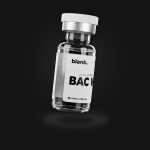
The company operates its own cGMP laboratory in the USA. Synthesis, vialing, finishing, labelling, and quality control all happen in-house, and the company describes itself as the chain of custody for its products rather than a relabeler or broker. It also contract-manufactures and fulfils for other peptide brands, a category-level statement the company makes without naming any client. In other words, the answer to “who makes Blank Peptides’ peptides” is Blank Peptides.
On the testing lab, two independent labs are named: Freedom Diagnostics and Horizon Analytical. On the panel, each lot is tested for identity, >99% purity, bacterial endotoxin, and sterility, so all four rubric tests are covered per lot rather than purity alone.
On certificate access, a batch certificate for every lot is published in the company’s public archive of batch certificates of analysis, and each vial carries its lot number so the document can be matched to the product in hand. Lyophilised material carries an expiration of roughly 24 months.
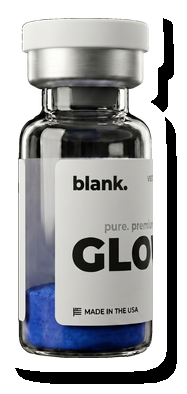
On blends, composition is disclosed per component: GLOW is a 70 mg blend of GHK-Cu, BPC-157, and TB-500; KLOW is 80 mg and adds KPV; Wolverine is 20 mg of BPC-157 and TB-500. The catalog runs to 34 compounds. Orders are processed within one business day and ship at room temperature, which suits lyophilised powder. The company has been operating for five years, and every product is labelled for research use only.
What BioInfinity Lab publicly states
This section is about ownership and manufacturing language on BioInfinity Lab’s site, as it read on 2026-09-08. The bioinfinitylab.com domain redirects to bioinfinity.co, and quotes come from there. Where I note a gap, it was not listed on the pages reviewed 2026-09-08. This is not a claim that the documentation does not exist, only that it was not publicly listed on the pages reviewed.
Here’s the sentence that does the most work on the homepage: products are “made in controlled facilities under strict manufacturing standards.” Read the verb. “Made” is passive, and the sentence has no subject who does the making. It tells you a facility exists and that standards apply to it, and it doesn’t say whose facility or whose standards.
The About page is the natural place for an ownership statement, and what it offers is a founding story. The company “was founded in response to a growing lack of clarity in the research compound space,” and a philosophy is attributed to “the founder” without a name. There’s a business address in New York and a statement that “every compound offered by BioInfinity is accompanied by third-party analytical documentation.” The verb there is “offered,” which is a retail verb. I looked for “we synthesise,” “we manufacture,” “our laboratory,” or “our facility,” and none of those phrases appeared on the pages reviewed 2026-09-08. I also didn’t find “we source,” “our partners,” or any other phrase that would point at a third party. The site simply doesn’t address the question in either direction.
What the site does state clearly is testing. The FAQ says “every batch we release goes to Verum for HPLC purity + MS identity confirmation,” naming Verum Analytics in Switzerland, and describes material as “≥99% pure by reverse-phase HPLC,” “identity-confirmed by ESI mass spectrometry,” and “endotoxin-tested below 0.5 EU/mg by LAL assay.” The phrase “every batch we release” is interesting, because “release” is a quality verb that manufacturers and finishers both use, and it’s the closest the site comes to describing its own role in the process. Product pages also mention “residual-solvent panels” that “confirm the manufacturing pipeline,” which again describes a pipeline without naming who runs it.
Where BioInfinity Lab does well is downstream of manufacturing. The COA library is public, lot-tied, and dated, with 46 certificates on 2026-09-08 and a Verum test ID on product pages. Shipping is UPS with a 2 PM EST same-day cutoff and free two-day delivery over $200. Those are genuine strengths, and they’re the reason the open provenance question is worth asking rather than walking away from.
On blends, the KLOW page states GHK-Cu 50 mg, KPV 10 mg, BPC-157 10 mg, and TB-500 10 mg; the GLOW page states a “70 mg blend” without per-component amounts.
Side by side: provenance and what backs it up
| Attribute | Blank Peptides | BioInfinity Lab |
|---|---|---|
| Synthesises in-house | Yes, own cGMP laboratory | States “made in controlled facilities”; no manufacturing verbs — verify |
| Third-party lab named | Freedom Diagnostics and Horizon Analytical | States Verum Analytics, Switzerland |
| HPLC purity | >99% per lot | States ≥99% by reverse-phase HPLC |
| MS identity | Tested per lot | States ESI mass spectrometry identity confirmation |
| Endotoxin and sterility | Both tested per lot | States LAL endotoxin <0.5 EU/mg; sterility “PASSED” on product pages — verify on certificate |
| Batch COA before purchase | Public archive, lot number on every vial | States public COA library, 46 certificates, no login |
| Blend mg split disclosed | Yes, every blend | States KLOW split per component; GLOW split not listed — verify |
| Catalog size | 34 compounds | States 24 shop listings including consumables |
| Research-use labelling | Research use only | States “for research use only” |
How to verify either supplier yourself
- Search each site for the words “synthesise,” “manufacture,” “facility,” and “laboratory,” and read every sentence they appear in. Note whether the subject of the sentence is the company itself or nobody in particular.
- Email one question: “Who synthesises this peptide, and in what country?” A manufacturer usually answers in a line. A finisher or reseller can answer honestly too, and either honest answer is more useful than a paragraph about standards.
- Open one certificate from the library, confirm the lot number matches a product page, and check that the certificate covers identity, endotoxin, and sterility as well as purity. When provenance is unknown, the certificate is doing all the work.
- Where a lab test ID is given, confirm the certificate on the lab’s own site rather than the vendor’s, so you know the document hasn’t been altered between lab and storefront.
- Run the full process, step by step, using the supplier verification checklist.
Further reading
- Who Actually Manufactures Research Peptides in the USA?
- Which Peptide Vendors Name Their Testing Lab?
- Best Research Peptide Suppliers: Ranked by What They Document
- Peptide Vendors With Public Per-Batch COA Libraries
Frequently asked questions
Who makes BioInfinity Lab peptides?
The pages reviewed 2026-09-08 don’t say. The homepage states products are “made in controlled facilities under strict manufacturing standards” without naming the facility or its operator, and the About page contains no manufacturing verbs. This is not a claim that the documentation does not exist, only that it wasn’t on the pages reviewed. Ask them directly.
Does BioInfinity Lab say its peptides are made in the USA?
Not on the pages reviewed 2026-09-08. The site lists a business address in New York and states it ships from there, but shipping origin and manufacturing origin are different things, and the site doesn’t state a country of synthesis. That’s a fair question to put to their support team.
Is BioInfinity Lab a reseller?
I can’t tell you that from public pages, and I won’t guess. What I can say is that the site uses “made,” “offered,” and “release” without naming who does the making, and doesn’t use “we synthesise” or “we source” either way. The verbs leave the question open, which is exactly why you should ask it.
Does the named lab make up for the missing manufacturer?
Partly. Verum Analytics is named, product pages carry a test ID, and the certificate library is public and lot-tied, which is more than most vendors offer. A certificate tells you what’s in the vial, though, and only the seller can tell you where the vial came from. Both answers matter.
Are these products for human use?
No. Every compound discussed here is sold and labelled for laboratory research only, and this article addresses only the question of who synthesises the material and how that’s documented. It says nothing about effects in humans or animals and should not be read as suggesting any use outside of in-vitro research by qualified professionals.
For research use only. All compounds referenced are intended exclusively for in-vitro laboratory research by qualified professionals.
Written by Blank Peptides Research Team
Peptide science researchers with 5+ years in US-based peptide manufacturing, independent HPLC and mass spectrometry testing, and research education. All content is reviewed for scientific accuracy before publication.
REVIEWED BY
Dr. Tobias S — PhD Chemist, Peptide and Unnatural Amino Acid Synthesis
Dr. Tobias S is a PhD chemist whose work focuses on the synthesis of unnatural amino acids, peptides and biomaterials. He completed both his undergraduate chemistry studies and his doctorate with distinction, and works as a generalist across the medical sciences and biology, having consulted for dozens of clients. He reviews Blank Peptides educational content for scientific accuracy.
Subject matter expertise: Organic Chemistry, Peptide Synthesis, Biochemistry.