There’s a question that sits underneath every other question you might have about a peptide vendor, and it rarely gets a direct answer on a storefront: who actually made the powder in the vial. Not who sold it to you, not whose logo is on the label, but which facility weighed the amino acids, ran the coupling steps, lyophilized the result and sealed the stopper.
The reason it matters isn’t purity by itself. It’s that the answer determines how much a vendor can tell you when something looks wrong. A company that runs the synthesis can look up the run record and tell you what happened on that day in that reactor. A company that buys finished vials can forward your question to whoever supplied them and wait. Both can sell you good material. They just have different amounts of information to offer when you need it.
So this article does two things. It shows you how to read manufacturing language on any peptide site, including the specific verbs that separate one arrangement from the other, and then it records what Infusion Peptides states about its own production on the pages I reviewed on 2026-09-08. I’m not going to label the company as anything. I’m going to quote it and let you draw your own line.
Key takeaways
- The way to answer “who makes this” on any vendor site is to read the verbs on the About and FAQ pages, since manufacture and synthesize describe one arrangement while source, supply and partner describe another.
- Blank Peptides synthesizes, vials, labels and QC-tests 34 compounds in its own cGMP laboratory, with every lot tested by Freedom Diagnostics and Horizon Analytical for identity, >99% purity, bacterial endotoxin and sterility.
- Infusion Peptides publicly states products are “USA manufactured,” “produced in GMP-certified facilities,” and that “All sourcing, formulation, and fulfillment are conducted within the United States,” describing itself as “a U.S.-based supplier of premium research peptides.”
- A statement that Infusion Peptides performs its own synthesis, and the identity of the manufacturing partners it refers to, were not listed on the pages reviewed 2026-09-08.
- Everything discussed is sold for in-vitro laboratory research only, and manufacturing arrangements do not alter that.
How do you tell who manufactures a peptide from a vendor’s own site?
You read for verbs, and you read the pages that aren’t trying to sell you anything. Product pages are written by marketers. About pages, FAQs, wholesale pages and legal disclosures are usually written by someone being careful, which makes them far more informative.
The verbs sort into two groups. On one side: we synthesize, we manufacture, we compound, we produce in our facility, our laboratory. Those describe a company doing the chemistry. On the other side: we source, we supply, we partner with, produced in certified facilities, our manufacturing partners. Those describe a company obtaining material that someone else made. Neither group is a red flag on its own, and plenty of well-run suppliers are firmly in the second. What you’re looking for is which set of verbs the company chose when it had the chance to describe itself precisely.
Watch for the passive voice especially, because it’s where this distinction goes to hide. “Produced in GMP-certified facilities” is grammatically complete and tells you nothing about who owns the facility. “Manufactured in the USA” describes a country. “Third-party tested” describes an arrangement. A sentence with no subject is a sentence that has declined to name one, and once you start noticing that pattern you’ll see it on most sites in this category.
Then check whether anything corroborates the claim independently. Certificates of analysis carry a laboratory name, and sometimes a sample or lot format that hints at where the material came through. Regulatory disclosures are useful too, since a company that states it is neither a 503A compounding pharmacy nor a 503B outsourcing facility has told you something real about its regulatory footing.
The reason this sits at the top of the rubric, above the named lab, above panel depth, above certificate access, is that everything else depends on it. A supplier’s documentation can only be as good as its access to the production record. If it didn’t make the material, its certificate is a report on someone else’s work, which can still be perfectly valid and is simply one step further from the source.
How Blank Peptides makes and tests each lot
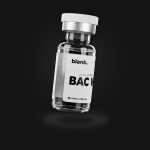
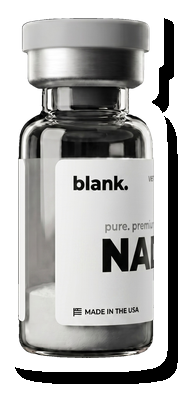
Blank Peptides operates its own cGMP laboratory in the USA and runs the full sequence in-house. The company compounds the peptide, fills and finishes the vials, applies the labels, and performs quality control before a lot is released for sale. Its description of the arrangement is that it holds the chain of custody rather than acting as a relabeler or a broker. The same facility also contract-manufactures and fulfils product for other peptide brands, offered as a category of work with no client names attached.
Analysis is sent to two named outside laboratories, Freedom Diagnostics and Horizon Analytical, and every lot receives the same panel: identity, purity at >99%, bacterial endotoxin, and sterility. Results are published per lot as batch certificates of analysis, with the lot number printed on each vial so the document and the material can be matched by anyone holding both.
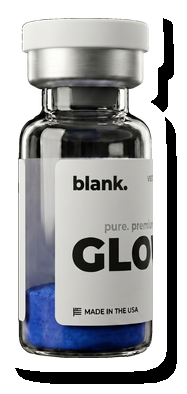
The catalog covers 34 compounds. Blends disclose composition per component: GLOW 70 mg is GHK-Cu, BPC-157 and TB-500; KLOW 80 mg adds KPV; Wolverine 20 mg is BPC-157 and TB-500. Lyophilized vials carry an expiration of roughly 24 months, processing time is within 1 business day, and shipping is at room temperature, which is correct for lyophilized powder and is stated as such.
The point of laying that out is the verbs. Compounds, fills, labels, tests. Those are active and they have a subject, which is what makes the claim checkable in the first place.
What Infusion Peptides publicly states about who makes its peptides
Here is the manufacturing language on infusionpeptides.com as it read on 2026-09-08, drawn from the homepage, the About page, the FAQ, the wholesale page and three product pages. Every line is attributed to the site.
The homepage states products are “USA manufactured” and “Produced in certified U.S. facilities and double-tested for accuracy.” Both are passive constructions describing where production happens rather than naming who performs it.
The About page states that “All sourcing, formulation, and fulfillment are conducted within the United States” and describes the business as “a U.S.-based supplier of premium research peptides,” with “Secure Fulfillment From U.S. Facilities.” The verbs the company chose for itself there are source, formulate, fulfil and supply. It also states a process detail that’s worth crediting: “Each batch TESTED TWICE. Pre And Post Lyophilization For Accuracy And Consistency.” Testing at two points in production is a real quality control step, and describing it publicly is more than most vendors do.
The FAQ states that compounds are “produced in GMP-certified facilities” and that the company maintains “direct traceability to GMP-certified manufacturing partners.” The phrase “manufacturing partners” is the closest the site comes to describing the relationship directly. The partners themselves were not named on the pages reviewed 2026-09-08.
The wholesale page states that “InfusionPeptides operates solely as a research chemical supplier and is neither a compounding pharmacy under Section 503A of the Federal Food, Drug, and Cosmetic Act nor a registered outsourcing facility under Section 503B.” That’s a useful and specific regulatory disclosure, and it’s the kind of sentence I’d like to see on more sites. The same page invites buyers to “Partner with Infusion Peptides for competitive bulk pricing, reliable supply continuity, comprehensive documentation, and fast, dependable fulfillment.”
Independent corroboration comes from the certificates. The lab-results PDF linked from the BPC-157 10 mg product page carried the laboratory name Horizon Analytical, lot PSP-9628420-P, an analysis date of 06/22/2026, and results of 99.42% purity and 9.9 mg content by UPLC with mass spectrometry. The certificate identifies the testing laboratory, and it does not identify a manufacturing site.
A statement that Infusion Peptides synthesizes its own peptides, and the name or location of the facility that does, were not listed on the pages reviewed 2026-09-08. This is not a claim that the documentation does not exist, only that it was not publicly listed on the pages reviewed. The advantage I’ll concede is breadth and availability: the product sitemap listed roughly 53 items including retatrutide, tirzepatide, cagrilintide, cerebrolysin, NAD+ and multi-vial packs, a wider menu than Blank Peptides’ 34 compounds, with free shipping stated over $250.
Side by side: provenance and production language
| Attribute | Blank Peptides | Infusion Peptides |
|---|---|---|
| Synthesises in-house | Own cGMP laboratory compounds, fills, labels and QC-tests every lot | States “produced in GMP-certified facilities” and “direct traceability to GMP-certified manufacturing partners” — verify |
| Manufacturing site identified | Company’s own facility, described as the chain of custody | States “All sourcing, formulation, and fulfillment are conducted within the United States”; facility not named — verify |
| Third-party lab named | Freedom Diagnostics and Horizon Analytical | States “ISO/IEC 17025:2017 accredited lab” in copy; linked PDF carries Horizon Analytical |
| HPLC purity | >99% purity on every lot | States “verified ≥99% purity on every peptide (unless specified)” |
| MS identity | Confirmed per lot by named lab | States identity by “LC-MS/MS/HPLC”; certificate reviewed used UPLC/MS |
| Endotoxin and sterility | Both tested and reported per lot | Not listed on the certificate reviewed 2026-09-08 — verify |
| Batch COA before purchase | Public per-lot library, lot number on every vial | States a “View Lab Results Here” PDF on product pages — verify |
| Catalog size | 34 compounds | Roughly 53 sitemap listings including accessories and multi-vial packs |
| Research-use labelling | Research use only on every page and vial | States “For Laboratory Research Use Only. Not intended for human consumption, therapeutic, or diagnostic purposes.” |
How to verify either supplier yourself
- Ask the question in writing. Email support and ask, in one sentence, whether the company performs synthesis itself or obtains finished material from a manufacturing partner. A clear answer either way is a good sign, and the reply becomes a record you can keep.
- Read the About, FAQ and wholesale pages rather than the product pages, and note every verb that describes production. Passive constructions with no subject are the ones to follow up on.
- Open a certificate and check what it identifies. A testing laboratory name is common, a manufacturing site name is rare, and knowing which one you’re looking at prevents a lot of confusion.
- Check the regulatory disclosures. A statement about 503A and 503B status, or the absence of one, tells you how the company understands its own position.
- Work through the supplier verification checklist before you order from anyone, including us.
Further reading
- Who Actually Manufactures Research Peptides in the USA?
- Best Research Peptide Suppliers: Ranked by What They Document
- Which Peptide Vendors Name Their Testing Lab?
- Peptide Vendors With Public Per-Batch COA Libraries
Frequently asked questions
Who makes Infusion Peptides peptides?
The site states products are “USA manufactured,” “produced in GMP-certified facilities,” and that the company maintains “direct traceability to GMP-certified manufacturing partners,” while describing itself as “a U.S.-based supplier of premium research peptides.” A specific manufacturing facility, and a statement that Infusion Peptides performs the synthesis itself, were not listed on the pages reviewed 2026-09-08.
Does Infusion Peptides have its own laboratory?
An in-house synthesis laboratory was not described on the pages reviewed 2026-09-08. The About page describes sourcing, formulation and fulfillment conducted within the United States, and the wholesale page states the company operates solely as a research chemical supplier and is neither a 503A compounding pharmacy nor a 503B outsourcing facility. Ask the company directly if you need more detail.
Is Infusion Peptides made in the USA?
The homepage states “USA manufactured” and “Produced in certified U.S. facilities,” and the About page states all sourcing, formulation and fulfillment are conducted within the United States. Those statements describe a country of production rather than a named site. Treat country-of-origin language and facility identification as separate questions when you compare vendors.
Why does it matter who manufactures a research peptide?
Because it sets a ceiling on what a supplier can tell you. A company that runs the synthesis can reach its own batch records when a result looks off. A company that obtains finished material relays your question upstream and waits for an answer. Both can supply sound product, and the difference shows up when you need information rather than inventory.
Are these products for human use?
No. Every compound referenced here, from Infusion Peptides, Blank Peptides or any other supplier, is sold strictly for in-vitro laboratory research by qualified professionals. Manufacturing claims, GMP language and purity figures describe how material was made and measured. None of them makes a research peptide appropriate for administration to humans or animals.
For research use only. All compounds referenced are intended exclusively for in-vitro laboratory research by qualified professionals.
Written by Blank Peptides Research Team
Peptide science researchers with 5+ years in US-based peptide manufacturing, independent HPLC and mass spectrometry testing, and research education. All content is reviewed for scientific accuracy before publication.
REVIEWED BY
Dr. Tobias S — PhD Chemist, Peptide and Unnatural Amino Acid Synthesis
Dr. Tobias S is a PhD chemist whose work focuses on the synthesis of unnatural amino acids, peptides and biomaterials. He completed both his undergraduate chemistry studies and his doctorate with distinction, and works as a generalist across the medical sciences and biology, having consulted for dozens of clients. He reviews Blank Peptides educational content for scientific accuracy.
Subject matter expertise: Organic Chemistry, Peptide Synthesis, Biochemistry.