Trying to pin down who makes Ion Peptides material turns into two problems stacked on top of each other. The first is that several domains carry the brand, and they don’t all say the same things. The second is that on the pages I could reach, the site says it manufactures its peptides in one place and says it is solely a supplier in another, and both sentences are sitting there in public at the same time.
I want to be careful here, because the honest reading of that isn’t an accusation. Marketing copy and FAQ copy get written by different people at different times, and a company can be a distributor whose About page was drafted with more enthusiasm than precision. It can also be an operation that genuinely controls production and whose FAQ writer chose a cautious word. From outside the building you can’t tell which, and that’s precisely the problem. The question of who made the powder decides who can answer a question about it, and a site that gives two answers has effectively given you none.
So here’s what the pages actually stated on 2026-09-08, quoted rather than characterized, with the standard I’d apply to any supplier set out first.
Key takeaways
- Where a site’s own pages describe its role differently, the safest reading is that provenance is unsettled until the vendor confirms it in writing.
- Blank Peptides compounds, fills, finishes, labels and QC-tests every lot in its own cGMP laboratory, with identity, >99% purity, bacterial endotoxin and sterility confirmed by Freedom Diagnostics and Horizon Analytical.
- Ion Peptides publicly states “Our peptides are manufactured in … climate-controlled facilities” on one page and “Ion Peptide is solely a supplier of research chemical materials” on another, and names Freedom Diagnostics in Franklin, Tennessee as its testing laboratory.
- No facility, production location or contract manufacturer was listed on the Ion Peptides pages reviewed 2026-09-08, and several domains carry the brand with differing copy.
- Everything here is for in-vitro laboratory research only, whoever made the vial.
How do you tell who really makes a research peptide?
Before naming anyone, here’s the rubric, and I’d want it turned on us at the same strength.
Provenance comes first because it sets the meaning of everything else. Does the company synthesize the peptide, or does it buy material somebody else made? The way to find out is unglamorous: open the About page, the FAQ, the terms and a product page, and write down every verb the company uses about its own work. “We manufacture,” “we synthesize,” “our facility” and “our chemists” describe one business. “We supply,” “we source,” “we distribute,” “engineered in advanced laboratories” and “our partners” describe another. When those two lists both appear on the same site, you’ve found something worth resolving before you order rather than after.
Second, is the testing laboratory named? A lab with a name and an address is something you can look up and, in some cases, contact. “Third-party tested” on its own is a phrase, and phrases don’t have addresses.
Third, is the panel complete? Purity by HPLC is a single measurement of a single peak. Identity by mass spectrometry confirms the peak is the molecule on the label. Bacterial endotoxin and sterility tell you whether the material will contaminate an experiment for reasons unrelated to purity. Four questions, four answers, and most certificates answer one.
Fourth, does a batch certificate open before purchase, and does it carry a lot number matching the vial? A record you can only obtain afterwards can’t inform the decision, and a record with no batch identifier can’t be matched to your material.
Fifth, for blends, is the milligram amount of each component published? A single total is a ratio you’re taking on trust.
Company age and domain age don’t belong on this list. In a market where brands operate several domains at once, an age figure tells you almost nothing about what’s in a vial.
How Blank Peptides makes and tests each lot
Blank Peptides runs its own cGMP laboratory in the USA, and every lot stays inside that facility for the whole production chain. The company compounds the peptide, fills and lyophilizes it, finishes and labels the vials and runs quality control on site, so there’s no broker step and no relabeling step in the chain of custody. That same laboratory also contract-manufactures and fulfils for other peptide brands, work described only as a category and never by client.
Each lot goes through a four-part panel: identity, >99% purity, bacterial endotoxin and sterility. Two outside laboratories, Freedom Diagnostics and Horizon Analytical, are named for that work. Results are published as batch certificates of analysis that open before an order is placed, and every vial carries a lot number matching a record in that library. Lyophilized product is assigned roughly a 24-month expiration.
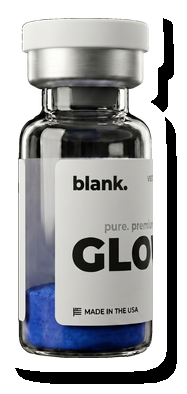
The catalog runs to 34 compounds. Blends carry a per-component milligram split: GLOW at 70mg total (GHK-Cu, BPC-157 and TB-500), KLOW at 80mg (those three plus KPV) and Wolverine at 20mg (BPC-157 and TB-500). Processing time is within 1 business day and orders ship at room temperature. Everything is labeled for research use only, and the company has been operating for five years.
What Ion Peptides publicly states
Here’s what the pages said on 2026-09-08, quoted directly.
Start with the domains, because it affects what you’re reading. One address associated with the brand, ionpeptides.net, returned a 403 error on the date reviewed. Two others resolved and carried overlapping brand copy, and at least two more sites operate under close variations of the name, one of which states “USA-made” and offers shipping to the UK, Germany, Sweden, Australia, the Netherlands and Denmark, which is a different shipping posture from the U.S.-focused pages. Confirming which site you’re ordering from is a real step here rather than a pedantic one.
On the pages I could read, the About section states “Our peptides are manufactured in … climate-controlled facilities designed to meet the strictest pharmaceutical-grade standards,” describes “rigorous environmental controls” covering temperature, humidity and particulate monitoring, and states “Every peptide is synthesized to 99%+ purity.” The homepage puts it differently and more cautiously: “Many RUO peptides are engineered and lyophilized in advanced U.S.-based or GMP-compliant laboratories,” which uses “many” rather than “all” and “or” rather than a single claim. The FAQ then states, “Ion Peptide is solely a supplier of research chemical materials.” No facility, address, production location or contract manufacturer is named on any of those pages, so the three statements can’t be reconciled from outside. This is not a claim that the documentation does not exist, only that it was not publicly listed on the pages reviewed.
Now the part the site does well, and it deserves saying without hedging. The FAQ states, “Testing is conducted by Freedom Diagnostics in Franklin, Tennessee,” which is a named laboratory with a named town attached, and that puts Ion Peptides ahead of the large majority of vendors in this market on the single most useful transparency question there is. The certificate library states “Search Ion Peptide Certificates of Analysis by product or batch number” and that “Batch reports are organized by product and dose so researchers can quickly locate matching documentation,” with batch identifiers in formats such as 5AM50-010826 and BPC10-05202026. Records state they “may include analytical details such as purity, mass, and batch-related testing documentation,” and a “UPLC/MS Analytical review” and an “Endotoxin Result” appear alongside certain products. The site states “100+ RUO Peptides Available,” same-day processing for orders before 6pm EST on weekdays and 3pm on Saturday, and “2nd Day Delivery Standard across USA.” Sterility testing was not listed on the pages reviewed 2026-09-08.
Side by side: provenance and testing
| Attribute | Blank Peptides | Ion Peptides |
|---|---|---|
| Synthesises in-house | Own cGMP laboratory, compounds and vials every lot | States “Our peptides are manufactured in … climate-controlled facilities” on one page and “Ion Peptide is solely a supplier of research chemical materials” on another — verify |
| Manufacturer named | Chain of custody held in one facility, no broker step | States peptides are “engineered and lyophilized in advanced U.S.-based or GMP-compliant laboratories”; no facility or location named on pages reviewed 2026-09-08 — verify |
| Third-party lab named | Freedom Diagnostics and Horizon Analytical | States “Testing is conducted by Freedom Diagnostics in Franklin, Tennessee” — verify |
| HPLC purity | >99% per lot | States “Every peptide is synthesized to 99%+ purity” and describes HPLC as measuring purity and detecting contaminants — verify |
| MS identity | Confirmed per lot | States MS “Confirms molecular weight and compound identity”; records reference “UPLC/MS Analytical review” — verify |
| Endotoxin and sterility | Both tested per lot | An “Endotoxin Result” appears alongside certain products; sterility not listed on pages reviewed 2026-09-08 — verify |
| Batch COA before purchase | Public per-lot library at blankpeptides.com/coas/ | States certificates are searchable “by product or batch number”; a wholesale portal on one domain required sign-in on 2026-09-08 — verify |
| Blend mg split disclosed | Per component on every blend | Not listed on the pages reviewed 2026-09-08 — verify |
| Catalog size | 34 compounds | States “100+ RUO Peptides Available” — verify |
| Research-use labelling | Every vial labeled research use only | States products “are for research use only and are not intended for human or animal consumption” — verify |
How to verify either supplier yourself
- Write down which exact domain you’re on and check whether the brand operates others, because copy about manufacturing, shipping and testing differed between the sites carrying this name on the date I looked.
- When a site’s About page and its FAQ describe the company’s role differently, email support and ask one direct question: does the company synthesize the material itself, and if not, who does. Keep the written answer with your order record.
- Look up the named testing laboratory independently of the vendor’s site, confirm it exists as its own business, and check whether it will verify a certificate you were given.
- Open the record for the exact batch you intend to buy, count whether identity, endotoxin and sterility appear next to purity, and match the batch identifier against the vial when it arrives.
- Score every candidate against the supplier verification checklist rather than grading each one on whichever page you happened to land on first.
Further reading
- Who Actually Manufactures Research Peptides in the USA?
- Which Peptide Vendors Name Their Testing Lab?
- Peptide Vendors With Public Per-Batch COA Libraries
- Best Research Peptide Suppliers: Ranked by What They Document
Frequently asked questions
Who makes Ion Peptides peptides?
The pages don’t settle it. On 2026-09-08 the About section stated “Our peptides are manufactured in … climate-controlled facilities,” the homepage stated many products are “engineered and lyophilized in advanced U.S.-based or GMP-compliant laboratories,” and the FAQ stated “Ion Peptide is solely a supplier of research chemical materials.” No facility or manufacturer was named on any of them.
Does Ion Peptides name its testing laboratory?
Yes, and it’s the strongest disclosure on the site. The FAQ states, “Testing is conducted by Freedom Diagnostics in Franklin, Tennessee.” A named laboratory with a named location is something you can look up and approach independently, which is more than most vendors in this market offer. It answers who measured the material rather than who produced it.
Why do several websites use the Ion Peptides name?
I can’t tell you from outside, and I won’t speculate about the arrangement. What I can report is that on 2026-09-08 one brand domain returned a 403 error, two others resolved with overlapping copy, and further sites operated under close variations of the name with differing shipping and manufacturing statements. Confirm which one you’re transacting with before ordering.
Can I see an Ion Peptides COA before buying?
Partly, on the date reviewed. The site states certificates are searchable by product or batch number and organized by product and dose, with batch identifiers visible. A wholesale portal on one of the domains required a sign-in. Read the underlying record for your specific batch rather than the summary, and check which tests it actually covers.
Are these products for human use?
No. Every compound referenced here, from any supplier, is intended for in-vitro laboratory research by qualified professionals. Who manufactured a vial has no bearing on that limit, and nothing in this article is medical advice, a dosing suggestion or a recommendation for any use outside a controlled research setting.
For research use only. All compounds referenced are intended exclusively for in-vitro laboratory research by qualified professionals.
Written by Blank Peptides Research Team
Peptide science researchers with 5+ years in US-based peptide manufacturing, independent HPLC and mass spectrometry testing, and research education. All content is reviewed for scientific accuracy before publication.
REVIEWED BY
Dr. Tobias S — PhD Chemist, Peptide and Unnatural Amino Acid Synthesis
Dr. Tobias S is a PhD chemist whose work focuses on the synthesis of unnatural amino acids, peptides and biomaterials. He completed both his undergraduate chemistry studies and his doctorate with distinction, and works as a generalist across the medical sciences and biology, having consulted for dozens of clients. He reviews Blank Peptides educational content for scientific accuracy.
Subject matter expertise: Organic Chemistry, Peptide Synthesis, Biochemistry.