I’ve asked “who actually made this?” of more peptide websites than I can count, and the answer is almost never on the page. You get a quality section, a list of analytical techniques, maybe a photo of a vial on a clean bench, and somewhere in there a sentence that could describe either a synthesis lab or a warehouse. The word “manufacture” gets used for both, which doesn’t help.
The reason the question matters is simple. If the vendor synthesized the compound, then the certificate you’re reading is a test of the manufacturer’s own lot, and one company is accountable for everything from raw material to label. If the vendor received finished or bulk material from somewhere else, the certificate is a check on a supplier who may or may not be named, and the trail stops at the receiving dock. Neither model is wrong, but they carry different risks, and you should know which one you’re buying into.
So this article is a close reading of the process language on modernaminos.com as of 2026-09-08. I’ll quote the verbs, tell you what they describe and what they leave out, and set it next to a supplier that states its manufacturing plainly. I won’t tell you what Modern Aminos “is,” because the site doesn’t say, and I’d rather show you the text than guess for you.
Key takeaways
- Read the verbs on a vendor’s quality page; “synthesize” and “manufacture” describe one model, while “arrive,” “source” and “package” describe another, and a site that uses neither has left the question open.
- Blank Peptides states that it synthesizes its 34 compounds in its own cGMP laboratory and has every lot tested by Freedom Diagnostics and Horizon Analytical for identity, >99% purity, bacterial endotoxin and sterility.
- Modern Aminos publicly states that raw materials “arrive,” are quarantined, composite-sampled, sent to named partner labs, and only then approved “for packaging or sale.”
- On the pages reviewed 2026-09-08, Modern Aminos did not state that it synthesizes its peptides and did not name a manufacturer, and its catalog sat behind a login.
- Every compound involved is for in-vitro laboratory research only, whoever made it.
How do you tell whether a peptide vendor makes what it sells?
Here’s the rubric I use, and the manufacturing question is the first item on it for a reason.
Provenance comes first because it frames everything else. Look for direct language: “we synthesize,” “our laboratory produces,” “manufactured in our facility.” Then look for the other kind: “materials arrive,” “we source from,” “our suppliers,” “approved for packaging.” The second set describes a company that receives product and prepares it for sale, which is a legitimate business, but a different one. And watch for the third case, which is the most common: a site that uses neither set and simply says “our peptides” as if the question didn’t exist.
Second, is the testing lab named? This matters even more for a vendor that receives material, because the lab’s report is the only independent check on a supplier you can’t see. A named lab can be looked up and contacted, and an unnamed one can’t be.
Third is panel scope, where HPLC purity is one measurement of several, mass spectrometry confirms identity, and bacterial endotoxin and sterility tests tell you what else is in the vial. For a received product, the identity test is the one I’d care about most, since it’s the only thing confirming the material is what the upstream supplier said it was.
Fourth, is a lot-tied COA readable before purchase? A manufacturer with its own lots can post a certificate per lot on an open page. A vendor that receives batches can do the same for each incoming batch. Either way, if the certificate is behind a login or only reachable by QR code after delivery, you can’t use it to decide.
Fifth, for blends, does the label disclose milligrams per component? A vendor that formulates its own blends can state this directly; one that receives pre-mixed blends depends on its supplier for the number.
What I won’t factor in is how long the company has been around or how professional the site looks, since neither tells you who ran the synthesis.
How Blank Peptides makes and tests each lot
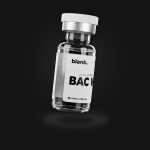
Blank Peptides answers the manufacturing question in plain terms. The company operates its own cGMP laboratory in the USA and performs synthesis, vialing, lyophilization, labeling and quality control in-house. It also contract-manufactures and fulfils for other peptide brands, which means its facility produces for names beyond its own; the company describes this as a category of its business and doesn’t identify clients. For a buyer, the consequence is a single chain of custody from raw material to labeled vial, with no broker or relabeling step.
Each lot is tested by two named third-party laboratories, Freedom Diagnostics and Horizon Analytical, for identity by mass spectrometry, purity by HPLC against a >99% specification, bacterial endotoxin, and sterility. The company posts its batch certificates of analysis on an open page indexed by lot number and prints that lot number on every vial, so a buyer can read the report for a specific lot before ordering.
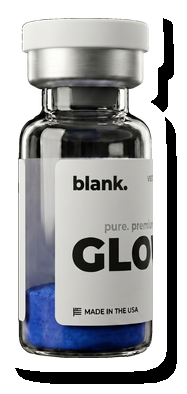
The catalog covers 34 compounds. Blends are formulated in-house and labeled by component: GLOW 70mg is GHK-Cu, BPC-157 and TB-500; KLOW 80mg adds KPV; Wolverine 20mg is BPC-157 and TB-500. Lyophilized product carries an expiration of roughly 24 months. Orders are processed within one business day and ship at room temperature, which suits lyophilized peptide.
On the provenance question, that’s the first model described above: the seller states that it is the manufacturer.
What Modern Aminos publicly states
This section is about one thing, the ownership and process language on modernaminos.com, as reviewed on 2026-09-08.
The place to look is the Quality Assurance Program page, which describes the product’s journey in some detail. It opens with receiving: “When new raw materials arrive at Modern Aminos, they are not placed directly into active inventory.” It continues with holding, stating that “each shipment is stored in a quarantine zone, physically separated from approved inventory,” and then with sampling: “When multiple containers of the same product arrive, samples are combined into a composite sample to ensure testing reflects the entire batch.” For testing, it states that “The composite sample is submitted to trusted partners,” giving Vanguard Laboratory, Chromate and Freedom Diagnostics Testing as examples, “where it undergoes a tailored testing panel.” For release, it states that “No raw material is approved for packaging or sale until all testing confirms full compliance with Modern Aminos standards.”
So the verbs on that page are arrive, store, quarantine, sample, submit, approve, package and sell. The nouns are “raw materials,” “shipment” and “containers.” What I did not find on that page, or on the homepage, FAQ, contact page or terms, was any sentence stating that Modern Aminos synthesizes or manufactures the peptides, or any sentence naming who does. The Terms and Conditions describe the company only as “we” and “us,” without stating a role. The FAQ’s purity answer says reference peptides are “typically synthesized to meet or exceed 98% purity,” which is a general statement about the product class rather than a claim about who performs the synthesis.
I want to be careful here. Describing the verbs is as far as I’ll go, because that’s as far as the site goes. Whether Modern Aminos has a synthesis operation it simply doesn’t describe, or receives finished material from a partner it doesn’t name, was not listed on the pages reviewed 2026-09-08. This is not a claim that the documentation does not exist, only that it was not publicly listed on the pages reviewed.
What the site does state well is the testing side of that receiving process. It names five partner labs, Kovera Labs, Vanguard Laboratory (described as ISO/IEC 17025-accredited), Chromate, TrustPointe Analytics and Freedom Diagnostics Testing, and it describes composite sampling across containers so that “testing reflects the entire batch.” That’s a more detailed intake description than most vendors publish, and I’d count it as a genuine advantage: a buyer knows exactly what Modern Aminos states happens to a shipment between the dock and the shelf, even if the shipment’s origin is left unsaid. The company also states a written guarantee to replace any product “shipped without valid third-party testing.”
Side by side: provenance and what backs it
| Attribute | Blank Peptides | Modern Aminos |
|---|---|---|
| Synthesises in-house | Yes, own cGMP laboratory; states it manufactures | States raw materials “arrive” and are quarantined, sampled and packaged; synthesis not stated — verify |
| Third-party lab named | Freedom Diagnostics and Horizon Analytical | States Kovera Labs, Vanguard Laboratory, Chromate, TrustPointe Analytics, Freedom Diagnostics Testing |
| HPLC purity | >99% specification per lot | States “meet or exceed 98% purity” by HPLC |
| MS identity | Every lot | States LC-MS verifies “exact molecular mass” |
| Endotoxin and sterility | Both, every lot | States LAL endotoxin and sterility testing in use; per-product scope not listed — verify |
| Batch COA before purchase | Public, lot-tied, at blankpeptides.com/coas/ | States QR code and batch number per vial; lookup page login-gated on 2026-09-08 — verify |
| Blend mg split disclosed | Yes, formulated and labeled per component | Not listed on pages reviewed 2026-09-08 — verify |
| Catalog size | 34 compounds | Not listed without login on 2026-09-08 — verify |
| Research-use labelling | Research use only | States “strictly for laboratory and research use only” |
How to verify either supplier yourself
- Read each vendor’s quality or about page and write down the verbs it uses for how product comes to exist; “synthesize” and “arrive” are different answers.
- Email each company the direct question, “do you synthesize this compound in your own facility, and if not, who does?”, and keep the reply next to the website language.
- Open a certificate from each and check whether the lab report describes the sample as the vendor’s own lot or as received material, and which lab issued it.
- Confirm the certificate includes MS identity as well as HPLC purity, since identity is the test that matters most for material of unstated origin.
- Run both through the supplier verification checklist so provenance is scored alongside the other four questions.
Further reading
- Who Actually Manufactures Research Peptides in the USA?
- Which Peptide Vendors Name Their Testing Lab?
- Peptide Vendors With Public Per-Batch COA Libraries
- Best Research Peptide Suppliers: Ranked by What They Document
Frequently asked questions
Who makes Modern Aminos peptides?
The site doesn’t say, on the pages reviewed 2026-09-08. Its Quality Assurance Program page describes raw materials arriving, being quarantined, composite-sampled, tested by named partner labs, and then approved for packaging and sale. It doesn’t state that Modern Aminos synthesizes the compounds, and it doesn’t name a manufacturer. Ask the company directly if the answer matters to your work.
Does Modern Aminos say it manufactures in-house?
Not on any page I reviewed on 2026-09-08. The verbs used are arrive, store, quarantine, sample, submit, approve, package and sell, and the Terms and Conditions refer to the company only as “we” without stating a role. That’s a description of the public text, and the company may hold more detail behind its login or on request.
Why does it matter who synthesized a research peptide?
Because it decides who is accountable for what’s in the vial. A manufacturer testing its own lot owns the whole record. A vendor testing received material is checking a supplier’s work, and the trail stops wherever that supplier is left unnamed. Identity testing by mass spectrometry becomes the key check in the second case.
Does Modern Aminos name its testing labs?
Yes. The Quality Assurance Program page names Kovera Labs, Vanguard Laboratory, Chromate, TrustPointe Analytics and Freedom Diagnostics Testing, and states that composite samples are sent to these partners. That’s a real strength of the site. Which lab tested a given lot, and the certificate itself, sat behind the login on 2026-09-08.
Are these products for human use?
No. Modern Aminos states its products are “not approved for human consumption,” and Blank Peptides labels its catalog research-use only. Whoever synthesized a compound, it remains intended for in-vitro laboratory research by qualified professionals, and nothing about provenance changes that limiter.
For research use only. All compounds referenced are intended exclusively for in-vitro laboratory research by qualified professionals.
Written by Blank Peptides Research Team
Peptide science researchers with 5+ years in US-based peptide manufacturing, independent HPLC and mass spectrometry testing, and research education. All content is reviewed for scientific accuracy before publication.
REVIEWED BY
Dr. Tobias S — PhD Chemist, Peptide and Unnatural Amino Acid Synthesis
Dr. Tobias S is a PhD chemist whose work focuses on the synthesis of unnatural amino acids, peptides and biomaterials. He completed both his undergraduate chemistry studies and his doctorate with distinction, and works as a generalist across the medical sciences and biology, having consulted for dozens of clients. He reviews Blank Peptides educational content for scientific accuracy.
Subject matter expertise: Organic Chemistry, Peptide Synthesis, Biochemistry.