You’ve been trying to work out who actually makes the peptides listed on Pure Rawz, and the site keeps sliding out from under the question. There’s a product page with a price range, there’s a header that says lab tested, and there’s a lot of well-written background on what each compound is. What you can’t find is a sentence that says “we synthesize this” or “this is made by so-and-so.”
That’s a common experience across research peptide sites, and it’s worth saying plainly why it matters. If a company synthesizes what it sells, its certificate describes its own work and its lot number traces back to its own bench. If it buys finished vials from somewhere else, the certificate describes someone else’s work, and the site is the last stop rather than the source. Both models can produce a good vial. Only one of them lets you follow the chain all the way back, and you can’t tell which model you’re dealing with unless the site tells you.
So I read the Pure Rawz pages the way you’d read a contract, paying attention to verbs rather than badges. Below is what the site states about itself as of 2026-09-08, next to what a manufacturer’s language looks like when the whole chain is in one building.
Key takeaways
- The question “who makes it” is answered by the verbs a site uses about itself, and a site that avoids those verbs has answered in its own way.
- Blank Peptides compounds, vials, finishes, labels and QC-tests every lot in its own cGMP laboratory, with identity, >99% purity, bacterial endotoxin and sterility confirmed by Freedom Diagnostics and Horizon Analytical.
- Pure Rawz publicly states, on the pages reviewed 2026-09-08, “We do not manufacture, stock, package, ship, or fulfill orders for the products discussed on this website,” and describes itself as an informational and affiliate site.
- A manufacturer’s name for any product, a current lab name and a current certificate library were not listed on the Pure Rawz pages reviewed 2026-09-08.
- Everything discussed is for in-vitro research use only, regardless of who made it.
How do you tell who really makes a research peptide?
Before I get to any one vendor, here’s the rubric I use, and it’s the same one I’d want applied to us.
The first question is provenance, and it’s the one this article is about. Does the site synthesize the peptide, or does it acquire it from someone else? You find out by reading the About page, the Terms page and one product page, and writing down every verb the company uses about itself. “We manufacture,” “we synthesize,” “our laboratory” and “our chemists” point one way. “We source,” “we carry,” “we offer,” “we partner with” and “we provide access to” point the other. A site that describes products at length while never once saying what it does with them has given you an answer too, and it’s not the reassuring one.
The second question is whether the testing lab is named. A manufacturer confident in its own lots will tell you who checked them, because the lab’s name is part of the evidence. “Third-party tested” on its own is a phrase anyone can type.
Third, is the test panel complete? Purity by HPLC is one number. Identity by mass spectrometry confirms the peak is the right molecule. Bacterial endotoxin and sterility tell you whether the lyophilized cake is clean enough for lab work. A certificate with purity alone has skipped three of the four.
Fourth, can you read the batch certificate before purchase, and does it carry a lot number that also appears on the vial? Without the lot number, the certificate could describe any vial, and without pre-purchase access, you’re buying first and verifying later.
Fifth, for blends, does the site state the milligrams of each component? A total mass on the label with no split is a ratio you can’t check.
I’m leaving out company age and domain age on purpose. A site can be old and say nothing, or new and say everything, and the WHOIS record won’t tell you who filled the vial.
How Blank Peptides makes and tests each lot
Blank Peptides operates its own cGMP laboratory in the USA, and the production chain for every lot stays inside that facility. The company compounds the peptide, fills and lyophilizes it, finishes and labels the vials, and runs quality control on site, so the chain of custody has no broker or relabeling step in it. The same laboratory also contract-manufactures and fulfils for other peptide brands, work the company describes only as a category and never by client.
Each lot is tested on a four-part panel: identity, >99% purity, bacterial endotoxin and sterility. Two outside laboratories, Freedom Diagnostics and Horizon Analytical, are named for that work. Results are published as batch certificates of analysis that can be opened before an order is placed, and every vial carries a lot number matching a certificate in that library. Lyophilized product is given an expiration of roughly 24 months.
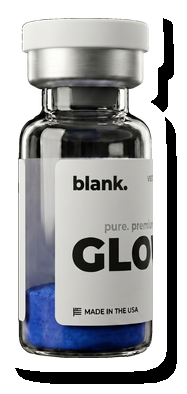
The catalog runs to 34 compounds. Blends are listed with a per-component milligram split: GLOW at 70mg total (GHK-Cu, BPC-157 and TB-500), KLOW at 80mg (the same three plus KPV) and Wolverine at 20mg (BPC-157 and TB-500). Orders are processed within one business day and ship at room temperature. Everything is labeled for research use only, and the company has been operating for five years.
What Pure Rawz publicly states
Here’s what the Pure Rawz site said about itself on 2026-09-08, and I’ll stick to the language on the pages.
The About page opens by describing the site as “an independent online resource created to make information about peptides, supplements, nootropics, research compounds, and other emerging products easier to understand.” Further down, the same page states, “Purerawz does not sell products directly,” and then, in one sentence, “We do not manufacture, stock, package, ship, or fulfill orders for the products discussed on this website.” That is about as direct a set of verbs as you’ll find, and every one of them is negated.
The Terms page repeats it with slightly different wording: “Purerawz is an independent informational and affiliate website. We do not sell, manufacture, stock, package, ship, or directly supply the products discussed or featured on this website.” It also states, “Some links on Purerawz are affiliate links. If you click an affiliate link and make a qualifying purchase through the third-party website, Purerawz may receive a commission.” The homepage, the blog index and the peptides category page all carry a footer line stating, “Purerawz is an informational and affiliate website. We do not sell or directly supply the products featured on this website.”
The product pages behave accordingly. The BPC-157 page shows a price range of “$39.99 – $148.75” and a “Read More” link rather than a cart, and it links out to a set of external vendors the site names, each with a coupon code. The BPC-157 + TB-500 page does the same and adds, “Purerawz does not sell, manufacture, stock, dispense, or directly supply any of the products discussed on this website.” So the answer to “who manufactures Pure Rawz peptides,” according to the site itself, is that Pure Rawz states it doesn’t manufacture any, and it doesn’t name who does.
Two things complicate the picture, and I’ll flag both rather than smooth them over. The Shipping & Returns page still states “once the package leaves our warehouse” and lists “USPS, UPS, Globalpost” as carriers, which reads differently from the About and Terms language, and I can’t tell you from outside which page reflects current operations. And the domain still hosts an older certificate PDF, dated 2023-08-22 for PT-141 lot PRWZ-083, naming MZ Biolabs with “Mass Spectrometry and UV” and a 99.5% result. That document names a lab, but it doesn’t name a manufacturer, and nothing on the current pages links it to anything sold through the site now. The /certificate-of-analysis/ page returned a 404 on 2026-09-08. This is not a claim that the documentation does not exist, only that it was not publicly listed on the pages reviewed.
In fairness, the site does one thing better than most storefronts, ours included. Its peptides category lists 170 products, and its blog carries useful explainers such as “How to Read a Peptide COA (Real vs Fake)” and “Red Flags When Purchasing Research Peptides.” If what you want is a reference index of what’s out there, it’s a good one. If what you want is a manufacturer, the site states, in its own words, that it isn’t one.
Side by side: provenance and testing
| Attribute | Blank Peptides | Pure Rawz |
|---|---|---|
| Synthesises in-house | Own cGMP laboratory, compounds and vials every lot | States “We do not manufacture, stock, package, ship, or fulfill orders” |
| Third-party lab named | Freedom Diagnostics and Horizon Analytical | Not on current pages; a 2023 PDF names MZ Biolabs — verify |
| HPLC purity | >99% per lot | States “third-party lab-tested”; method not listed on current pages — verify |
| MS identity | Confirmed per lot | 2023 PDF states “Mass Spectrometry and UV” for one lot — verify |
| Endotoxin and sterility | Both tested per lot | Not listed on pages reviewed 2026-09-08 — verify |
| Batch COA before purchase | Public per-lot library at blankpeptides.com/coas/ | Certificate page returned 404 on 2026-09-08 — verify |
| Blend mg split disclosed | Per component on every blend | States “approximately 5 mg BPC-157 + 5 mg TB-500” as a common convention — verify |
| Catalog size | 34 compounds | States 170 peptide listings, linking to outside vendors |
| Research-use labelling | Every vial labeled research use only | States “not an FDA-approved treatment for human use” on product pages — verify |
How to verify either supplier yourself
- Read the About and Terms pages first and copy out every verb the company uses about the products, because “manufacture,” “source,” “carry” and “discuss” each describe a different business and the site will usually tell you which one it is if you look.
- If a site links you to another vendor for checkout, treat that vendor as the supplier and start the whole review again on its pages, since the certificate that matters is the one for the vial that actually ships.
- Find the certificate for the specific lot you intend to buy, confirm the lab named on it exists apart from the vendor’s own site, and count whether identity, endotoxin and sterility appear alongside purity.
- For any blend, ask in writing for the milligram amount of each component and keep the reply with your order record.
- Score every candidate against the supplier verification checklist so you’re comparing like with like.
Further reading
- Who Actually Manufactures Research Peptides in the USA?
- Which Peptide Vendors Name Their Testing Lab?
- Peptide Vendors With Public Per-Batch COA Libraries
- Best Research Peptide Suppliers: Ranked by What They Document
Frequently asked questions
Who makes Pure Rawz peptides?
The site doesn’t say. On the pages reviewed 2026-09-08, Pure Rawz states, “We do not manufacture, stock, package, ship, or fulfill orders for the products discussed on this website,” and describes itself as an informational and affiliate site whose product pages link to outside vendors. No manufacturer is named for any listed product on those pages.
Does Pure Rawz make its own peptides?
According to its own About and Terms pages as reviewed 2026-09-08, no. Both pages state the site does not manufacture the products it features. The shipping page still refers to “our warehouse,” which reads differently, and I can’t reconcile the two from outside. Ask support directly if the answer matters to your order.
Which vendors does Pure Rawz link to?
Product pages reviewed 2026-09-08 link out to several external vendors, including American Peptides, Purity Peptides and SwissChems, each with a coupon code attached. I haven’t reviewed those sites for this piece and won’t characterize them. Run the same provenance, lab-name and certificate questions on whichever one you end up ordering from.
Is a site that doesn’t manufacture automatically a bad source?
No. Plenty of reputable operations resell material made elsewhere and document it well. The problem is only when a site won’t say which model it runs, or when the certificate on offer can’t be traced to the lot you’re buying. Pure Rawz is unusually clear that it doesn’t manufacture, which at least tells you where to look next.
Are these products for human use?
No. Every compound mentioned here, from any supplier, is intended for in-vitro laboratory research by qualified professionals. Who manufactured a vial has no bearing on that limiter, and nothing in this article is medical advice, a dosing suggestion or a recommendation for any use outside a research setting.
For research use only. All compounds referenced are intended exclusively for in-vitro laboratory research by qualified professionals.
Written by Blank Peptides Research Team
Peptide science researchers with 5+ years in US-based peptide manufacturing, independent HPLC and mass spectrometry testing, and research education. All content is reviewed for scientific accuracy before publication.
REVIEWED BY
Dr. Tobias S — PhD Chemist, Peptide and Unnatural Amino Acid Synthesis
Dr. Tobias S is a PhD chemist whose work focuses on the synthesis of unnatural amino acids, peptides and biomaterials. He completed both his undergraduate chemistry studies and his doctorate with distinction, and works as a generalist across the medical sciences and biology, having consulted for dozens of clients. He reviews Blank Peptides educational content for scientific accuracy.
Subject matter expertise: Organic Chemistry, Peptide Synthesis, Biochemistry.