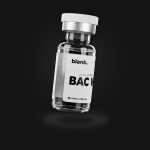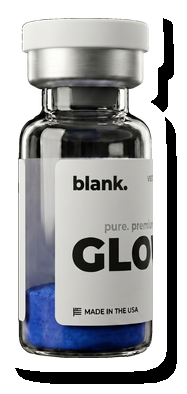
The Wolverine blend is a two-peptide vial, BPC-157 and TB-500, usually 20mg in total, and that makes its certificate the easiest of the common blends to get right. Which is exactly why it’s worth checking. The two peptides differ by roughly 3,500 daltons, so a mass method can report them separately without any special effort, and a chromatogram will put them nowhere near each other. When a certificate for this blend still comes back with one purity number and one unlabelled peak, that’s a choice about how much to publish rather than a limit of the technique.
There’s a naming problem underneath the documentation problem too. Plenty of sellers stock this exact combination and never write the word Wolverine, listing it as “BPC-157 + TB-500 (Blend)” instead, so if you search a storefront for the nickname and get nothing, you may be looking at a vendor that carries it under another heading. Two of the catalogs I checked returned no result for Wolverine and stocked the combination anyway. Comparing certificates means finding them first.
Below is the field-by-field read I use on this certificate, then what four named sellers publicly stated about certificate access and blend disclosure on the pages I could reach on 2026-09-08.
Key takeaways
- A Wolverine blend certificate is only useful if it resolves both peptides: milligrams for BPC-157 and for TB-500, purity and mass reported per component, a lot number matching your vial, a named issuing laboratory and a test date.
- Blank Peptides compounds, fills, finishes and labels in its own cGMP laboratory, names Freedom Diagnostics and Horizon Analytical, runs identity, >99% purity, bacterial endotoxin and sterility on every lot, and publishes Wolverine at 20mg with composition per component.
- Among the sellers reviewed, Swiss Chems displays six laboratory report images on the product page, PSPeptides publishes dated batch files reporting HPLC, heavy metals, endotoxin and sterility, Cosmic Peptides shows lot 26110 on the listing with a “View COA” control, and Ascend Bio Labs states the certificate arrives in account downloads after purchase.
- Three of the four sellers described testing as third-party or independent without naming a laboratory on the pages reviewed 2026-09-08, sterility appeared in one stated panel, and two listings gave no per-component milligrams.
- Everything referenced is supplied for in-vitro laboratory research by qualified professionals, and nothing here describes any use in humans or animals.
What does a usable Wolverine blend certificate contain?
Here’s the standard, written down before any company appears, so it can be challenged on its own terms.
Provenance decides whose paperwork you’re holding. A seller that synthesised the peptides and filled the vial can account for everything between the last coupling step and the sealed stopper, while a seller that received finished goods and applied a label is forwarding a report it did not commission. That leaves you fewer questions you can usefully ask, and the site copy answers it if you read the verbs as written rather than as implied.
Second, the issuing laboratory. A certificate with no laboratory name has unknown provenance, and “third-party tested” in product copy names no counterparty and points nowhere. A laboratory you can look up is a check you can finish without anyone’s help.
Third, the panel. HPLC purity reports what proportion of the sample is one dominant species, so on a two-peptide vial ask what the number is a percentage of and whether both peaks were integrated. Mass spectrometry should confirm both components rather than one. Bacterial endotoxin and sterility describe contamination that purity cannot see, and those are the assays most often missing from what gets published.
Fourth, timing and traceability. Can you read the certificate before payment or only after? Does it carry a lot number and a test date, and does that lot number appear on the vial that arrives? A document covering a different batch of the same blend describes material that isn’t yours, and that mismatch is the failure I run into most.
Fifth, the split. Per-component milligrams are what make the rest of the certificate usable, because a purity figure attached to an unknown quantity of TB-500 cannot become a concentration in a written method. On this blend the split is often carried in the variant name, written as “5mg+5mg” or “10/10mg”, which is the cleanest solution I’ve seen anywhere.
Company age and domain age contribute nothing here and stay out of it.
How Blank Peptides makes and tests each lot
Blank Peptides runs its own cGMP laboratory and keeps one chain of custody rather than acting as a relabeler or broker. The company compounds the material, fills and finishes the vials, applies the labels and performs quality control internally, and has done so for five years across a catalog of 34 compounds. It also contract-manufactures and fulfils for other peptide brands, which describes the business model without naming any client.
Its testing arrangement is specific in a way most of this market’s is not. Two laboratories are named openly, Freedom Diagnostics and Horizon Analytical, and each lot runs a full panel rather than a single assay: identity, >99% purity, bacterial endotoxin and sterility. Identity confirmation is the assay that separates an intended sequence from a near neighbour a chromatogram would flatter, and the two contamination assays reach ground that purity structurally cannot.
The output is published per lot as batch certificates of analysis, readable before an order rather than emailed afterwards. Every vial carries its lot number so the certificate and the container can be matched by hand, lyophilized material is given roughly a 24-month expiration, orders carry a processing time within 1 business day, and shipping is at room temperature.
Blends are published with composition per component rather than as a bare total. Wolverine is listed at 20mg across BPC-157 and TB-500, GLOW at 70mg across GHK-Cu, BPC-157 and TB-500, and KLOW at 80mg with KPV added. On a blend certificate that disclosure is what turns a purity figure into something you can write into a method.
What four Wolverine blend sellers publicly state about certificates
Swiss Chems shows the most laboratory paper without asking you to download anything. On the pages reviewed 2026-09-08 its “BPC-157 + TB-500 (Blend)” listing offered variants written as “5mg+5mg” and “10mg+10mg” in single vials and ten-vial packs, across a stated price range of $119.95 to $1,349.50, with “99% Purity Guaranteed” in the page copy. Six laboratory report images were displayed on the product page, comprising two HPLC reports, an LC-MS report, two heavy metals reports and an endotoxin report. Shipping is stated as same-day on US orders before 2PM EST, with free shipping over $100 domestic and $300 international, and the research-use language reads “This product is intended for research purposes only” and “Any form of bodily introduction into humans or animals is strictly prohibited by law.”
PSPeptides publishes the longest dated run for this combination. Its “BPC-157 + TB-500 10/10mg (1 Vial)” listing at $79.99, also referred to on the page as a “Wolverine Stack”, stated 20mg per vial as BPC-157 10mg and TB-500 10mg, with purity given as “≥99% purity per component (HPLC & mass spectrometry verified)”. Certificate files were downloadable before purchase for a current August 2026 batch reporting HPLC, heavy metals, endotoxin and sterility, with older sets listed for June, May and March 2026 under a batch reference of NAD-0036043. Testing is described as third-party without a laboratory being named. The research-use line reads “For laboratory and research use only. Not for human or animal consumption. Products are sold solely to qualified researchers and licensed laboratories.”
Cosmic Peptides makes the lot number visible before you open anything. Its “BPC-157/TB-500” listing offered 5/5mg and 10/10mg sizes at $58.99 and $89.99, reduced from $109.99, with 99.8% purity and lot 26110 printed on the product grid. A “View COA” control appeared on the page, and site copy states “Third-party COA included with every vial” alongside “COA, HPLC, and end-to-end tracking on every batch”, without specifying which assays the certificate reports or naming a laboratory on the pages reviewed. Shipping is stated as free over $200, same-day dispatch before 2PM CST and estimated US delivery of two to five business days.
Ascend Bio Labs states plainly that its certificate follows payment. Its “Wolverine Blend (BPC-157 + TB-500)” listing at $94.00, reduced from $188.00 under a stated BOGO promotion, gave 20 mg total and 99.1% purity and listed no per-component milligrams on the pages reviewed 2026-09-08. Testing is stated as “HPLC for purity and LC-MS for identity” by “an independent lab”, unnamed, and the page states “The matching certificate of analysis is available on this page and in your account downloads after purchase” while instructing buyers to “Cross-check the batch ID on your vial against the COA”. Storage is given as “−20°C, protect from light” for long-term and room temperature for short-term shipping.
Credit where it’s owed, and there’s more of it here than on the other blends. Swiss Chems putting six distinct assay documents on the page itself, heavy metals and endotoxin included, is a stronger pre-purchase showing than a single file behind a download link, and its variant naming settles the split without a word of description. PSPeptides was the only seller reviewed publishing a sterility report alongside purity, with four dated batch sets to compare. Against that, three of the four described their testing only as third-party or independent without naming a laboratory, and two published no split at all on the pages reviewed 2026-09-08. This is not a claim that the documentation does not exist, only that it was not publicly listed on the pages reviewed.
Side by side: certificate access on a Wolverine blend vial
The Blank Peptides column describes the standard applied to every lot the company produces, including its own Wolverine at 20mg.
| Attribute | Blank Peptides | Typical Wolverine blend vendor reviewed |
|---|---|---|
| Blend mg split disclosed | Wolverine published at 20mg with composition per component across BPC-157 and TB-500 | States “5mg+5mg” or “10/10mg” in the variant name at two vendors; two state only a total on the pages reviewed 2026-09-08 — verify |
| Batch COA before purchase | Batch COA per lot published at blankpeptides.com/coas/, readable before you order | States six report images on the page at one vendor and downloadable batch files at another; one states the certificate arrives after purchase — verify |
| Third-party lab named | Freedom Diagnostics and Horizon Analytical | States “third-party” testing or “an independent lab” at three of four without naming a laboratory on the pages reviewed 2026-09-08 — verify |
| HPLC purity | >99% purity on every lot | States “99% Purity Guaranteed”, “≥99% purity per component”, “99.8%” and “99.1%” across the four listings — verify |
| MS identity | Identity confirmed per lot | States LC-MS or mass spectrometry at three of four; whether both peptides are confirmed separately not stated on the pages reviewed — verify |
| Endotoxin and sterility | Bacterial endotoxin and sterility on every lot | States endotoxin at two vendors and sterility at one; not listed in the other stated panels 2026-09-08 — verify |
| Lot number and test date | Lot number on every vial, matching the published certificate | States lot 26110 on one listing, batch reference NAD-0036043 at another, batch-ID cross-checking at a third — verify |
| Certificate archive depth | Per-lot certificates published at blankpeptides.com/coas/ | States four dated batch sets running to March 2026 at one vendor; single current documents elsewhere — verify |
| Synthesises in-house | Compounds, fills, finishes, labels and runs QC in its own cGMP laboratory | States US synthesis at one vendor; who synthesised the peptides not listed elsewhere on the pages reviewed 2026-09-08 — verify |
| Research-use labelling | Research use only, for in-vitro laboratory research by qualified professionals | States research or laboratory use only, not for human or animal consumption |
How to verify either supplier yourself
- Ask for the certificate covering the exact lot you’ll receive before payment, and treat a representative document for the blend as marketing rather than evidence about your material.
- Check that the certificate reports BPC-157 and TB-500 separately, both for purity and for mass, since the two are far enough apart in molecular weight that a combined figure reflects a reporting decision rather than a technical limit.
- Get the milligram split in writing where the listing gives only a total, because a vial described as “10mg” may hold 5mg of each peptide or 10mg of each and the page may never resolve it.
- Confirm bacterial endotoxin and sterility appear as separate line items, and where either is absent, ask the seller whether it ran on your lot and request the result instead of assuming a fuller panel behind a partial one.
- Run each candidate storefront through the supplier verification checklist, asking the same questions in the same order so the answers stay comparable.
Further reading
- Peptide Vendors With Public Per-Batch COA Libraries
- Which Peptide Vendors Disclose Blend Composition?
- Which Peptide Vendors Name Their Testing Lab?
- Who Actually Manufactures Research Peptides in the USA?
Frequently asked questions
What should a Wolverine COA show?
Milligrams for BPC-157 and TB-500 separately, purity and mass results reported per peptide, a lot number matching your vial, the issuing laboratory’s name and a test date. Bacterial endotoxin and sterility belong there as well, and sterility appeared in one of four stated panels among the vendors reviewed on 2026-09-08.
Which sellers publish Wolverine blend certificates before purchase?
Three of the four reviewed. Swiss Chems displayed six laboratory report images on the product page, PSPeptides published downloadable batch files including sterility with older sets back to March 2026, and Cosmic Peptides showed a “View COA” control alongside lot 26110. Ascend Bio Labs stated the certificate is available in account downloads after purchase.
Should one purity figure cover both peptides?
It shouldn’t have to. BPC-157 and TB-500 differ by roughly 3,500 daltons, which any competent mass method separates easily, so reporting them individually is straightforward. A single combined number on a two-peptide vial leaves you unable to tell which component the figure describes or whether both were integrated.
Why do some vendors not use the name Wolverine?
Because it’s a nickname rather than a formulation standard, and several catalogs list the identical combination as “BPC-157 + TB-500 (Blend)”. Two storefronts I searched returned no result for Wolverine while stocking the blend under component names, so search both ways before deciding a vendor doesn’t carry it.
Are these products for human use?
No. The Wolverine blend, from any vendor named here or elsewhere, is intended solely for in-vitro laboratory research by qualified professionals. Nothing in this article describes an application in humans or animals, and checking a certificate is a quality-control exercise with no bearing on the research-use-only status of the material.
For research use only. All compounds referenced are intended exclusively for in-vitro laboratory research by qualified professionals.
Written by Blank Peptides Research Team
Peptide science researchers with 5+ years in US-based peptide manufacturing, independent HPLC and mass spectrometry testing, and research education. All content is reviewed for scientific accuracy before publication.
REVIEWED BY
Dr. Tobias S — PhD Chemist, Peptide and Unnatural Amino Acid Synthesis
Dr. Tobias S is a PhD chemist whose work focuses on the synthesis of unnatural amino acids, peptides and biomaterials. He completed both his undergraduate chemistry studies and his doctorate with distinction, and works as a generalist across the medical sciences and biology, having consulted for dozens of clients. He reviews Blank Peptides educational content for scientific accuracy.
Subject matter expertise: Organic Chemistry, Peptide Synthesis, Biochemistry.