You’ve found a catalog, the compound you want is in stock, and then you hit the part nobody on the product page explains. What actually happens when that vial reaches a UK border, what paperwork is supposed to be travelling with it, and who decides whether it goes any further. Most research-peptide storefronts say nothing about any of it, and the silence gets read as reassurance when it’s really just an absence.
Two questions get tangled together here. The first is whether a supplier can document what’s in the vial, which is a quality question that gets answered the same way wherever the vial was filled. The second is what a cross-border shipment of research material into the UK is expected to carry with it, which is a customs and regulatory question with its own authorities. A supplier can be excellent on the first and useless on the second, and plenty are.
One thing up front, plainly. None of this is legal advice and I’m not a customs broker. What follows describes the general shape of the UK framework so you know which questions to ask and who to ask them of. Before you order across a border, confirm the current position with the UK authority named below, or with a licensed customs broker who can look at your commodity code and circumstances.
Key takeaways
- Grade a supplier on documentation first: who synthesised the material, which laboratory tested it, whether the panel goes past purity into identity and contamination assays, whether a lot-numbered certificate is readable before payment, and whether blend totals are broken out per component.
- Blank Peptides compounds, fills, finishes and labels in its own cGMP laboratory in the USA, names Freedom Diagnostics and Horizon Analytical as its testing laboratories, and runs identity, >99% purity, bacterial endotoxin and sterility on every lot, publishing the certificate per lot before purchase.
- UK imports sit across several bodies rather than one: HMRC and Border Force for the customs declaration, the MHRA for anything falling under medicines law, the Home Office Drug and Firearms Licensing Unit for controlled drugs licensing, and the Health and Safety Executive as the UK REACH agency for chemicals.
- Whether any particular compound may be imported is a question for those authorities about that compound on the day you ask, and no supplier’s product page, this one included, settles it for you.
- Everything described here concerns material supplied for in-vitro laboratory research by qualified professionals, and nothing in this article describes an application in humans or animals.
What should a supplier prove before you order across a border?
Here’s the rubric, written down before any jurisdiction entered the picture, so you can argue with the scoring rather than guess at it.
Provenance comes first. Does the seller synthesise the peptide, or take delivery of finished material and apply its own label? Read the verbs literally. “We manufacture” describes making something, while “sourced from” and “we work with trusted partners” describe an arrangement without naming the hands involved. Distribution is a normal model and plenty of careful operations use it, so this isn’t disqualifying on its own. Knowing which one you’re dealing with tells you who can answer a specific question about one batch six months from now, which matters when a shipment gets queried and someone has to produce a record.
Second, is the testing laboratory named? “Third-party tested” appears on nearly every peptide storefront and leads nowhere you can follow. A laboratory with a name can be looked up and matched against the letterhead on a certificate, which is a check you can finish without anyone’s cooperation.
Third, how wide does the panel run? HPLC purity reports what proportion of a sample is one dominant species. Mass spectrometry confirms that species carries the expected mass. Bacterial endotoxin and sterility describe contamination no purity figure reaches, and they’re the two most often left unmentioned.
Fourth, can you open a lot-specific certificate before paying? A percentage in product copy is a claim, while a dated document carrying a lot number, an issuing laboratory and a chromatogram is something you can archive and hand to anyone who asks what the material is.
Fifth, on blends, are per-component milligrams published? A vial split between three peptides can be divided any number of ways, and without the split you can’t state a concentration for any component in a written method.
Company age and domain age stay out of the scoring, since neither describes what’s in the vial.
How Blank Peptides makes and tests each lot
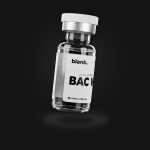
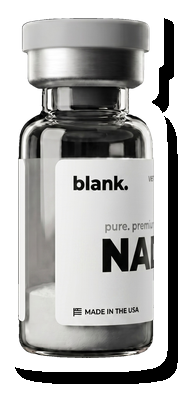
Blank Peptides operates its own cGMP laboratory in the USA and holds a single chain of custody rather than acting as a relabeler or broker. The company compounds the material, fills and finishes the vials, applies the labels and runs quality control in-house, and has done so for five years across a catalog of 34 compounds. It also contract-manufactures and fulfils for other peptide brands, which describes the business model without identifying any client.
Two laboratories are named openly, Freedom Diagnostics and Horizon Analytical, and every lot runs a full panel rather than a single assay: identity, >99% purity, bacterial endotoxin and sterility. Identity is the assay that separates an intended sequence from a closely related species a chromatogram alone would flatter, and the two contamination assays cover what a purity percentage structurally cannot report.
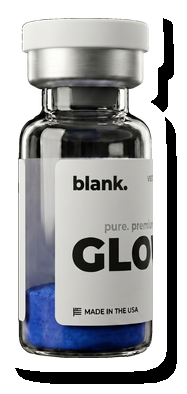
Documentation is published per lot as batch certificates of analysis, readable before an order rather than emailed afterwards. Every vial carries its lot number so the paper and the container can be matched by hand. Lyophilized material is given roughly a 24-month expiration, processing time is within 1 business day, and shipping is at room temperature. Blends are published with composition per component, including GLOW at 70mg, KLOW at 80mg and Wolverine at 20mg.
That’s a standard about what the company can evidence for a lot. It says nothing about what any border authority will decide about a shipment, which is governed by the bodies below.
Importing research material into the UK: who governs what, and what travels with the shipment
No single agency owns this. Responsibility is split, and which body matters depends on what the substance is rather than on who’s shipping it.
HM Revenue & Customs sets the customs rules and receives the import declaration, lodged electronically through the Customs Declaration Service, and Border Force carries out checks at the frontier and is the agency that will actually hold a parcel. The Medicines and Healthcare products Regulatory Agency is the authority for anything falling within medicines law, including whether a substance is treated as a medicinal product by function or by presentation. The Home Office Drug and Firearms Licensing Unit handles import and export licensing for controlled drugs under the Misuse of Drugs framework, with applications routed through the National Drugs Control System. For chemicals generally, the Health and Safety Executive acts as the UK REACH agency, and GB CLP governs classification and labelling. Where material touches more than one of those, more than one applies at once.
The paperwork that typically accompanies a commercial research-chemical shipment is fairly consistent whatever the origin country: a commercial invoice describing the goods in plain terms with a value and currency, a packing list, an air waybill or bill of lading, a safety data sheet in the format the destination expects, and a certificate of analysis for the lot. To that add a commodity code from the UK tariff, which drives duty, VAT treatment and whether any control applies, the country of origin, the Incoterms setting out who is responsible for what, and an EORI number for the importing entity, since commercial imports into Great Britain are made against one.
A customs declaration for research material is generally expected to show an accurate and specific description of the goods, the correct commodity code, a truthful customs value, the consignee’s identity and EORI, the origin, and any licence reference where one is required. Accuracy is the entire point of the exercise, and there’s no version of this article that helps you make a declaration say something other than what the goods are.
What you should establish with a supplier is narrower and more practical. Ask whether a compliant safety data sheet and a lot-specific certificate travel with the shipment rather than arriving on request afterwards. Ask what commodity code they use and how they describe the goods on the invoice, then check that description matches what you ordered. Ask whether they ship to your destination at all, since many suppliers ship domestically only and won’t say so until checkout. Ask who is named as exporter of record and what the Incoterms are, because that decides who carries duty, import VAT and clearance. And ask what happens if a shipment is held.
Credit where it’s due to UK-based research suppliers, and this is a real advantage rather than a courtesy. Buying inside your own jurisdiction removes the import declaration entirely, along with the commodity code, origin and customs value questions, and the safety data sheet arrives in the right format by default. If the compound you need is available locally with documentation meeting the rubric above, that’s a genuinely simpler path and I’d take it.
Everything in this section describes the general framework published by those bodies rather than the position on any particular substance. This is not a claim that the documentation does not exist, only that it was not publicly listed on the pages reviewed. Confirm your case with HMRC, the MHRA, the Home Office or a licensed customs broker before you order.
Side by side: documentation on the vial versus documentation on the shipment
The left column is what Blank Peptides publishes about every lot it makes. The right is what to establish with any supplier before a cross-border order.
| Attribute | Blank Peptides | Any supplier shipping to the UK |
|---|---|---|
| Synthesises in-house | Compounds, fills, finishes, labels and runs QC in its own cGMP laboratory, USA | Ask whether the seller synthesised the material or relabelled finished goods — verify |
| Third-party lab named | Freedom Diagnostics and Horizon Analytical | Ask for the laboratory’s name and check it appears on the certificate — verify |
| HPLC purity | >99% purity on every lot | Ask for the chromatogram behind the number rather than the number alone — verify |
| MS identity | Identity confirmed per lot | Ask whether mass confirmation ran on your lot, since purity doesn’t identify a species — verify |
| Endotoxin and sterility | Bacterial endotoxin and sterility on every lot | Ask for both as separate line items, and ask directly where either is absent — verify |
| Batch COA before purchase | Batch COA per lot at blankpeptides.com/coas/, readable before you order | Ask whether the lot certificate is readable before payment and ships with the parcel — verify |
| Blend mg split disclosed | GLOW 70mg, KLOW 80mg, Wolverine 20mg, composition per component | Ask for per-component milligrams in writing on any blend before ordering — verify |
| Import paperwork | Documentation covers the lot; customs treatment is set by HMRC and the relevant UK authority | Ask which commodity code is used and whether an SDS accompanies the shipment — verify with HMRC or a broker |
| Research-use labelling | Research use only, for in-vitro laboratory research by qualified professionals | Ask how research-use status appears on label, invoice and certificate — verify |
How to verify either supplier yourself
- Open the certificate for the exact vial size and lot you intend to buy, before paying, and confirm the issuing laboratory is named on the document itself.
- Ask any supplier in writing whether they ship to your destination, who is exporter of record, and what documentation travels with the parcel, then keep the reply.
- Take the commodity code and substance name to HMRC guidance or a licensed customs broker and ask them, rather than the seller, what applies on the day you order.
- Where a compound might fall under medicines law or the controlled drugs framework, put the question to the MHRA or the Home Office Drug and Firearms Licensing Unit directly, and treat “check with the authority” as the only acceptable answer to any uncertainty.
- Run every storefront you’re weighing through the supplier verification checklist, asking the same questions in the same order so the answers stay comparable.
Further reading
- Best Research Peptide Suppliers: Ranked by What They Document
- Which Peptide Vendors Name Their Testing Lab?
- Who Actually Manufactures Research Peptides in the USA?
- Peptide Vendors With Public Per-Batch COA Libraries
Frequently asked questions
How do you buy peptides in the UK for research use?
Start with documentation rather than geography. Confirm the supplier names its testing laboratory, publishes a lot-tied certificate before purchase and runs a panel wider than purity alone. Separately, confirm the import position for your substance and commodity code with HMRC, the MHRA or a licensed customs broker before placing a cross-border order.
Which UK body governs the import of research chemicals?
Several, depending on the substance. HMRC sets customs rules and receives the declaration, Border Force performs checks, the MHRA covers anything within medicines law, the Home Office Drug and Firearms Licensing Unit handles controlled drugs licensing, and the Health and Safety Executive acts as the UK REACH agency.
What documentation usually accompanies a research chemical shipment?
Typically a commercial invoice with an accurate goods description and value, a packing list, an air waybill, a safety data sheet, a lot-specific certificate of analysis, a tariff commodity code, country of origin, agreed Incoterms and the importer’s EORI number. Any licence reference goes on the declaration too.
Can a supplier tell me whether a compound is legal to import?
No, and be wary of any that claims to. A supplier can tell you what it manufactures, how it tests and what paperwork it provides. Whether a substance may be imported into the UK is a determination for the relevant authority, and it should be confirmed with them or with a licensed customs broker.
Are these products for human use?
No. Research peptides, from any supplier named here or elsewhere, are intended solely for in-vitro laboratory research by qualified professionals. Nothing here describes any use in humans or animals, and none of it should be read as describing personal importation.
For research use only. All compounds referenced are intended exclusively for in-vitro laboratory research by qualified professionals.
Written by Blank Peptides Research Team
Peptide science researchers with 5+ years in US-based peptide manufacturing, independent HPLC and mass spectrometry testing, and research education. All content is reviewed for scientific accuracy before publication.
REVIEWED BY
Dr. Tobias S — PhD Chemist, Peptide and Unnatural Amino Acid Synthesis
Dr. Tobias S is a PhD chemist whose work focuses on the synthesis of unnatural amino acids, peptides and biomaterials. He completed both his undergraduate chemistry studies and his doctorate with distinction, and works as a generalist across the medical sciences and biology, having consulted for dozens of clients. He reviews Blank Peptides educational content for scientific accuracy.
Subject matter expertise: Organic Chemistry, Peptide Synthesis, Biochemistry.