Research Disclaimer
This article reviews published scientific literature for educational purposes only. All compounds referenced are sold by Blank Peptides exclusively for in-vitro research and laboratory use. Nothing in this article constitutes medical advice, a treatment recommendation, or an endorsement of human use.
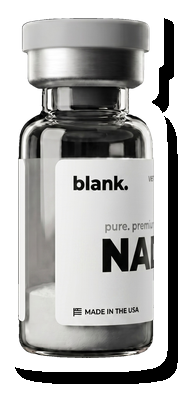
NAD+ isn’t a peptide. It’s a coenzyme, a small molecule that helps enzymes do their job. So why do we carry it? NAD+ research overlaps with most of what happens in the longevity and regenerative space, and the peptide stacks we sell depend on the cellular machinery NAD+ keeps running.
What Is NAD+ and Why Cells Need It
Nicotinamide adenine dinucleotide is found in every cell in the body. It participates in hundreds of metabolic reactions:
- Energy production (ATP synthesis): foundational to cellular function
- DNA repair, where PARP enzymes consume NAD+ to fix DNA breaks
- Cell signaling, including sirtuin activation and metabolic regulation
- Mitochondrial function: electron carrier in energy extraction pathways
NAD+ and Mitochondrial Energy
NAD+ is essential for glycolysis and the citric acid cycle, the pathways where cells extract energy from food. Without adequate NAD+, mitochondria can’t operate efficiently:
- Mitochondrial dysfunction is a hallmark of aging: less efficient ATP production, more free radical byproducts
- NAD+ restoration gives mitochondria the cofactors they need to function
- Published data: cell cultures from aged animals show improved ATP production when NAD+ is restored to youthful levels
NAD+ and DNA Repair
PARP enzymes are DNA repair systems that use NAD+ as fuel. The aging problem is twofold:
- More DNA damage accumulates: oxidative stress, radiation, and replication errors all increase with age
- Less NAD+ is available for repairs, so the repair crew works overtime with fewer resources
Published work reports improved DNA repair in aged cells when NAD+ levels are restored, which matters for cancer prevention, chromosomal stability, and preventing age-driving mutations.
NAD+ and Sirtuins: The Longevity Enzymes
Sirtuins are enzymes that require NAD+ as a cofactor and regulate longevity-related processes:
- DNA repair coordination through sirtuin-mediated repair pathways
- Metabolic health regulation, covering glucose and lipid handling
- Stress resistance, meaning cellular defense against oxidative and metabolic stress
- Senescence prevention: sirtuins may help regulate and clear senescent cells
NMN vs. NR: Choosing a Precursor
NAD+ is too large to cross cell membranes directly, so researchers use precursors the body converts to NAD+:
NMN (Nicotinamide Mononucleotide)
- Exploding research over past 5 years from top institutions
- Human trials showing good safety, promising metabolic and muscle signals
- Bioavailability may decline with age (ironic timing)
NR (Nicotinamide Riboside)
- Longer research history, more accumulated human data
- More stable bioavailability across ages
- May work better in older populations where it’s most needed
Both raise NAD+ levels. Both appear safe. Effects seem comparable in many contexts.
The Honest Assessment
- NMN and NR do raise NAD+ levels in cells and tissues, in preclinical models and in short-term human studies
- Animal data shows improvements in mitochondrial function, metabolic health, and aging markers
- Human data includes clinical trials reporting improved muscle strength, metabolic markers, and blood sugar in older adults
- Long-term lifespan data is not yet available in humans and would take decades to establish
Why We Carry NAD+ Alongside Peptides
GHK-Cu and BPC-157 work in the context of mitochondrial function, energy production, and cellular repair capacity. NAD+ is foundational to all of that:
- Better cellular energy: peptides need energized cells to exert their effects
- Better DNA repair supports the genomic integrity that peptide signaling depends on
- Better sirtuin activation improves the longevity context in which regenerative peptides operate