Is NAD+ legal to purchase for research in the United States? The short answer is yes. Nicotinamide adenine dinucleotide is not a scheduled substance under the Controlled Substances Act, it has no DEA watchlist status, and there is no federal prohibition on acquiring it for laboratory research. That said, understanding exactly how NAD+ sits within the regulatory framework matters when you are sourcing for a serious research program — because the regulatory environment does not police compound quality, and that responsibility falls entirely on the researcher.
NAD+ Is Not a Controlled Substance
Nicotinamide adenine dinucleotide has a CAS number of 53-84-9 and a molecular weight of 663.43 g/mol. It is a naturally occurring coenzyme present in all living cells, playing a central role in cellular energy metabolism through its function in the electron transport chain and as a substrate for sirtuins and PARP enzymes involved in DNA repair signaling.
Because NAD+ is an endogenous molecule rather than a synthetic novel compound, it does not fall within the DEA’s scheduling criteria. Scheduling under the Controlled Substances Act typically applies to substances recognized for abuse potential or with structures substantially similar to known scheduled drugs. NAD+ meets neither condition. Researchers in the US acquire it routinely for in vitro and in vivo studies on mitochondrial function, cellular aging biology, and related metabolic pathways.
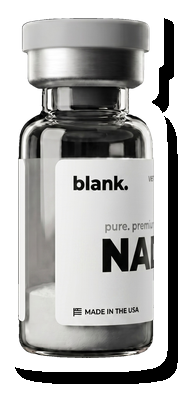
NAD+ is available in lyophilized powder form, which is the standard format for laboratory work requiring precise gravimetric measurement and controlled dilution.
How the FDA Approaches NAD+ for Research Purposes
NAD+ occupies an interesting regulatory position because it appears in multiple contexts simultaneously. As a laboratory reagent, it is simply a chemical compound subject to standard handling and storage requirements — no special license or registration is required to purchase it for research. As a potential therapeutic, it exists in a gray zone: NAD+ itself is not approved as a drug, though related precursors like nicotinamide riboside (NR) and nicotinamide mononucleotide (NMN) have moved into commercial dietary supplement markets.
The FDA’s position on NAD+ as a research compound is passive rather than restrictive. There are no import alerts specific to NAD+, no special labeling mandates beyond standard research chemical requirements, and no federally imposed restrictions on institutional procurement for laboratory purposes. Researchers should comply with their institution’s chemical ordering and safety protocols, which is standard practice for any laboratory compound regardless of regulatory status.
What the FDA does not provide is any quality assurance for research compounds. That responsibility sits with the supplier and the researcher.
What to Look for When Sourcing Research-Grade NAD+
Purity is the primary checkpoint. Research-grade NAD+ should test at >99% by HPLC analysis. The reason this matters for NAD+ specifically is that many assays using this compound — sirtuin activity assays, PARP inhibitor studies, NAD+/NADH ratio measurements — are sensitive to cofactor concentration at the nanomolar to micromolar scale. Impure material shifts the effective concentration in ways that are difficult to correct for after the fact.
Our NAD+ is tested through Freedom Diagnostics and Horizon Analytical and meets the >99% threshold. Lot-specific certificates of analysis are available on request and document HPLC purity results for that production run.
Bacterial endotoxin testing is the second checkpoint. NAD+ used in cell-based assays can generate artifacts if endotoxin contamination triggers inflammatory signaling in the model system — particularly in assays involving immune cell lines or primary macrophages, where LPS-like signals confound metabolic readouts. Bacterial endotoxin testing on each lot confirms the compound is appropriate for cell culture work before it ships.
Sourcing from US-based cGMP labs reduces shipping-related stability risk. Lyophilized NAD+ is more tolerant of transit conditions than many peptides, but extended or high-temperature shipping still affects long-term quality. Our catalog sources from our cGMP labs and ships with processing time within 1 business day.
Researchers building mitochondrial or aging biology protocols often pair NAD+ with compounds targeting complementary pathways. SS-31, a mitochondria-targeted antioxidant tetrapeptide, is used alongside NAD+ in studies examining mitochondrial membrane potential and reactive oxygen species production. MOTS-c, a mitochondria-derived peptide that activates AMPK signaling, represents another complementary compound for researchers studying metabolic regulation and cellular energy homeostasis at the mitochondrial level.
Practical Sourcing Checklist for Research Labs
When evaluating a NAD+ supplier for research use, three things should appear in writing before an order is placed: HPLC purity confirmation at >99%, bacterial endotoxin testing results for the specific lot, and a certificate of analysis tied to lot number rather than a generic specification sheet. Generic specification sheets tell you what the supplier claims as a standard; lot-specific COAs tell you what was actually in the batch you are buying.
Storage instructions should specify lyophilized powder conditions (typically -20°C, protected from moisture and light) and include guidance on reconstituted solution stability. For NAD+, which is sensitive to oxidation in aqueous solution, reconstituted stock is typically stored at -80°C under inert gas or used promptly rather than held at 4°C for extended periods.
FAQ
Do I need a permit or license to buy NAD+ for research in the US?
No permit or license is required. NAD+ is not a controlled substance and is not scheduled by the DEA. Standard institutional procurement processes apply, and researchers should comply with their institution’s chemical ordering, handling, and storage policies — which is standard practice for any lab compound.
Is NAD+ different from NMN or NR legally?
All three — NAD+, NMN, and NR — are unscheduled and legal to purchase for laboratory research. The regulatory distinction is that NMN and NR are precursors that cells convert to NAD+ through biosynthetic pathways, while NAD+ is the active coenzyme itself. For research requiring direct addition of the coenzyme to cell culture or biochemical assays, NAD+ is the more appropriate compound. For studies of NAD+ biosynthesis or precursor pharmacokinetics, NMN or NR may be the correct selection.
What purity and testing standards should I expect from a qualified NAD+ supplier?
A qualified supplier should provide HPLC-confirmed purity at >99%, lot-specific certificates of analysis, and bacterial endotoxin testing data for each lot. Anything less than these three data points introduces uncertainty that compounds across a research program. Our supplier conducts this testing through Freedom Diagnostics and Horizon Analytical, with COAs available per lot on request.
All products discussed are for laboratory research use only and are not for human or veterinary use.