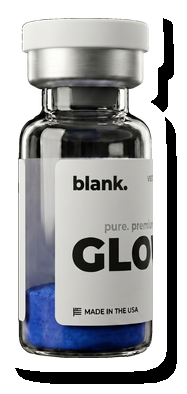
The decision to source a klow peptide blend vs separate vials of its component compounds is a practical one that comes up often in multi-peptide research programs. Both approaches deliver the same actives — GHK-Cu, BPC-157, TB-500, and KPV — but they differ in logistical complexity, per-milligram cost, and how QC data is structured on the certificate of analysis.
Researchers running comparative tissue studies with these four peptides in combination often settle on a blend for consistency. Others prefer individual vials to vary concentrations between arms of a study. Neither approach is universally better. The right choice depends on what the research protocol demands.
What Goes Into KLOW
KLOW is a pre-formulated blend combining four compounds that appear together in skin and soft-tissue research: GHK-Cu, BPC-157, thymosin beta-4 fragment (TB-500), and KPV. The vial ships lyophilized at 80mg total, with fixed ratios across those four peptides.
GHK-Cu is a copper-binding tripeptide with a molecular weight around 341 Da, studied in wound-healing and extracellular matrix contexts. BPC-157 is a pentadecapeptide (15 amino acids, MW ~1419 Da) derived from a protective gastric protein, frequently used in rodent models examining tissue repair. TB-500 is the biologically active fragment of thymosin beta-4, studied in regeneration and actin-regulation research. KPV is a tripeptide (Lys-Pro-Val) derived from α-MSH, studied primarily in inflammation and gut models.
When blended, each peptide is present at a fixed dose. That means the researcher accepts the ratio as established by the formulator rather than scaling each component independently.
The Case for the Blend
Pre-blended vials reduce preparation time and the chance of reconstitution error across four separate vials. For studies where all four compounds are used at fixed ratios, KLOW cuts the number of syringes, mixing steps, and storage tubes needed per research session.
Purity documentation on a blend COA is structured differently from individual-compound COAs: you’ll see a combined certificate referencing the lot as a whole, with HPLC and bacterial endotoxin testing results covering the final blended product rather than each component separately. Freedom Diagnostics and Horizon Analytical are the labs that test our products, so any KLOW COA can be cross-referenced against those providers.
One meaningful consideration: lot-to-lot consistency is worth verifying. With a quality supplier, the peptide ratios should be stable batch to batch, and the COA should confirm this. A certificate showing all four components with individual peak areas is more informative than a general “blend meets spec” statement.
The Case for Individual Vials
Buying GHK-Cu, BPC-157, and KPV separately gives the research team full control over dosing ratios. If a protocol calls for a higher proportion of BPC-157 than TB-500, or for GHK-Cu alone in a control arm, a fixed blend cannot accommodate that.
Individual vials also make it easier to isolate which compound is responsible for a given effect when interpreting results. Multi-peptide study designs are harder to publish cleanly if the ratios can’t be reproduced or varied across conditions. For preclinical researchers building toward publication-ready data, flexible sourcing is worth the added prep time.
Cost per milligram is sometimes lower when buying individually at higher quantities, though this varies by supplier and lot size. The tradeoff is the administrative overhead of managing four SKUs, four storage vials, and four COAs per research session.
Practical Ordering Considerations
Whether ordering KLOW or individual vials, processing time within 1 business day applies across all SKUs from our cGMP labs in the USA. Vials ship lyophilized, and storage at -20°C maintains peptide integrity for the recommended window stated on each COA.
Both formats require reconstitution with bacteriostatic water before use in a research setting. Confirming total milligrams in the vial before calculating the target working concentration is the critical step — especially for a blend where 80mg is distributed across four peptides rather than representing a single compound.
Purity on all formats is >99%, verified by HPLC and mass spectrometry, with bacterial endotoxin testing results included in the COA documentation.
FAQ
Does KLOW come with a COA showing each component’s purity separately?
The COA for KLOW references the blended product as a whole rather than breaking out individual HPLC peak data for each of the four peptides. Researchers who need per-component purity documentation in that format would need to source the compounds individually and obtain certificates for each.
How does the reconstitution volume work for a blend vs individual vials?
For a fixed blend, the reconstitution volume is set to achieve a target working concentration for the combined 80mg content. For individual vials, each compound is reconstituted separately, which allows researchers to adjust each component’s concentration independently. GHK-Cu, for example, is typically reconstituted with 3 mL of bacteriostatic water; other peptides in the blend follow their own guidance. The blend format consolidates these steps into one vial.
Can I use KLOW alongside a separate BPC-157 vial in the same study?
Technically yes — they contain the same compound. Any study design that mixes a fixed-ratio blend with additional single-component sourcing introduces a concentration variable that must be accounted for explicitly in the protocol. Most researchers choose one sourcing format and maintain it consistently within a study arm to avoid confounds in the dosing math.
All products discussed are for laboratory research use only and are not for human or veterinary use.