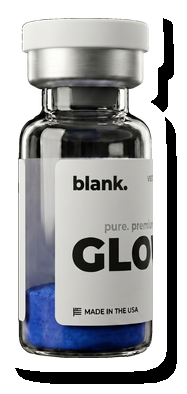
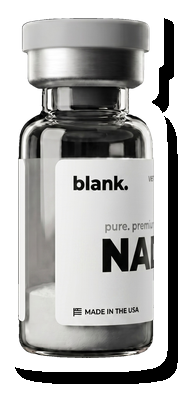
The market for research-grade GLP-1/GIP dual agonists has grown quickly, and tirzepatide reviews have followed. Forum threads, supplier listings, and peptide communities now carry a volume of feedback on this compound that can look like useful sourcing information. Most of it is not.
What fills a review section — shipping experience, packaging quality, communication notes — tells researchers essentially nothing about whether the compound they received is what it claims to be. The relevant questions for a research purchase are analytical: Is the purity >99% by HPLC? Does mass spectrometry confirm the correct molecular weight? Has bacterial endotoxin testing been performed by a named external lab?
This post explains how to read vendor data on tirzepatide with those questions in mind.
Why User Reviews Are a Poor Quality Signal
A researcher ordering tirzepatide is not evaluating a consumer product where subjective outcome reports carry meaningful signal. A reviewer who says a product “worked well” for their study has given you one data point from one experiment with no controls, no documented purity verification, and no independent confirmation of compound identity. That’s anecdote dressed as evidence.
User reviews can surface useful information — whether a vendor responds to pre-sale questions, how orders are packaged, whether documentation arrives with the shipment. These are logistics signals, not quality signals. A vendor can be exceptionally responsive and ship a compound at 80% purity. The star rating captures the former; only analytical documentation captures the latter.
Tirzepatide reviews from researchers who did not examine the COA before ordering are, at best, descriptions of the sourcing experience. At worst, they actively mislead: a positive review based on a substandard compound creates confidence where skepticism is warranted.
What a Tirzepatide COA Should Show
A certificate of analysis for research-grade tirzepatide should include three distinct categories of data.
Purity by HPLC. The standard for research-grade peptides is >99%. The COA should include the actual HPLC chromatography trace, not just a percentage figure. A percentage without the underlying trace is unverifiable — there is no way to assess the peak shape, integration, or secondary peaks that the number is derived from. Vendors who supply numbers only, without the trace, are providing partial documentation.
Mass spectrometry identity confirmation. Tirzepatide has a theoretical molecular weight of approximately 4,813.4 Da. The MS result should confirm this within instrument tolerance and should show tirzepatide as the dominant detected species. Secondary peaks representing truncated sequences, deletion analogs, or synthesis byproducts are meaningful if present; their absence is what a clean MS report demonstrates.
Bacterial endotoxin testing. This is the data point most commonly missing from lower-quality vendor COAs. Endotoxin contamination occurs during synthesis or post-synthesis handling and is completely invisible to HPLC and mass spectrometry — it requires a dedicated LAL (Limulus Amebocyte Lysate) assay to detect. The COA should name the lab that performed bacterial endotoxin testing and report the result in EU/mg. A result without a lab name is not independently verifiable.
The Value of Named Third-Party Labs
In-house testing has a structural problem: the vendor runs the assay and reports the result. There is no external check. Third-party testing by an independent lab removes that conflict. The lab has no stake in whether the compound passes or fails — its job is to report what the assay finds.
Semaglutide and retatrutide from our catalog are tested through Freedom Diagnostics and Horizon Analytical, whose names appear on released COA documentation. Tirzepatide follows the same protocol.
When evaluating any vendor, ask directly: which external lab performed your endotoxin test? If the answer is vague, if the COA lists only “internal QC,” or if there is no endotoxin test at all, that is a substantive gap in the documentation, not a minor detail. Endotoxin contamination has real consequences for research validity, and the only way to rule it out is a properly documented external assay.
Red Flags in Tirzepatide Vendor Data
Several patterns in vendor listings and review sections correlate with quality risk.
Reviews that focus entirely on results or personal experience without mentioning COA access are a sign the reviewer did not examine quality documentation. This does not mean the compound was bad — it means there is no documented evidence either way.
COAs with a purity percentage but no HPLC trace are unverifiable. The percentage is self-reported without supporting data.
Endotoxin tests with no lab name. “Tested by our QC team” or “tested in-house” without a named third-party lab cannot be independently assessed.
Purity claims below >99%, or qualitative language like “high purity” or “pharmaceutical grade” without a specific HPLC figure and trace.
Reconstitution guidance that significantly departs from standard lab practice — extremely large volumes for small-peptide vials, or no mention of bacteriostatic water — can reflect unfamiliarity with the compound and is worth noting alongside documentation gaps.
FAQ
What should researchers look for in a tirzepatide vendor COA?
At minimum: >99% purity by HPLC with the chromatography trace included, mass spectrometry identity confirmation of the correct molecular weight (~4,813.4 Da), and bacterial endotoxin testing from a named independent lab with results in EU/mg. A COA missing the HPLC trace or the endotoxin result is incomplete for research purposes, regardless of what the purity number says.
How do third-party labs like Freedom Diagnostics add value over in-house testing?
In-house testing relies on the vendor running its own assays and reporting results without external review. Third-party testing assigns the work to an independent lab with no interest in the outcome — the result cannot be adjusted to clear a release threshold. When a COA names Freedom Diagnostics or Horizon Analytical, those labs signed off on the data, which is a materially different claim than a vendor signing off on its own work.
What do tirzepatide vendor reviews actually tell you about compound quality?
Mostly nothing about the compound itself. Reviews surface logistics and service data — shipping speed, packaging quality, responsiveness — that are genuinely useful for comparing the sourcing experience. They do not replace analytical documentation. A positive review without COA verification is an endorsement of the ordering process, not the compound. Research decisions should be grounded in documentation, not review volume.
All products discussed are for laboratory research use only and are not for human or veterinary use.