GHK-Cu purity is the first line of evaluation when sourcing the copper tripeptide for laboratory research. The compound — glycyl-L-histidyl-L-lysine complexed with copper(II) — appears across a broad range of skin biology, wound-healing, and hair follicle studies, but only when supplied at a high enough purity specification to produce reproducible results. A >99% purity claim says something real. Understanding what it means technically changes how you evaluate a COA before placing an order.
What >99% Purity Actually Measures
“Purity” for a research-grade peptide refers to the percentage of the measured sample that is the target compound, by mass, as determined by HPLC. A >99% result means less than 1% of the detectable material is anything other than confirmed GHK-Cu.
Synthesis byproducts are the main impurity source. The copper-complexed tripeptide is assembled from glycine, histidine, and lysine, then coordinated with Cu(II). Side reactions introduce racemized amino acids, incomplete coupling products, and oxidized variants of the histidine imidazole ring. Copper coordination adds another potential layer: partial coordination complexes, free copper salts, and coordination isomers can appear in an underrefined batch.
At >99% purity, those totaled impurities are less than 1 mg per 100 mg of material — a specification that keeps inter-run variability linked to the study design rather than to batch composition.
Testing Methods That Back the Claim
HPLC separates mixture components by their differential affinity for a stationary and mobile phase. The area under the GHK-Cu peak, divided by the area of all detected peaks, gives the purity percentage. HPLC alone can confirm a peak is present and quantify it — but it cannot confirm that peak is GHK-Cu rather than a co-eluting impurity with a similar retention time.
Mass spectrometry (MS) closes that gap. The target molecular weight for the GHK-Cu free base tripeptide is approximately 340.38 g/mol; the copper complex registers at approximately 403.85 g/mol. MS confirms that the peak being quantified by HPLC matches the theoretical molecular weight, ruling out co-eluters. Combined HPLC-MS — rather than single-instrument HPLC — is the meaningful purity test for a copper-chelated peptide.
Bacterial endotoxin testing rounds out the core QC stack. GHK-Cu synthesized in contaminated environments can carry endotoxins (lipopolysaccharides from gram-negative bacteria) even when the HPLC purity reads clean. These lipopolysaccharides activate innate immune pathways at nanogram levels, which would confound any cell-based assay where inflammatory signaling is a measured variable. A proper COA includes a bacterial endotoxin testing result, expressed as EU/mg, with an acceptable limit stated alongside the measured value.
What to Look For in a GHK-Cu COA
Start with the lot number on the certificate. It should match the number on the vial label exactly. A COA without a matching lot number cannot be traced to the specific material in your hands.
The HPLC result should show both the purity percentage and a chromatogram with labeled retention times and peak areas. A bare percentage without chromatographic data is not independently verifiable.
Look for MS confirmation alongside the HPLC result. The reported molecular ion should match the expected mass of GHK-Cu. Some labs report the (M+H)+ ion or the (M+2H)2+ ion, depending on instrumentation — either is acceptable as long as the calculated parent mass matches.
The bacterial endotoxin testing result should be a numeric value, not a binary pass/fail. Without a measured number, you cannot assess whether the result is comfortably within limits or borderline.
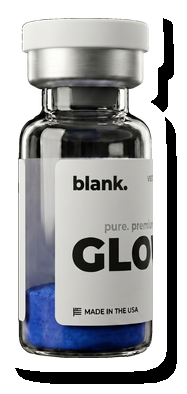
All GHK-Cu from Blank Peptides is synthesized in our cGMP labs in the USA and independently tested by Freedom Diagnostics and Horizon Analytical. COA documentation is available before purchase. GHK-Cu is also a component of the GLOW and KLOW blends for researchers working with multi-peptide stacks.
Reconstitution and Storage
Reconstitute lyophilized GHK-Cu with 3 mL of bacteriostatic water per vial. Store the reconstituted solution at 2–8°C and use within 28 days. Lyophilized powder is stable at −20°C for up to 24 months when sealed against moisture.
Copper peptides are sensitive to oxidation at the histidine imidazole position. Work quickly after opening and keep vials away from direct light during reconstitution. Swirl gently rather than shaking — vigorous agitation introduces bubbles that complicate accurate volume measurement.
If the study spans multiple sessions, aliquot the reconstituted solution before first use and store individual aliquots at −20°C, thawing one at a time as needed. Each aliquot should undergo at most one freeze-thaw cycle.
FAQ
Why does GHK-Cu purity matter more for cell-based assays than for other study formats?
In a cell-based assay, the culture medium is the entire environment for the cells under observation. Any impurity in the test compound reaches the cells directly. Copper salts, oxidized peptide variants, and endotoxin fractions each have measurable effects on cell viability and signaling readouts independent of GHK-Cu itself. At >99% purity with confirmed-low endotoxin levels, the assay readout can be attributed to the compound rather than to batch contaminants.
Does the copper in GHK-Cu show up on standard HPLC testing?
HPLC measures organic compounds based on UV absorbance and chromatographic separation. Inorganic copper is not directly detected by standard reversed-phase HPLC. The HPLC result confirms the presence and abundance of the GHK-Cu complex, but copper stoichiometry requires separate confirmation by ICP-MS. If confirmed copper content is essential for your assay, request ICP-MS data from the supplier alongside the standard HPLC-MS report.
How does purity degrade over the storage window for lyophilized GHK-Cu?
Lyophilized GHK-Cu stored at −20°C shows minimal purity degradation over the stated 24-month window when properly sealed. The main degradation pathway in the solid state is moisture-facilitated hydrolysis, which is why desiccant and sealed packaging matter. In reconstituted solution at 4°C, degradation occurs faster — principally through oxidation of the histidine imidazole ring. Repeated freeze-thaw cycles on reconstituted solution accelerate this process; aliquot before the first use rather than re-freezing the same reconstituted vial repeatedly.
All products discussed are for laboratory research use only and are not for human or veterinary use.