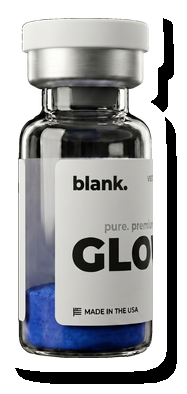
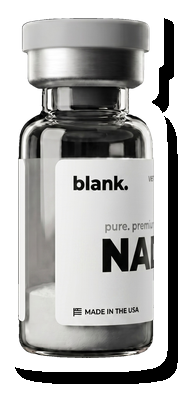
Reading a CJC-1295 No DAC certificate of analysis becomes straightforward when you know what each section is measuring and why it matters. Unlike a blend COA, which must account for multiple active compounds in a single formulation, the cjc 1295 no dac coa covers one well-defined synthetic peptide: 29 amino acids, molecular weight 3,367.9 g/mol, synthesized with four stabilizing substitutions relative to native GRF (1-29). The certificate should match that precision.
The following sections walk through each part of a complete COA and explain what to verify at each line.
Lot Number and Test Date
Every properly documented COA begins with a lot number tied to a specific manufacturing run. This isn’t administrative detail — the lot number is how the supplier connects the analytical data to the actual batch in inventory. If a QC question arises after delivery, the lot number is the reference point for pulling manufacturing records and cross-referencing original test data.
The test date should fall within the product’s documented shelf life window. A certificate issued more than 12 months before your order is worth querying, even for lyophilized material stored at −20°C. Peptide stability under those conditions is generally strong, but the test date establishes what was actually measured and when.
Confirm that the lot number on the COA matches what appears on the vial label. A mismatch between the two means either the wrong certificate was sent or the labeling and documentation are not tracking the same batch. Contact the supplier before proceeding.
HPLC Purity
HPLC purity is the core measurement in any peptide COA. For research-grade CJC-1295 No DAC, the result should be >99% by HPLC. The COA should include the actual numeric result — “99.3% by RP-HPLC, UV 220 nm,” for example — not merely a specification threshold.
A COA that states “>99% purity required” without reporting the measurement result for this specific lot is incomplete. The specification tells you what was required; the result tells you what was found. You need both to evaluate whether the lot actually cleared the bar and by what margin.
Pay attention to secondary peaks in the chromatography trace when they’re provided. A clean synthesis produces a dominant peak with minimal adjacent signal. Significant secondary peaks can indicate truncated sequences, deletion analogs, or degradation products — all of which affect compound potency in ways the purity percentage alone doesn’t capture.
Mass Spectrometry Identity Confirmation
Mass spectrometry is how compound identity is confirmed independently of purity. CJC-1295 No DAC has a theoretical molecular weight of 3,367.9 Da. The MS report should show a result consistent with that value within the typical accuracy range of the instrument (generally ±0.5 Da for a well-maintained LC-MS system).
An MS peak at the correct m/z ratio, with no major secondary masses representing unintended species, confirms that what was synthesized is the target compound. HPLC alone cannot confirm identity — it shows that the dominant peak in the chromatogram appears at the expected retention time. MS is what names the compound.
Ipamorelin, which researchers often use alongside CJC-1295 No DAC for combined GHRH and GHSR-1a stimulation studies, follows the same COA structure: purity by HPLC, identity by MS, endotoxin by external lab. Comparing two COAs side by side is easier when both follow consistent documentation formats.
Bacterial Endotoxin Testing
Bacterial endotoxin testing catches lipopolysaccharide contamination that HPLC and mass spectrometry cannot detect. Endotoxin fragments — shed from gram-negative bacterial cell walls during synthesis or handling — can trigger systemic immune responses in animal models at concentrations well below what any chromatography-based assay would flag.
For studies examining GH axis function, inflammatory markers, or metabolic parameters, endotoxin contamination creates confounds that are difficult to separate from compound effects after the fact. A COA without bacterial endotoxin testing is missing data that research design depends on.
The result should appear as a numeric figure in EU/mg (endotoxin units per milligram), not just “pass.” Research-grade peptides are typically specified at ≤1 EU/mg or tighter. Any COA that reports only a pass/fail without the measured value leaves the safety margin undefined.
CJC-1295 No DAC certificates include numeric endotoxin results from Freedom Diagnostics and Horizon Analytical — independent labs whose results are attributable outside of the supplier’s own testing.
Additional Quality Indicators
Appearance. The COA may include a physical description of the lyophilized product — typically white to off-white powder. A vial that arrives with unusual coloration or texture that doesn’t match the COA description is worth flagging before reconstitution.
Water content. Some certificates include Karl Fischer titration or loss-on-drying results showing moisture levels in the lyophilized material. High residual moisture is associated with faster peptide degradation, particularly for longer-term storage. Not every supplier includes this measurement, but its presence adds a layer of quality documentation beyond the core purity and identity tests.
Certifying lab. The lab name should belong to an independent third-party analytical facility, not the supplier’s in-house QC team. Self-issued certificates can be formatted to look like third-party documents. Cross-check the lab name against recognizable independent providers.
CJC-1295 DAC — the albumin-binding form with a substantially longer half-life — uses the same core documentation format. If your protocol involves both analogs in separate study arms, the COA comparison is direct: same sections, different molecular weight and HPLC retention characteristics.
FAQ
What does >99% purity on a CJC-1295 No DAC COA actually represent?
It means that 99% or more of the material detected by HPLC corresponds to the target compound, with less than 1% attributable to impurities, degradation products, or synthesis byproducts. The figure reflects the purity of the lot at the time of testing. For the number to be meaningful, the COA should show the actual measured result alongside the specification, with the measurement method stated — RP-HPLC with UV detection at a specified wavelength is standard.
Why does mass spec data matter when HPLC purity already shows >99%?
HPLC confirms that one compound dominates the chromatogram. Mass spectrometry confirms what that compound is. A high-purity lot could theoretically be the wrong peptide entirely if synthesis or labeling went wrong. MS adds identity verification that purity testing alone cannot provide. The two measurements answer different questions and both are needed for a complete quality assessment.
How should I interpret endotoxin units per milligram on a peptide COA?
EU/mg expresses the detected endotoxin load relative to the mass of peptide in the sample. A lower number is better. Research-grade peptides typically specify ≤1 EU/mg as the acceptable limit, though tighter limits are achievable with careful synthesis and testing protocols. The numeric result also tells you how close the lot came to the limit — a result of 0.03 EU/mg and a result of 0.96 EU/mg both pass a ≤1 EU/mg specification, but they carry different interpretive weight for sensitive studies.
All products discussed are for laboratory research use only and are not for human or veterinary use.