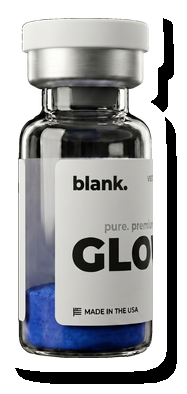
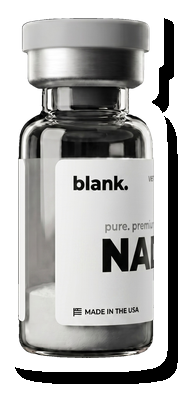
Glutathione alternatives come up in research planning for a few distinct reasons: a protocol needs to isolate specific redox pathways rather than glutathione-mediated ones, a study design calls for mitochondria-targeted antioxidant approaches, or a researcher is building a multi-compound panel and needs to understand how the surrounding compounds relate to each other. The compounds that appear most often alongside glutathione in a research catalog — NAD+, GHK-Cu, SS-31 — each serve different mechanistic purposes, and their overlap with glutathione is worth mapping before placing an order.
Why Glutathione Has Specific Limitations as a Sole Research Compound
Glutathione (γ-L-glutamyl-L-cysteinyl-glycine, MW 307.32 g/mol) is the cell’s primary endogenous antioxidant. As the reduced form (GSH), it operates through the glutathione peroxidase and glutathione reductase systems, scavenging reactive oxygen species via its free thiol group. This chemistry is well-characterized and the compound is commercially available at research grade.
The limitation is that its specificity is also its constraint. Glutathione research answers questions about glutathione-mediated redox pathways. When a study’s scope expands to mitochondrial bioenergetics, extracellular matrix regulation, or NAD+-dependent enzyme activity, glutathione is no longer the right tool — not because it performs poorly, but because it targets a different part of the system.
That is where the alternatives become relevant: not as substitutes in equivalent protocols, but as the appropriate primary compound when the question shifts.
NAD+ as a Research Companion
NAD+ (nicotinamide adenine dinucleotide) operates upstream of glutathione in cellular redox regulation. As a coenzyme for oxidoreductases and a substrate for sirtuins (which regulate gene expression and stress response) and PARP enzymes (which manage DNA repair), NAD+ sits at the intersection of energy metabolism, oxidative stress response, and genomic stability.
Researchers studying oxidative damage in aging models or mitochondrial dysfunction commonly include both NAD+ and glutathione in their compound panels — using glutathione to address direct ROS scavenging while NAD+ addresses upstream metabolic context. The two are not substitutable; they illuminate different aspects of the same cellular stress response.
NAD+ is available from our cGMP labs at >99% purity, confirmed by Freedom Diagnostics and Horizon Analytical. Processing time is within 1 business day.
GHK-Cu: A Different Mechanistic Angle
GHK-Cu (glycyl-L-histidyl-L-lysine copper complex) enters research panels when the focus shifts to extracellular matrix regulation, tissue remodeling, or skin biology. Its copper coordination chemistry and interaction with matrix metalloproteinases give it a mechanism distinct from glutathione’s sulfhydryl-based ROS scavenging.
That said, GHK-Cu does appear in panels studying tissue-level oxidative stress responses — particularly in models where extracellular matrix dynamics, rather than intracellular redox balance, are the primary readout. Researchers use it alongside, not instead of, intracellular antioxidants when the study design spans multiple biological compartments.
The GHK-Cu product from our catalog is tested at >99% purity. The compound’s copper content is specified on the COA, which matters for experimental stoichiometry in metalloprotein interaction studies.
SS-31 and the Mitochondria-Targeted Approach
SS-31 (D-Arg-Dmt-Lys-Phe-NH2, also known as elamipretide) represents a third mechanistic approach: mitochondria-targeted antioxidant activity. Where glutathione operates systemically and NAD+ functions as a coenzyme, SS-31 selectively concentrates in the inner mitochondrial membrane and protects cardiolipin from oxidative damage.
For researchers whose models center on mitochondrial dysfunction — bioenergetics studies, respiratory chain complex activity, or mitochondrial permeability transition — SS-31 is the more specific tool than glutathione. The two compounds have been run in parallel in studies examining mitochondrial vs. cytosolic antioxidant contributions, providing a cleaner attribution of effects than either alone.
Glutathione in the Catalog
The glutathione in our catalog is supplied as reduced glutathione (GSH) at >99% purity. COA documentation covers identity, HPLC purity, and bacterial endotoxin testing. Vials are held at -20°C and should be stored at -20°C on receipt; the reduced thiol is susceptible to oxidation if stored above freezing for extended periods.
Reconstitution is straightforward: glutathione dissolves readily in sterile water or PBS. Unlike peptides that require bacteriostatic water at the 1 mL per 10 mg protocol, glutathione stock solutions are typically prepared at millimolar concentrations in aqueous buffer — volumes per unit mass will be larger. Filter-sterilize before adding to culture systems.
The cellular health and longevity section of the catalog is where researchers browsing across this compound cluster typically start. All compounds ship from domestic cGMP facilities with processing time within 1 business day.
How These Compounds Map Onto Each Other
A practical summary for research planning:
Glutathione targets intracellular thiol-based ROS scavenging. NAD+ targets metabolic coenzyme function and upstream redox regulation. GHK-Cu targets extracellular matrix and tissue remodeling. SS-31 targets mitochondrial inner membrane protection. Each addresses a different node of cellular stress biology.
The compounds that get described as “glutathione alternatives” in a sourcing context are usually compounds that a researcher is considering for a study where glutathione’s specific mechanism is not quite the right fit — not compounds that are chemically or mechanistically equivalent.
FAQ
Can NAD+ replace glutathione in research protocols?
Not as a direct substitute. The compounds operate through different mechanisms and answer different experimental questions. Switching from glutathione to NAD+ does not replicate the same biology — it shifts the investigation to a different node. Researchers who make the switch are typically targeting a different pathway, not seeking equivalent coverage from a new compound.
What purity standard applies to glutathione alternatives?
The same floor applies across this compound cluster: >99% by HPLC, with bacterial endotoxin testing results on the COA. Any compound used in mammalian cell culture should have confirmed endotoxin testing; the purity figure alone does not confirm the absence of endotoxin contamination. All compounds in this catalog section meet both criteria.
How do researchers document switching between similar compounds mid-study?
Standard practice is to note the substitution in the Materials section of the experimental record, specifying lot number, supplier, purity grade, and form (reduced vs. oxidized for glutathione; oxidized form for NAD+) for both compounds. If the switch happens mid-study rather than at the design stage, running a parallel validation experiment to confirm comparability is the methodological safeguard — compound changes without validation are a common source of reproducibility issues in multi-experiment studies.
All products discussed are for laboratory research use only and are not for human or veterinary use.