NAD+ purity matters in ways that differ from standard peptide sourcing. Because nicotinamide adenine dinucleotide is a small-molecule coenzyme rather than a polypeptide chain, the analytical methods and the failure modes are different — and researchers need to know what those differences look like on a certificate of analysis. A stated nad+ purity of >99% should mean something specific. Here is what to verify before placing an order.
What “>99%” Signals for NAD+
Purity figures are always method-dependent. For NAD+, the standard analytical approach is HPLC (high-performance liquid chromatography), which separates the compound from degradation products and related species — primarily NADH (the reduced form), nicotinamide mononucleotide (NMN), and nicotinamide riboside (NR). A result of >99% by HPLC means the target compound accounts for at least 99 parts per hundred of the measured peak area.
What it does not automatically cover: water content, residual solvents, and endotoxin burden. These are measured separately, and a supplier quoting a purity figure without addressing them is offering an incomplete picture. Research-grade material for cell culture or in vitro assays needs all three addressed in the documentation.
The specific form also matters. NAD+ (the oxidized form, MW 663.43 g/mol) and NADH (the reduced form, MW 665.43 g/mol) are distinct compounds with different molecular weights. An identity statement or mass spectrum on the COA should confirm which form you’re receiving — the two-dalton difference is small but the biological relevance is not.
How NAD+ Purity Is Measured
HPLC purity is the baseline. A well-constructed COA will specify the column type, mobile phase, detection wavelength (typically UV around 260 nm for adenine-containing nucleotides), and the resulting chromatogram. Any major secondary peaks deserve explanation — unlabeled peaks are worth querying before use.
Mass spectrometry confirmation (LC-MS or ESI-MS) adds a second identity-verification layer. For NAD+, the molecular ion at m/z 664.1 (positive mode, [M+H]+) confirms identity in ways HPLC alone cannot. Not every supplier includes this, but it is worth requesting if the COA doesn’t show it.
Karl Fischer titration or thermogravimetric analysis measures residual moisture. NAD+ is hygroscopic — it pulls water from ambient air if vials are mishandled — and elevated moisture affects both mass accuracy and compound stability. A COA should state a moisture figure. Quality research-grade material is typically below 5% by weight.
Bacterial endotoxin testing is conducted via LAL (Limulus Amebocyte Lysate) assay. Any NAD+ preparation used in mammalian cell culture needs a confirmed endotoxin result. Endotoxin at concentrations as low as 0.1 EU/mL can trigger inflammatory responses in sensitive cell lines. A COA that omits bacterial endotoxin testing results is not suitable for tissue culture applications.
What a NAD+ COA Should Include
A complete COA for research-grade NAD+ will show: identity confirmation (UV spectrum or mass spectrum stating NAD+ oxidized form), HPLC purity (>99%), moisture content, and bacterial endotoxin testing results. Some suppliers add a residual solvent panel; that is more routine for synthesized organic compounds and less standard here, but the absence of the four core tests is a disqualifying gap.
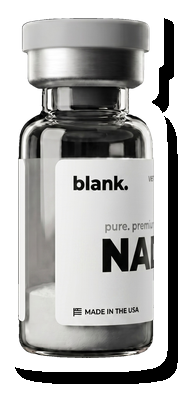
At Blank Peptides, each NAD+ lot is tested through Freedom Diagnostics and Horizon Analytical before release. Purity is confirmed at >99%, and the accompanying COA is available on request. Material ships from our US cGMP labs with processing time within 1 business day.
For researchers working across the cellular energy and longevity space, SS-31 (a mitochondria-targeted tetrapeptide) and MOTS-c (a 15-amino-acid mitochondria-derived peptide) are companion compounds that frequently appear alongside NAD+ in multi-compound study panels.
Reconstitution and Working Stock Preparation
NAD+ reconstitution differs from standard peptide protocol. The compound is water-soluble at room temperature and dissolves readily in sterile water or PBS without the bacteriostatic water volumes typical for peptide vials. Most researchers prepare stock solutions at 10–50 mM and filter-sterilize before addition to culture media. Volumes per unit mass will be substantially higher than peptide protocols — 1 mg of NAD+ (MW 663.43) in 1 mL gives approximately 1.5 mM, not the concentrated stocks a peptide of comparable mass would produce.
Once reconstituted, store at 4°C and use within one to two weeks. NAD+ is susceptible to reduction to NADH under certain conditions; repeated freeze-thaw cycles accelerate this conversion. Aliquot stock solutions into single-use volumes before freezing if multi-week experiments are planned.
FAQ
What purity threshold should NAD+ meet for research use?
For standard in vitro and cell culture applications, >99% by HPLC is the floor. Lower-grade preparations introduce uncertainty about what is driving observed effects — a particularly significant concern given NAD+’s central role in cellular energy metabolism. Material at 95% or below should not be used in mechanistic studies where clean attribution of effects matters.
Does NAD+ require bacterial endotoxin testing?
Yes. Any NAD+ preparation used in mammalian cell culture or primary cell work needs confirmed bacterial endotoxin testing results on the COA. Endotoxin contamination produces non-specific inflammatory activation in cell culture systems that can confound assay readouts. A supplier that does not provide this result for a compound intended for cell-based research is not meeting the standard the application requires.
How should research-grade NAD+ be stored before reconstitution?
Unopened vials should be held at -20°C, where the compound is stable for at least 24 months under proper conditions. Minimize freeze-thaw cycles even at this stage. Once removed from cold storage, allow vials to equilibrate to room temperature before opening to reduce condensation on the powder — moisture uptake in the vial degrades the compound before use. Handle under dry conditions and reseal promptly.
All products discussed are for laboratory research use only and are not for human or veterinary use.