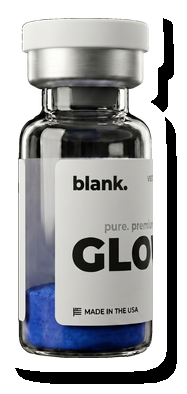
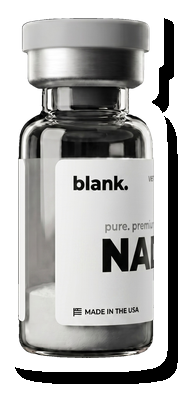
Retatrutide alternatives are a genuine research question, not just a procurement one. The compound occupies a specific mechanistic space — it acts simultaneously at GIP, GLP-1, and glucagon receptors — and no other single molecule in any commercial research catalog does exactly what it does. Understanding where it sits relative to structurally adjacent compounds is necessary before building a study that depends on the comparison.
Why Retatrutide’s Triple Agonist Activity Matters for Comparison
Retatrutide (LY3437943) was developed as a GIP/GLP-1/glucagon receptor co-agonist. Each of those three receptor targets plays a distinct role in metabolic regulation: GLP-1 activity drives insulin secretion and appetite signaling, GIP modulates both insulin and glucagon responses, and glucagon receptor engagement accelerates hepatic glucose output and fat oxidation. Activating all three simultaneously in preclinical models produces metabolic effects that differ in magnitude and character from activating any two — which is the mechanistic argument for studying it alongside dual agonists.
The question for most research programs is not “what is most potent” but “what is the right tool to isolate the receptor contribution I care about.” If the research goal is to understand GLP-1/GIP synergy, a dual agonist is a cleaner experimental tool. If the goal is to map the glucagon component specifically, retatrutide and a dual agonist run in parallel become a controlled comparison. That design requires sourcing both.
GLP-1/GIP Dual Agonists: The Closest Comparator
Tirzepatide — a GIP/GLP-1 dual receptor agonist — is the structurally and mechanistically closest available comparator. Where retatrutide adds glucagon receptor engagement, tirzepatide does not. Running both in parallel in a metabolic research model gives a relatively clean read on what glucagon co-agonism contributes on top of GIP/GLP-1 activity.
Our tirzepatide (TZP) is synthesized to >99% purity in our cGMP-certified US laboratories and independently tested by Freedom Diagnostics and Horizon Analytical. Because tirzepatide has been widely studied in published preclinical and translational research, there is also an established body of literature to contextualize results.
One practical difference: tirzepatide’s synthetic complexity is lower than retatrutide’s, and it has been available in the research market longer. This matters for batch-to-batch consistency comparisons over multi-month studies.
GLP-1 Mono-Agonists: Stripping Back to the Single Receptor
To isolate GLP-1 receptor activity entirely, GLP-1 analog mono-agonists are the appropriate tool. Our semaglutide (SMG) represents this class — a long-acting GLP-1 receptor agonist with well-characterized receptor binding and a substantial published preclinical literature. Compared to retatrutide, semaglutide’s selectivity makes it useful as a reference anchor: results in GLP-1 receptor-expressing cell models can be attributed to that specific receptor pathway without glucagon or GIP confounds.
Researchers designing mechanistic studies sometimes structure experiments as a three-arm comparison: semaglutide (GLP-1 only), tirzepatide (GLP-1 + GIP), and retatrutide (GLP-1 + GIP + glucagon). Each addition brings a new receptor contribution into play, and the delta between arms isolates it.
Where Retatrutide Has No Direct Substitute
There is no other commercially available research compound that recapitulates retatrutide’s specific triple-agonist activity at GIP, GLP-1, and glucagon receptors simultaneously. Co-administering a mono-agonist and a separate glucagon receptor agonist is an imperfect substitute — the pharmacokinetics, receptor occupancy profiles, and interaction timing are all different from a single molecule doing all three jobs.
This is why for researchers interested in the glucagon-GLP-1 axis specifically, our retatrutide (RTA) has no true swap in the catalog. The study question and the compound are matched, and substituting a dual agonist changes what is being asked.
For broader metabolic axis research that does not require glucagon co-agonism, the metabolic regulation research collection provides a structured view of the available compounds and their mechanistic targets.
Handling and Purity Considerations Across Agonist Classes
All three compound classes — mono, dual, and triple agonists — are large synthetic peptides requiring careful handling. Storage at -20°C for lyophilized material is consistent across all of them. Reconstitution at 1 mL bacteriostatic water per 10 mg is standard. Reconstituted solutions should be kept at 4°C and used within a timeframe appropriate for the stability profile of the specific molecule.
From a purity perspective, the triple agonist architecture of retatrutide presents greater synthetic complexity than either a mono or dual agonist — more residues, more reactive side chains, more steps in which deletion sequences can accumulate. A COA showing >99% purity by HPLC, confirmed by mass spectrometry, is more meaningful than a round-number claim from a vendor who has not published the chromatographic data.
All Blank Peptides batches are independently tested by Freedom Diagnostics and Horizon Analytical. Orders ship with processing time within 1 business day.
Frequently Asked Questions
Can tirzepatide substitute for retatrutide in research focused on glucagon receptor activity?
No. Tirzepatide engages GLP-1 and GIP receptors but does not agonize the glucagon receptor. Any experimental readout that depends on glucagon receptor signaling — hepatic glucose output modulation, effects on brown adipose tissue thermogenesis, direct glucagon receptor binding competition — will not be replicated by tirzepatide. The two compounds are appropriate comparators but not substitutes.
What is the rationale for running a GLP-1 mono-agonist, a dual agonist, and retatrutide in the same experiment?
The three-arm design allows researchers to attribute metabolic outcomes to specific receptor contributions. The delta between the mono-agonist arm and the dual-agonist arm isolates GIP receptor effects; the delta between the dual-agonist arm and the triple-agonist arm isolates glucagon receptor effects. Without this layered comparison, it is difficult to separate mechanistic contributions from one another in complex metabolic readouts.
Are purity specifications for GLP/glucagon multi-agonists meaningfully harder to achieve than for simpler peptides?
Yes, generally. Longer chains and more complex synthetic steps — including the lipophilic modifications common in long-acting agonists — multiply the number of ways a batch can fall short. Deletion sequences at any of dozens of residues, incomplete deprotection, aggregation artifacts — all are more likely in a complex peptide than in a short one. This is why independent COA documentation from accredited labs carries more weight for these compounds than for simpler sequences.
All products discussed are for laboratory research use only and are not for human or veterinary use.