GHK-Cu Alternatives in the Research Catalog: Where It Fits
GHK-Cu alternatives come up frequently in peptide research discussions, usually because investigators want to understand whether the copper tripeptide-1 is the best fit for their study design or whether a different compound might suit a particular model better. The short answer is that GHK-Cu occupies a fairly specific niche — its activity profile is distinct enough that “alternatives” is more usefully framed as “compounds that address adjacent questions.” Understanding that framing helps labs make better sourcing decisions.
What GHK-Cu Actually Does in Research
GHK-Cu (glycine-histidine-lysine copper) is a naturally occurring tripeptide that binds copper(II) ions. It appears endogenously in human plasma and tissue fluids, and its concentration declines measurably with age — from roughly 200 ng/mL in young adults to under 80 ng/mL by the seventh decade. That age-dependent decline is one reason it attracts interest in wound-healing and tissue-remodeling studies.
In published research, GHK-Cu has been examined for effects on collagen synthesis, metalloproteinase regulation, fibroblast activity, and hair follicle signaling. Studies in cell culture and rodent models have used topical and subcutaneous delivery routes. The peptide is highly water-soluble, stable at pH 7.4, and typically stored at -20°C for long-term preservation. Molecular weight is approximately 340 Da for the unbound tripeptide; the copper-bound complex runs slightly higher.
One important note for lab handling: reconstitution for research use generally calls for 3 mL of bacteriostatic water per vial. GHK-Cu is one of the compounds where that larger volume is appropriate rather than the standard 1 mL per 10 mg ratio used with most peptides. Researchers should document the volume used at time of preparation to maintain consistency across experiments.
How Related Compounds Compare
When labs are evaluating compounds for skin, hair, or connective-tissue research, GHK-Cu often appears alongside a few other categories:
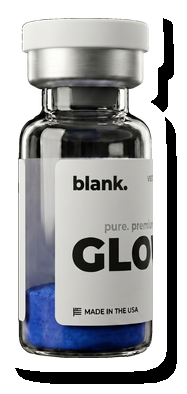
Aesthetic and regenerative blends. Some research catalogs carry multi-peptide formulations designed to address overlapping pathways simultaneously. GLOW from Blank Peptides is one example — a blend that targets aesthetic research applications and may be relevant when a study design calls for a combination rather than a single isolated compound. Combination protocols can simplify certain in vitro or animal model designs, though they also make it harder to attribute observed effects to any single molecule.
KLOW is another research formulation in this category. KLOW is designed for researchers working on aesthetic and recovery endpoints simultaneously, and it’s been drawing more search interest from labs looking at multi-target models. The tradeoff versus GHK-Cu used alone is the usual one: specificity vs. coverage.
Collagen-adjacent peptides. Some researchers compare GHK-Cu with palmitoyl-based peptides (such as palmitoyl tripeptide-1 or palmitoyl pentapeptide-4) in the context of fibroblast signaling. These are structurally different — the palmitoyl chain increases lipophilicity for membrane interaction — but the research questions overlap. These are typically studied in dermal models rather than systemic delivery.
BPC-157 in tissue-repair contexts. Where GHK-Cu research focuses on the extracellular matrix and fibroblasts, BPC-157 research focuses more on angiogenesis and tendon-to-bone healing. The two compounds are rarely direct alternatives; more often, researchers are choosing between them based on the biological endpoint being measured.
Where GHK-Cu Has No Close Substitute
The copper-binding mechanism is GHK-Cu’s most distinctive feature. Copper plays a structural role in lysyl oxidase activity, which crosslinks collagen and elastin fibers in connective tissue. Peptides that don’t incorporate copper don’t operate through this pathway. If a study design is specifically investigating copper-dependent enzymatic activity in the dermis or in wound-healing cascades, GHK-Cu isn’t interchangeable with peptides that simply stimulate collagen gene expression through other routes.
Researchers interested in this mechanism should also be aware of the storage conditions: GHK-Cu is susceptible to oxidation of the copper center if stored improperly. Aliquoting before first use and storing unused portions at -20°C significantly extends activity. Light exposure should be minimized.
Sourcing and Quality Considerations
Because GHK-Cu is widely used in cosmetic formulations, the research market includes a range of quality levels. For controlled studies, purity matters. At Blank Peptides, GHK-Cu is verified at >99% purity through third-party testing with Freedom Diagnostics and Horizon Analytical, with full certificates of analysis available. The product is made in our cGMP labs in the USA, and orders process within 1 business day.
Researchers evaluating vendor options should look for batch-specific COAs and confirmed bacterial endotoxin testing results — endotoxin levels affect cell viability in culture-based assays and must be controlled in any valid in vitro study design.
If the research question involves related aesthetic or recovery pathways, the skin and hair aesthetic research collection may be worth reviewing to see which compounds complement a GHK-Cu protocol.
FAQ
What makes GHK-Cu different from other copper peptides in research?
GHK-Cu is a naturally occurring tripeptide (glycine-histidine-lysine) that chelates copper(II) at a specific coordination geometry. Most synthetic copper peptides are larger or structurally modified, which changes how they interact with tissue transporters and enzymes. GHK-Cu’s endogenous origin and small size make it relevant to researchers studying age-related concentration declines or physiological matrix remodeling processes.
Can GHK-Cu and GLOW blend be used in the same study design?
That depends on the study purpose. If researchers are isolating GHK-Cu’s mechanism, using a blend introduces confounds. If the goal is to evaluate a combined protocol across multiple aesthetic endpoints, a blend is more efficient. Most labs run GHK-Cu as a standalone in mechanistic studies and use blends in phenotypic or comparison studies.
What purity level is appropriate for cell culture research with GHK-Cu?
For in vitro work, >99% purity is the appropriate threshold — lower purity introduces unknown contaminants that affect cell viability independently of the compound being tested. Endotoxin-tested product is essential for any cell-based assay, since gram-negative bacterial contamination triggers inflammatory responses that will confound results.
All products discussed are for laboratory research use only and are not for human or veterinary use.