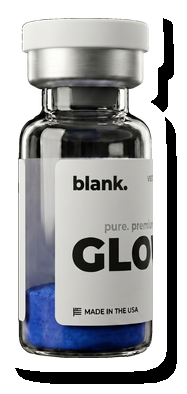
Researchers exploring KLOW peptide alternatives are usually asking one of two questions: whether a single component within the blend can serve the specific study purpose, or whether a different compound configuration addresses the research target more precisely. KLOW combines GHK-Cu, BPC-157, TB-500, and KPV into a fixed-ratio formulation — a design suited to multi-pathway screening but less appropriate when experimental control requires independent variable management across those four compounds. Peptides like KLOW that package multiple research compounds into one vial trade component-level control for workflow simplicity.
Both paths have legitimate research applications. The choice depends on what the study is actually trying to isolate.
Breaking Out the Components: When Individual Sourcing Makes Sense
KLOW’s four components are each available as standalone vials, and many study designs are better served by individual sourcing than by the blended format. The difference is experimental resolution.
When a protocol is designed to investigate a specific pathway — GHK-Cu’s role in extracellular matrix remodeling, BPC-157’s behavior in GI repair models, KPV’s activity in cytokine-mediated signaling — using the individual compound keeps the experimental variables clean. A blend introduces all four peptides simultaneously. Any observed effect cannot be cleanly attributed to a single component without additional factorial controls, which effectively recreates the individual sourcing approach at greater cost and complexity.
Researchers who need cross-study comparability with published literature are also better served by individual compounds in most cases. The peer-reviewed work on GHK-Cu, BPC-157, and KPV typically uses each compound alone rather than in a blend. A single-compound protocol aligns more directly with that prior data, which matters when building on an established evidence base.
The trade-off is logistical. Four separate vials, four sets of reconstitution conditions, four COAs to track. For studies where component-level control is required, that overhead is justified. For initial screening where the goal is to assess whether a multi-peptide approach merits further investigation, the blend simplifies the workflow without sacrificing the core research question.
GHK-Cu: Targeted Skin and Connective Tissue Research
GHK-Cu is the copper-binding tripeptide in KLOW with the longest independent publication record among the four components. Research involving this compound centers on collagen and elastin expression in fibroblast and keratinocyte models, wound contraction dynamics, and inflammation markers in tissue repair contexts.
Researchers whose study design focuses specifically on extracellular matrix biology will find standalone GHK-Cu more tractable than KLOW. The other three components — BPC-157, TB-500, and KPV — each influence inflammatory and regenerative signaling in ways that may not be relevant to a focused matrix research protocol and can introduce variables that complicate data interpretation. Removing them narrows the experimental scope and makes the resulting data easier to interpret in the context of matrix biology specifically.
GHK-Cu is also the most oxidation-sensitive compound in the blend. Working with it as a standalone compounds simplifies post-reconstitution handling because the constraints apply to one compound rather than governing how the full blend must be managed through experimental use.
BPC-157 and KPV: The GI and Barrier Pathway Subset
BPC-157 and KPV appear together in KLOW and together define much of the blend’s research relevance in gastrointestinal and mucosal barrier work. BPC-157 is a 15-amino acid stable gastric pentadecapeptide fragment studied in gut epithelial models, wound healing in mucosal tissue, and angiogenesis contexts. KPV is the C-terminal tripeptide of alpha-MSH, with a published research record in inflammatory bowel models and cytokine suppression studies.
Studies specifically targeting GI barrier function or mucosal inflammation can use BPC-157 and KPV together without bringing GHK-Cu and TB-500 into the protocol. This two-compound approach preserves the blend’s topical relevance for GI-specific work while removing components less directly applicable to those questions.
The same logic applies from the other direction. Researchers working primarily on tissue regeneration and wound healing who find KPV’s anti-inflammatory profile relevant may find the BPC-157 and KPV pairing more focused than the full four-compound blend. Similar compounds to KLOW — ones that share two or three of its components — can be assembled from individual sourcing to match the specific research scope.
When KLOW as a Blend Stays the Right Choice
Individual sourcing is not always better. KLOW as a pre-formulated blend is the appropriate choice for a distinct class of study design: multi-pathway screening, initial exploration of combined compound effects, or protocols that deliberately replicate conditions previously investigated using the KLOW formulation specifically.
For researchers establishing a new research program who want to assess whether a multi-peptide approach in tissue repair and inflammatory contexts merits further focused work, the blend is a practical starting point. One reconstitution procedure, one vial to manage, one set of dosing parameters to establish. The blend’s fixed ratios represent a reasonable experimental baseline for combined-compound investigation.
KLOW is also the right choice when cross-referencing with existing internal study data that used the same formulation. Consistency in experimental conditions matters as much as alignment with external literature — changing to individual compounds between study phases introduces a sourcing variable that can complicate cross-phase comparisons.
FAQ
Can GHK-Cu replace KLOW for research focused on skin and connective tissue?
For studies specifically targeting extracellular matrix biology and collagen remodeling, standalone GHK-Cu is often more appropriate than KLOW. The other three blend components — BPC-157, TB-500, and KPV — influence inflammatory and regenerative signaling in ways that may not be relevant to matrix-focused work and can introduce experimental variables that complicate result interpretation. GHK-Cu alone keeps the protocol scope matched to the research question.
What is the practical difference between sourcing BPC-157 individually versus using KLOW for GI research?
Individual BPC-157 gives the researcher independent control over dosing and experimental timing without the simultaneous presence of GHK-Cu and TB-500. For a study designed specifically around gut epithelial or mucosal models, the individual compound aligns more directly with published literature using BPC-157 in isolation — whereas KLOW’s four-compound profile introduces variables not present in most published protocols for GI research.
If KLOW contains KPV, why would a researcher source KPV separately?
The most direct reason is dose control. In KLOW, KPV is present in a fixed ratio relative to the other three components. A researcher who wants to vary KPV concentration independently — while holding other experimental variables constant — cannot do that with a pre-formulated blend. Standalone KPV provides that flexibility and simplifies the attribution of observed effects to KPV’s activity specifically, rather than to the combined action of the four-compound formulation.
All products discussed are for laboratory research use only and are not for human or veterinary use.