Purity in a Multi-Peptide Blend Is More Complicated Than It Looks
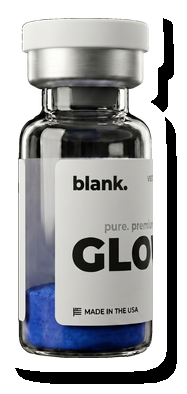
A single-compound peptide has a straightforward purity story: one molecule, one HPLC peak, one percentage. Glow peptide purity is a more layered question because GLOW is a blend of three distinct compounds — GHK-Cu, BPC-157, and TB-500 — combined in a single 70 mg lyophilized vial. Stating that the product is >99% pure only means something if the testing methodology behind that figure is component-level, not aggregate.
Blank Peptides tests each component individually before blending. GHK-Cu is HPLC-verified separately. BPC-157 is HPLC-verified separately. TB-500 is HPLC-verified separately. Each must meet the >99% threshold before any of the three enters the blending step. The result is a final vial where the purity claim is grounded in three independently characterized starting materials rather than a single measurement taken after mixing — which would obscure whether any one component fell short.
What >99% Means on a Certificate of Analysis
High-performance liquid chromatography separates molecular components by polarity and size, producing a chromatogram where each compound appears as a distinct peak. Integrating the area under each peak gives the relative abundance of that compound as a percentage of all detected material. A result of >99% means the target compound accounts for at least 99 percent of what the instrument detected; everything else — minor process impurities, solvent residues, or trace degradation products — falls below one percent combined.
That remaining fraction is a practical reality of peptide synthesis and lyophilization, not a quality failure. Absolute 100% purity is a theoretical limit. What matters is that the impurity fraction is small enough that it does not interfere with the research application, and that it is documented accurately rather than obscured by a rounding convention.
For GLOW, the COA from Freedom Diagnostics or Horizon Analytical reports purity values for GHK-Cu, BPC-157, and TB-500 as separate figures. It also includes mass spectrometry data to confirm molecular identity — the observed mass of each component should match the theoretical molecular weight within the instrument’s tolerance.
Three Sections to Check Before Accepting a Shipment
Reviewing a GLOW COA thoroughly means looking at three distinct areas:
Per-component HPLC purity: Each peptide should read ≥99%. A result of 97% or 98% for any component means that component did not pass the quality threshold at the testing step. A legitimate independent COA will not adjust these numbers after the fact; they represent actual chromatographic output from the day of analysis.
Molecular mass confirmation: GHK-Cu has a theoretical molecular weight of approximately 340.4 Da. BPC-157 runs at approximately 1419.5 Da. TB-500 — the actin-binding fragment commonly supplied in this product class — is approximately 4963 Da. ESI-MS or MALDI-MS data on the COA should confirm these values within the instrument’s reported tolerance. A significant deviation indicates an identity problem with that lot.
Bacterial endotoxin testing: The COA should include a numeric endotoxin figure, typically reported in endotoxin units per milligram (EU/mg). Bacterial endotoxin testing confirms the product is suitable for cell-based assays, where lipopolysaccharide contamination from gram-negative bacteria would generate non-specific inflammatory responses and confound results. A COA that lists “bacterial endotoxin testing: pass” without a numeric figure provides less information than one reporting an actual measurement.
How Purity Degrades After Reconstitution
The >99% figure on the COA describes the lyophilized powder at the time of testing. Once reconstituted, the clock starts. Reconstituted GLOW in bacteriostatic water, stored at 4°C in a light-protected environment, is generally stable for 28 days. Beyond that window, degradation products accumulate and the opening purity figure no longer characterizes the working stock accurately.
This is not unique to GLOW. KLOW and standalone GHK-Cu follow the same trajectory: lyophilized storage at −20°C for long-term stability, refrigerated use at 4°C after reconstitution, 28-day working stock window. Freeze-thaw cycles accelerate degradation across all formats. Researchers who prepare a vial and need to work from it across multiple sessions should aliquot the reconstituted solution into single-use volumes after initial preparation rather than subjecting the entire stock to repeated temperature cycling.
Vials that have been reconstituted and stored beyond 28 days, or that have gone through more than two freeze-thaw cycles, should not be used in quantitative assays where concentration accuracy matters.
FAQ
Should I trust a supplier’s internal QC data or only third-party COAs?
Third-party COAs are the standard for research-grade peptides. Internal QC departments have organizational incentives to pass lots; external labs — Freedom Diagnostics and Horizon Analytical are the ones used by Blank Peptides — have no commercial stake in whether a particular lot passes or fails. Their value is in objective measurement. When evaluating any purity claim, confirm that the COA names a third-party lab, references the specific lot number on your vial, and reports numerical results rather than pass/fail shorthand.
What does it mean if a GLOW COA only shows a single aggregate purity number?
A single purity figure for a three-component blend tells you the average across all detected material, which can mask individual component failures. If GHK-Cu in a given lot tested at 97% and the other two components tested at 99.5%, an aggregate figure might report 98.7% and obscure the below-threshold component. Component-level HPLC runs — separate chromatograms for each peptide — are the appropriate standard for a multi-compound product.
At what concentration does a <1% impurity start to matter for research?
It depends on the assay. In most cell-based in vitro work at peptide concentrations in the 100 nM to 10 µM range, a sub-1% impurity is unlikely to produce a measurable artifact. At very high concentrations or in highly sensitive assays — particularly those using mass spectrometry as the readout — even trace impurities can show up. Researchers designing quantitative dose-response experiments at low concentrations should request lot-specific impurity profiling beyond the standard purity summary if their assay sensitivity warrants it.
All products discussed are for laboratory research use only and are not for human or veterinary use.