Peptide stacking—running two or more compounds within the same research protocol—has become a routine design choice in preclinical peptide science. The question most researchers grapple with isn’t whether multi-peptide designs are valid; it’s how to structure them rigorously, and what sourcing standards hold when multiple compounds need to meet the same quality bar simultaneously.
Why Multi-Peptide Designs Appear in Published Research
Single-compound studies dominate early-phase characterization work for an obvious reason: controlling variables is straightforward when only one agent changes. But once a compound’s baseline profile is established—its receptor affinity, approximate half-life in model organisms, or organ distribution pattern—combination studies become the natural next step. They let researchers probe interaction effects, additive behavior, or mechanistic redundancy between compounds that target overlapping but distinct pathways.
BPC-157 and TB-500 are among the most frequently co-studied peptides in tissue repair literature. BPC-157 is a 15-amino-acid synthetic sequence derived from a gastric mucosal protein; it has been examined in models involving nitric oxide signaling and growth factor upregulation. TB-500 is a synthetic fragment of thymosin beta-4, a 43-amino-acid protein that regulates actin polymerization and has been studied for its role in vascular remodeling and cell migration. The two compounds work through mechanically distinct pathways, which is precisely what makes pairing them scientifically interesting rather than redundant.
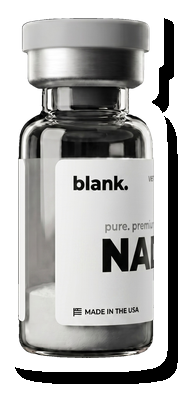
The pre-formulated Wolverine blend exists partly because of how consistently these two peptides appear together in the research literature—a single vial eliminates reconstitution handling variables for labs studying both compounds simultaneously.
Designing a Rigorous Multi-Peptide Protocol
Running compounds together introduces complexity at several points in study design.
Temporal sequencing. Some protocols administer both compounds concurrently; others stagger introduction—one compound for an acclimation or loading period before the second is added. The choice affects what interpretations the data can support. Staggered designs allow cleaner attribution of early-period effects; concurrent designs are more appropriate when the hypothesis concerns synergistic activity.
Independent dosing. Effective stacking research treats each compound’s dosing parameters as derived independently from its own published literature, not as a proportional share of a combined total. A protocol that divides a fixed peptide mass budget between two compounds without grounding each in prior work produces data of limited interpretability.
Endpoint specificity. When two peptides both influence, say, inflammatory cytokine profiles, researchers need measurement strategies that can attribute changes to individual interventions. Aggregate endpoints—gross tissue appearance, animal weight—rarely survive peer scrutiny in multi-compound papers. Biomarker panels specific enough to differentiate compound effects are the standard approach.
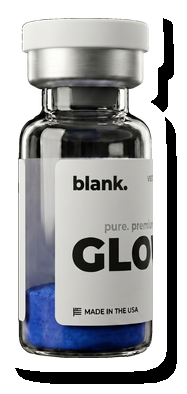
Vial-level logistics. Pre-combined blends like KLOW and GLOW address the practical side of multi-peptide research: fewer vials to reconstitute, fewer labeling variables to track, and consistent component ratios across a batch. GLOW combines GHK-Cu, BPC-157, and TB-500 in a single lyophilized vial; KLOW adds KPV to that foundation. Labs studying multi-peptide effects on tissue repair or skin biology have used these blends to reduce handling complexity in compound protocols.
Purity Standards Across the Whole Stack
A stacking protocol is only as clean as its weakest compound. One vial with poor purity documentation contaminates the entire dataset. Labs running combination designs apply their purity standards uniformly across every compound in the protocol, not just the primary agent.
BPC-157 and TB-500 available through our cGMP US labs ship with >99% purity confirmed by HPLC and mass spectrometry, with third-party verification through Freedom Diagnostics and Horizon Analytical. COAs are downloadable from each product listing. When labs run replication work across sites—which is common in peptide research—consistent purity documentation across batches is what makes inter-site comparisons valid.
Bacterial endotoxin testing is also a standard requirement in any in vivo multi-peptide design. Even trace endotoxin contamination produces inflammatory signals that confound the very endpoints most peptide research is trying to measure.
Storage and Reconstitution Discipline in Stacked Protocols
Lyophilized peptides are stable at −20°C before reconstitution. Post-reconstitution, vials should be stored at 4°C and used within approximately four weeks under typical laboratory conditions. In multi-peptide research, each compound’s vial should be reconstituted and labeled independently—date of reconstitution, compound identity, lot number, and working concentration all logged as part of the raw data record.
Cross-contamination between reconstituted vials is a data integrity problem. Labs handling multiple open vials simultaneously often use color-coded caps or physically separate storage locations to enforce discipline. For blended compounds like Wolverine, GLOW, or KLOW, this step is simplified: each blend reconstitutes as one vial rather than two or three.
Processing time within 1 business day applies to all orders, including multi-compound orders that ship together.
FAQ: Peptide Stacking in Research
Q: Does studying multiple peptides together compromise data validity compared to single-compound designs?
Not inherently. Multi-compound protocols are methodologically sound when the research question concerns interaction effects or when mechanistic hypotheses predict complementary activity across distinct pathways. Validity depends on design quality—appropriate controls, blinding, and endpoint specificity—not on compound count.
Q: How do researchers keep track of reconstituted vials in a multi-peptide protocol?
The standard approach is a detailed vial log: compound identity, lot number, reconstitution date, volume used for reconstitution, and storage location. Many labs photograph vial labels as part of their raw data file so the record is unambiguous if questions arise later. For blended vials, a single log entry covers all components.
Q: Do preclinical stacking studies use published dosing ranges from each compound’s individual literature?
They should, and most credible published examples do. Deriving dosing from existing single-compound studies gives the design a rationale reviewers can evaluate. Protocols that pick arbitrary amounts for each compound in a stack—without grounding them in prior work—tend to produce findings that are difficult to contextualize or replicate.
All products discussed are for laboratory research use only and are not for human or veterinary use.