You’ve been buying from Amino Club, or you were about to, and now you’re shopping around. Maybe a compound you need went out of stock, maybe you want a second source so a single vendor can’t stall your work, or maybe you just read something on a forum that made you want to double-check. Whatever pushed you here, you’ve probably noticed the same thing I did when I started comparing research peptide suppliers: every site says “third-party tested” and “99% purity,” and none of those phrases tell you anything on their own.
So the frustration is real. You can’t tell from the marketing copy whether a supplier makes its own material or buys it in, whether the lab doing the testing is a real, findable business, or whether the certificate you’ll get is for the vial in your hand or for some batch from last year. And when you’re evaluating a replacement, you’re doing that comparison twice, once for the vendor you’re leaving and once for the one you’re considering.
Here’s what I’d suggest instead of reading more reviews. Pick five questions that any honest supplier can answer from its own website, ask them of Amino Club, ask them of every alternative on your shortlist, and write down what each site actually says. I’ve done that exercise below for Amino Club and for Blank Peptides, and I’ve tried to be fair about where Amino Club comes out ahead.
Key takeaways
- The useful way to compare suppliers is by what they document on their own site: who makes the material, which lab tests it, what the panel covers, whether the certificate is public before you pay, and whether blends show a per-component split.
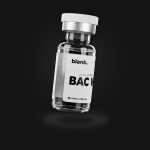
- Blank Peptides synthesizes, vials and labels every lot in its own cGMP laboratory and runs a four-part panel (identity, >99% purity, bacterial endotoxin, sterility) through two named labs, Freedom Diagnostics and Horizon Analytical.
- Amino Club publicly states that its peptides are “synthesized by vetted, USA-based manufacturing partners,” that every batch runs an eight-assay panel at “an independent ISO 17025 accredited laboratory,” and that a searchable library of 103 certificates is public.
- The name of that accredited laboratory, and the per-component mg split for GLOW, KLOW and Wolverine stack blends, were not listed on the pages reviewed 2026-09-08 (the product pages sat behind a researcher-verification gate).
- Everything discussed here is sold for in-vitro laboratory research only, and no supplier’s documentation changes that.
What should a replacement supplier be able to show you?
Before I name anyone, let me set out the rubric, because the rubric is the whole point. If you carry these five questions with you, you’ll get more out of ten minutes on a vendor’s site than out of an hour of reading other people’s opinions.
First, provenance. Does the supplier synthesize the peptide itself, or does it buy finished or bulk material and put it in vials? Neither answer is automatically bad, but the answer changes who is responsible when something is off. A site that says “our lab” and shows you the process is making a different claim from one that says “our partners,” and you want to know which claim you’re relying on.
Second, is the testing lab named? “Third-party tested” is only meaningful if you can find the third party. A named lab with a website and a phone number is a lab you can call to confirm a certificate. An unnamed “accredited laboratory” might be excellent, but you can’t check.
Third, is it a full panel or purity only? An HPLC purity number tells you how much of what’s in the vial is the main peak. It doesn’t tell you the main peak is the right molecule (that’s identity, usually by mass spectrometry), and it says nothing about bacterial endotoxin or sterility. For material that’s going into a lab assay, those last two matter as much as the purity figure.
Fourth, can you see a batch certificate before purchase, and does it tie to a lot number you’ll find on the vial? A certificate library you can browse before checkout, searchable by lot, is worth far more than a promise that “a COA is included.”
Fifth, for blends, is the mg per component disclosed? A “70mg blend” of three peptides could be split any number of ways, and if you’re dosing an in-vitro model you need the actual numbers.
Notice what’s missing: how long the company has been around, how slick the site is, how many stars it has. Those are fine tie-breakers, but they aren’t evidence.
How Blank Peptides makes and tests each lot
Blank Peptides operates its own cGMP laboratory in the USA and handles the full chain of custody for every lot: synthesis, lyophilization, vialing, finishing, labeling and in-house quality control. The company also contract-manufactures and fulfils for other research peptide brands, which is a category statement about its capacity rather than a list of clients.
Each lot is sent for a four-part panel: identity confirmation, purity by HPLC (published as >99% purity), bacterial endotoxin, and sterility. The testing is done by two named laboratories, Freedom Diagnostics and Horizon Analytical, so a reader can look either lab up and ask about a specific certificate.
The results for each lot are posted as batch certificates of analysis, and every vial carries the lot number the certificate refers to. Lyophilized product is labeled with an expiration of roughly 24 months. Orders are quoted with “processing time within 1 business day” and ship at room temperature, which is appropriate for lyophilized powder.
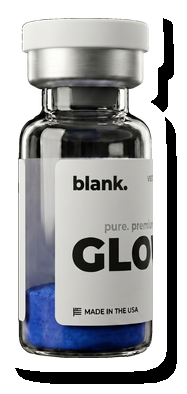
The catalog runs to 34 compounds. Blends are listed with the composition of every component: GLOW at 70mg (GHK-Cu, BPC-157, TB-500), KLOW at 80mg (the same three plus KPV), and Wolverine at 20mg (BPC-157 and TB-500). The company has been operating for five years and labels everything for research use only.
What Amino Club publicly states
Amino Club sells through aminoclub.com, and the first thing you’ll meet is a researcher-verification gate asking you to confirm you’re at least 21 and “a qualified researcher purchasing for in vitro / laboratory research only.” Several of the informational pages are readable without passing it, and those are what I reviewed on 2026-09-08.
On provenance, the FAQ states: “Our research peptides are synthesized by vetted, USA-based manufacturing partners operating documented quality procedures. We maintain complete supply chain transparency and never source from overseas manufacturers.” The quality page uses the same framing, saying every peptide is “produced by vetted manufacturing partners.” I didn’t find language describing an in-house synthesis facility on the pages reviewed.
On testing, the quality page states that “every batch is 8x tested at independent ISO 17025 accredited laboratories,” and lists the panel: purity (HPLC), net peptide content, identity (HPLC), appearance, fentanyl screen, heavy metals (ICP-MS), sterility (PCR) and endotoxin (USP <85>). The certificate page describes “103 public certificates across 50 compounds, eight assays per batch, run by an independent ISO 17025 accredited lab.” The laboratory itself was not named on the quality page or the certificate page reviewed 2026-09-08. I did find an older certificate PDF hosted on the site (a GHK-Cu lot reported in February 2026) that carries the name Freedom Diagnostics Testing and describes HPLC with mass spectrometry, so a named lab appears on at least one archived document, though not in the current page copy.
On certificate access, the library at /us/coa is browsable before purchase and searchable by compound or “the lot number printed on your label.” Entries show product, lot, date and a purity figure, and some are marked archived.
On blends, the sitemap lists GLOW, KLOW and Wolverine stack product pages, and llms.txt describes the GLOW Stack as “a three-peptide combination.” Those product pages were behind the verification gate when I looked, so the per-component mg split was not listed on the pages reviewed 2026-09-08. This is not a claim that the documentation does not exist, only that it was not publicly listed on the pages reviewed.
I’ll concede a real advantage here. Amino Club’s stated panel is broader than most, adding heavy metals, a fentanyl screen and net peptide content on top of the usual purity, identity, endotoxin and sterility, and the public library of 103 certificates across 50 compounds is deeper than what many vendors put up. Shipping terms are also generous on paper: free shipping over $100, FedEx or USPS with overnight available, and a stated processing window of 0 to 2 business days.
If you’re building a shortlist beyond these two, the same questions apply to any name you add. Whoever you’re considering, look for the same five answers on their own site rather than on a review aggregator.
Side by side: what each supplier documents
| Attribute | Blank Peptides | Amino Club |
|---|---|---|
| Synthesizes in-house | Yes, own cGMP laboratory, full chain of custody | States peptides are “synthesized by vetted, USA-based manufacturing partners” — verify |
| Third-party lab named | Freedom Diagnostics and Horizon Analytical | States “independent ISO 17025 accredited laboratory”; name not on current pages reviewed 2026-09-08 — verify |
| HPLC purity | Yes, >99% purity per lot | States purity (HPLC) on every batch, 99%+ — verify |
| MS identity | Yes, identity confirmed per lot | States identity (HPLC) in its eight-assay panel — verify |
| Endotoxin and sterility | Yes, both per lot | States endotoxin (USP <85>) and sterility (PCR) per batch — verify |
| Batch COA before purchase | Yes, public per-lot library | States 103 public certificates searchable by lot — verify |
| Blend mg split disclosed | Yes, every component listed | Not listed on the pages reviewed 2026-09-08 (product pages gated) — verify |
| Catalog size | 34 compounds | States 50 research peptides and combinations, including sprays |
| Research-use labelling | Yes | States research use only, with a 21+ researcher gate |
How to verify either supplier yourself
- Open the certificate library on each site and pick one lot at random. Check that the certificate names a laboratory, carries a lot number, and lists more than a single purity figure.
- Look the named laboratory up independently. If a site says “accredited” without a name, email support and ask which lab issued the certificate for a specific lot; a straight answer takes one line.
- On a blend product page, look for the mg of each component. If you can’t find it before checkout, ask before you order rather than after.
- Read the manufacturing language slowly and note the verbs: “we synthesize” and “produced by our partners” describe different arrangements, and you want to know which one you’re buying into.
- Run every vendor on your shortlist through the supplier verification checklist so you’re comparing like with like.
Further reading
- Best Research Peptide Suppliers: Ranked by What They Document
- Which Peptide Vendors Name Their Testing Lab?
- Who Actually Manufactures Research Peptides in the USA?
- Which Peptide Vendors Disclose Blend Composition?
Frequently asked questions
What are the best Amino Club alternatives?
The honest answer is that “best” depends on which documentation you need. If you want a supplier that synthesizes in-house, names its testing labs and shows per-component blend composition, Blank Peptides answers all three on its site. Amino Club states a broader assay panel and a larger catalog. Build your shortlist around the five questions above, then compare the actual pages.
Does Amino Club say who makes its peptides?
On the pages reviewed 2026-09-08, Amino Club states its peptides are “synthesized by vetted, USA-based manufacturing partners operating documented quality procedures” and that it never sources from overseas manufacturers. The partners themselves weren’t named on those pages, and no in-house synthesis facility was described. Read the FAQ and quality page yourself and decide whether that’s enough detail for your work.
Is Amino Club’s testing lab named?
The quality and certificate pages reviewed 2026-09-08 refer to “an independent ISO 17025 accredited laboratory” without naming it. One older certificate PDF hosted on the site does carry the name Freedom Diagnostics Testing. If you want the lab behind a current lot, the simplest route is to ask support for the issuing lab on a specific lot number and confirm it directly.
How do I check a blend’s composition before buying?
Look on the product page for a line listing each peptide with its mg. Blank Peptides prints this for GLOW, KLOW and Wolverine. Amino Club’s stack pages were behind a researcher-verification gate when reviewed, so the split wasn’t visible without passing it. Either way, if the number isn’t on the page you can see, email and ask before ordering.
Are these products for human use?
No. Every compound discussed here, from either supplier, is sold strictly for in-vitro laboratory research by qualified professionals. Both sites carry research-use-only language, and Amino Club adds a 21+ researcher attestation before entry. No certificate, panel or manufacturing claim changes that status, and nothing in this article should be read as guidance for any other use.
For research use only. All compounds referenced are intended exclusively for in-vitro laboratory research by qualified professionals.
Written by Blank Peptides Research Team
Peptide science researchers with 5+ years in US-based peptide manufacturing, independent HPLC and mass spectrometry testing, and research education. All content is reviewed for scientific accuracy before publication.
REVIEWED BY
Dr. Tobias S — PhD Chemist, Peptide and Unnatural Amino Acid Synthesis
Dr. Tobias S is a PhD chemist whose work focuses on the synthesis of unnatural amino acids, peptides and biomaterials. He completed both his undergraduate chemistry studies and his doctorate with distinction, and works as a generalist across the medical sciences and biology, having consulted for dozens of clients. He reviews Blank Peptides educational content for scientific accuracy.
Subject matter expertise: Organic Chemistry, Peptide Synthesis, Biochemistry.