You want to know where the vial came from. Not which website sold it to you, but who actually ran the synthesis, who filled and lyophilized it, and whether the company whose name is on the label had anything to do with that. It’s a reasonable thing to want, and it’s surprisingly hard to find out, because most peptide storefronts describe their products in loving detail and describe themselves in a single vague sentence.
I’ve read a lot of vendor sites with exactly this question in mind, and I’ve learned to pay attention to verbs. A company that makes its product says so. It talks about its facility, its process, its quality control. A company that doesn’t make its product uses different words: it supplies, it provides, it distributes, it sources. Neither set of verbs is a confession or a badge of honour, but the choice is informative, and it’s the vendor’s own choice, so you can quote it back to them.
This post is about the verbs Amino Science Labs uses. I reviewed the site on 2026-09-08, and below I’ll set out the standard for provenance, describe how a supplier with an in-house production record documents it, and then walk through exactly what Amino Science Labs states about what it does and doesn’t do. I’ll quote rather than characterise, and I’ll leave the conclusion to you.
Key takeaways
- The question of who manufactures a research peptide is answered by the vendor’s own description of its operations, and not by the product page or the purity badge.
- Blank Peptides synthesizes, vials, finishes and labels each lot in its own cGMP laboratory, tests every lot for identity, >99% purity, bacterial endotoxin and sterility at Freedom Diagnostics and Horizon Analytical, and posts a lot-numbered COA.
- Amino Science Labs publicly states that it is “a chemical supplier and not a compounding pharmacy or chemical compounding facility”, and links lot-numbered Freedom Diagnostics certificates that list “Amino Science” as the client.
- Any statement about synthesis, a production facility, or the origin of the material was not listed on the Amino Science Labs pages reviewed 2026-09-08.
- Whoever makes the product, everything discussed is research-use-only material for in-vitro work.
What does a real manufacturing claim look like?
Before I name a vendor, here’s the standard, because provenance is the first of five questions I put to any supplier and the others depend on it.
Provenance: does the company synthesize the peptide or buy finished material? The honest answer is on the site somewhere, usually in the company’s self-description on the homepage, about page, or disclaimers. Look for a facility, a process, and first-person production verbs. Then look for the alternative vocabulary: supplier, distributor, provider. Take whichever you find at face value. A vendor that says “supplier” hasn’t told you who makes the product, and you shouldn’t fill the gap with a guess in either direction.
Second, is the testing lab named? A manufacturer and a reseller can both send samples to an outside lab, and both can publish the results. The difference is what the certificate can be tied to. A manufacturer can link it to a production record; a reseller can link it to a received shipment. Either way, the lab should be named, on the certificate and on the site.
Third, the panel. HPLC purity, LC-MS identity, bacterial endotoxin and sterility are four separate measurements. A certificate with only the first has answered a quarter of the question.
Fourth, can you download a lot-numbered certificate before purchase, and is the lot on the vial? If not, the certificate can’t be matched to anything.
Fifth, for blends, are the components and their mg disclosed, and do the product page and the certificate agree?
Notice that “how long has the company existed” isn’t on the list. Longevity doesn’t tell you who runs the synthesis, and it’s not something I’d compare on. What I would do, once you’ve read the self-description, is send a one-line email asking who synthesizes and vials the material. The answer, or the absence of one, tends to confirm whatever the verbs on the site already suggested, and having it in writing means you’re no longer working from an impression. Keep that reply with your order records, because the day you need it is the day a lot doesn’t match its certificate.
How Blank Peptides makes and tests each lot
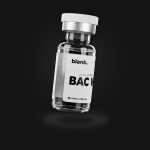
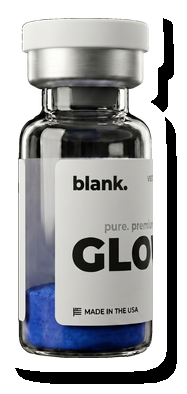
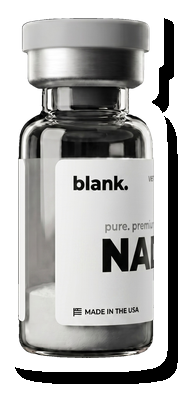
Blank Peptides operates its own cGMP laboratory in the USA and describes itself in production verbs: it compounds, vials, finishes, labels and runs quality control in-house. The company presents this as a chain of custody, meaning a single organisation holds each lot from raw material to shipped vial, with no handoff to a relabeler or broker. It also contract-manufactures and fulfils for other peptide brands, which it describes as a category of its business without identifying clients.
Every lot is tested on a four-part panel: identity, purity at >99%, bacterial endotoxin, and sterility. The work is done by two named outside laboratories, Freedom Diagnostics and Horizon Analytical, and each lot’s certificate is published among the company’s batch certificates of analysis. The lot number on the certificate is printed on every vial from that batch, so a researcher can match the document to the product in hand. Lyophilized material carries an expiration of about 24 months.
The catalog holds 34 compounds. Blends are listed with composition disclosed per component: GLOW 70mg is GHK-Cu, BPC-157 and TB-500; KLOW 80mg adds KPV; Wolverine 20mg is BPC-157 with TB-500. Processing time is within one business day, and orders ship at room temperature.
What Amino Science Labs publicly states
This section is about the ownership and operations language on the Amino Science Labs site, from the pages reviewed 2026-09-08. I’m going to describe the verbs and leave the interpretation to you.
The homepage describes the company as “a chemical supplier”. The disclaimers page uses the same phrase and expands it: “Amino Science Labs LLC is a chemical supplier and not a compounding pharmacy or chemical compounding facility.” That sentence is the fullest self-description I found on the site. It says what the company is, and it says two things the company is not. It doesn’t say who synthesizes the peptides.
The footer lists a Fort Lauderdale, Florida address, a support email and a phone number. I found no about page in the site menu. The site menu includes Products, Rewards, Membership, Affiliates, Calculator, COAs, Contact, Track Order and Research Library. On the pages reviewed 2026-09-08, I didn’t find the words “manufacture”, “synthesize”, “produce”, “facility” or “laboratory” used to describe the company’s own operations, and I didn’t find any statement about where the material originates. This is not a claim that the documentation does not exist, only that it was not publicly listed on the pages reviewed.
The product pages describe the material rather than its origin. The Glow Blend page calls the product “a single co-lyophilized research preparation combining three sequence-defined peptides” and explains that “identity is established by LC-MS”. The Klow page calls it “a proprietary multi-component research peptide preparation”. Both pages use passive constructions for the making of the product and don’t say who did the co-lyophilizing.
The certificates add one more data point. Every COA on the site is a Freedom Diagnostics PDF, and the client field reads “Amino Science”. So the company is the party that submitted samples to the lab. That tells you who commissioned the testing; it doesn’t tell you who made the sample.
Elsewhere the site states “U.S. Lab Tested”, “Accredited Labs” and “HPLC Verified” on the homepage, and the COA page says “every batch is independently tested by accredited U.S. laboratories”. The disclaimers page notes that products are sold “as is” with a recommendation for “independent third-party verification for critical research applications”.
Where Amino Science Labs has a clear advantage is range and logistics. The site states 38 listings including nasal sprays, capsules and bacteriostatic water, “Same-Day Ship Before 5PM CT”, and free shipping over $250. A supplier that sources from multiple places can often carry formats a single-facility manufacturer doesn’t, and that’s a real trade-off rather than a flaw.
Side by side: what each site states about origin and testing
| Attribute | Blank Peptides | Amino Science Labs |
|---|---|---|
| Synthesises in-house | Yes, own cGMP laboratory | States it is “a chemical supplier”; synthesis and facility language not listed — verify |
| Third-party lab named | Freedom Diagnostics and Horizon Analytical | States “accredited U.S. laboratories”; certificates are issued by Freedom Diagnostics — verify |
| HPLC purity | >99% per lot | States “99%+ purity”; certificate reviewed shows 99.67% — verify |
| MS identity | Every lot | States LC-MS identity on certificates reviewed — verify |
| Endotoxin and sterility | Both, every lot | Not listed on pages or certificates reviewed 2026-09-08 — verify |
| Batch COA before purchase | Yes, lot-numbered at /coas/ | States lot-numbered downloads for about 22 of 38 products — verify |
| Blend mg split disclosed | Yes, per component | Product page shows total only; certificate lists per-component mg — verify |
| Catalog size | 34 compounds | States 38 listings including sprays and capsules — verify |
| Research-use labelling | Yes | States “not for human consumption in any form” — verify |
How to verify either supplier yourself
- Read the vendor’s self-description on the homepage, about page and disclaimers, and write down the verbs. “Supplier”, “distributor”, “manufacturer” and “laboratory” are different claims, and the vendor picked the word.
- Email and ask directly who synthesizes the material and where it’s vialed. A manufacturer can answer in a sentence. Keep the reply with your order records.
- Open a certificate and check whose name is in the client field, which lab issued it, and what lot it covers. Then match that lot to the vial on arrival.
- For any blend, compare the per-component figures on the certificate to the label and ask about any gap.
- Run the supplier verification checklist and keep a dated record of what each site stated.
Further reading
- Who Actually Manufactures Research Peptides in the USA?
- Which Peptide Vendors Name Their Testing Lab?
- Best Research Peptide Suppliers: Ranked by What They Document
- Peptide Vendors With Public Per-Batch COA Libraries
Frequently asked questions
Who makes Amino Science Labs peptides?
The site doesn’t say. On the pages reviewed 2026-09-08, Amino Science Labs describes itself as “a chemical supplier and not a compounding pharmacy or chemical compounding facility”, and no synthesis, manufacturing or facility language appears. The certificates list “Amino Science” as the lab’s client. If origin matters to your work, ask the vendor and keep the written answer.
Does Amino Science Labs have its own laboratory?
No laboratory or production facility of its own was listed on the pages reviewed 2026-09-08. The homepage badges say “U.S. Lab Tested” and “Accredited Labs”, which refer to testing rather than production, and the linked certificates come from Freedom Diagnostics, an outside lab. That isn’t a claim a facility doesn’t exist, only that none was described.
Is Amino Science Labs a reseller?
I’d rather describe what the site says than apply a label. It calls itself a chemical supplier, doesn’t describe synthesis or a facility, and commissions testing from an outside lab under its own name. What that adds up to is for you to judge, ideally after asking the vendor directly who makes the material.
How can I find out who manufactures a peptide vendor’s products?
Read the vendor’s own description of itself and note the verbs. Then email and ask who synthesizes and vials the material. A manufacturer answers easily; a supplier will either name its source or decline. Open a certificate and check the client field and the lot. Match that lot to the vial when it arrives.
Are these products for human use?
No. Amino Science Labs states its products are “sold strictly for in-vitro research and laboratory use only” and “not for human consumption in any form”. Blank Peptides labels every vial for in-vitro laboratory research by qualified professionals. Who made the material has no bearing on that classification.
For research use only. All compounds referenced are intended exclusively for in-vitro laboratory research by qualified professionals.
Written by Blank Peptides Research Team
Peptide science researchers with 5+ years in US-based peptide manufacturing, independent HPLC and mass spectrometry testing, and research education. All content is reviewed for scientific accuracy before publication.
REVIEWED BY
Dr. Tobias S — PhD Chemist, Peptide and Unnatural Amino Acid Synthesis
Dr. Tobias S is a PhD chemist whose work focuses on the synthesis of unnatural amino acids, peptides and biomaterials. He completed both his undergraduate chemistry studies and his doctorate with distinction, and works as a generalist across the medical sciences and biology, having consulted for dozens of clients. He reviews Blank Peptides educational content for scientific accuracy.
Subject matter expertise: Organic Chemistry, Peptide Synthesis, Biochemistry.