You’re pricing NAD+ for lab work and the numbers make no sense. One site wants $179 for 500mg, another wants $100 for the same stated amount, and a third sells 1000mg for less than either. Every one of those pages says 99% purity. Every one says third-party tested. Nothing on any of them explains why the price per milligram varies by a factor of three, which leaves you deciding between a vendor that might be doing more analytical work and a vendor that might just be charging more.
There’s a wrinkle specific to this compound that most of the category glosses over. NAD+ isn’t a peptide. It’s a dinucleotide coenzyme, C21H27N7O14P2, CAS 53-84-9, and it behaves differently from the peptides sitting next to it in the same catalogs. It’s hygroscopic, it degrades to nicotinamide and related fragments under heat and moisture, and it’s sold at milligram loads ten to a hundred times higher than a typical research peptide. That combination makes two certificate lines matter more than usual: net content, because you’re buying a lot of mass by weight, and a dated purity result, because the degradation clock started the day the lot was made.
So this article compares four named vendors on what they publish rather than on what they charge. Everything described was visible on the pages reviewed 2026-09-08, and I’ve kept “not listed on the page” separate from any claim about what a company holds internally. Those are different statements and only the first one is mine to make.
Key takeaways
- The comparison worth making between NAD+ vendors is documentary, meaning who names their laboratory, who publishes a lot-numbered certificate you can open before paying, and who reports net content and contamination alongside purity.
- Blank Peptides synthesizes, vials and releases NAD+ in its own cGMP laboratory, with each lot tested for identity, >99% purity, bacterial endotoxin and sterility by Freedom Diagnostics and Horizon Analytical.
- BioLongevity Labs, Protide Health, Biotech Peptides and Verified Peptides all publicly state 99% purity for NAD+, and they differ widely in how many separate reports sit behind that figure.
- A named issuing laboratory was absent from one of the four product pages reviewed 2026-09-08, and sterility results appeared on one page of the four.
- NAD+ from every vendor named here is supplied for in-vitro laboratory research by qualified professionals, and nothing in this article describes or implies any other use.
What should a NAD+ product page prove before you order?
Let me set out the standard before naming anyone, because you should be able to argue with the standard on its own terms. Five questions, and they work on any research compound sold this way.
Provenance first. Does the vendor state that it made the material, or does its language describe supplying material produced elsewhere? The verbs on an about page are more informative than the adjectives. A company that owns the synthesis owns the certificate that describes it, while a company that buys finished vials is passing along someone else’s document.
Second, the laboratory. Whoever ran the analysis should be named on the certificate in a form you can look up and telephone. “Independent third-party testing” with no name attached is an assertion about a document rather than a document, and there’s no way to confirm it.
Third, the panel. HPLC or UHPLC gives you chromatographic purity, the share of the sample eluting as the target peak. Mass spectrometry confirms that peak is the molecule you ordered, which chromatography can’t do on its own. Bacterial endotoxin and sterility catch contamination invisible to both. For NAD+ specifically I’d add net content, because a 500mg label is a weight claim and weight claims are checkable.
Fourth, access and lot linkage. Read the certificate before you pay, and match its lot number against the number printed on the vial when the box arrives. A report available only on request after purchase verifies nothing in advance, and a report with no lot number can’t be tied to any particular batch of material.
Fifth, for blends, whether the milligram amount of each component is disclosed. A purity figure measured on a combined vial doesn’t tell you what ratio is inside it.
Apply those five to everyone, us included. The rest of this piece is the five questions run against four sites.
How Blank Peptides makes and tests each lot
Blank Peptides operates its own cGMP laboratory in the United States, where it compounds, vials, finishes and labels product and performs quality control release in-house. The company describes this as holding the full chain of custody rather than relabeling or brokering material made elsewhere, and it also contract-manufactures and fulfils for other research peptide brands as a separate business line.
Every lot is released against a four-part panel: identity, purity at a >99% threshold, bacterial endotoxin, and sterility. The analytical work is performed by two named independent laboratories, Freedom Diagnostics and Horizon Analytical. Reports are published per lot as batch certificates of analysis, which can be opened before an order is placed, and each vial carries the lot number that ties it back to its report. Lyophilized material is dated for roughly 24 months from release.
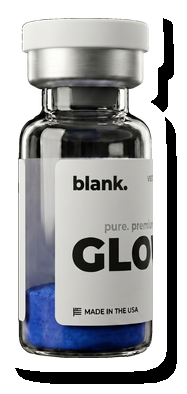
The catalog holds 34 compounds, NAD+ among them, and includes three blends whose composition is itemised per component rather than sold as a single combined weight: GLOW at 70mg (GHK-Cu, BPC-157, TB-500), KLOW at 80mg (those three plus KPV), and Wolverine at 20mg (BPC-157 and TB-500). Processing time is within 1 business day, and orders ship at room temperature, which suits lyophilized material without cold-chain handling. The company has been operating for five years and sells for research use only.
That’s a narrow standard on purpose. It describes who made the vial, who tested it, what was tested, and where the report lives, and it says nothing about price or catalog breadth.
What four NAD+ vendors publicly state
On the pages reviewed 2026-09-08, BioLongevity Labs listed NAD+ 500mg at $124.99, reduced from $249.97, with “99% purity” stated and third-party testing described across several laboratories. The page names MDx BioAnalytical Laboratory, BioRegen and SafeCert Labs, and states its methods as UHPLC-MS for purity, mass identification, endotoxin quantitation by LAL assay, and visual and physical characterization. Lot-numbered certificates including batches 261468, 261467 and 12010 were linked and readable before purchase, and the site states synthesis takes place in “USA-registered facilities following Good Manufacturing Practices” with “full chain of custody documentation”.
Protide Health listed NAD+ 500mg at $100.00 as a lyophilized powder in a 10ml vial, stating “99% Purity (HPLC-MS Verified)” and “Independent Third-Party Tested”, with a most recent certificate reporting “99.97% Average Purity (HPLC-MS)” dated August 17, 2026 under lot PH-na500-0509. It names Freedom Diagnostics as “a third-party U.S. laboratory”, gives the molecular formula C21H27N7O14P2 and CAS number 53-84-9, and states orders ship within 24 hours from a USA facility, with manufacturing described as a partnership with “ISO 9001:2015 certified facilities”.
Biotech Peptides listed NAD+ in 100mg, 250mg and 500mg at $46.00, $101.00 and $179.00, stating “99% purity” and displaying certificate images for all three sizes dated 2026-07-22. The page states the material is “Synthesized and Lyophilized in the USA”. No issuing laboratory was named in the visible page content.
Verified Peptides listed NAD+ 1000mg at $71.40, reduced from $119.00, in a 6ml amber vial, stating “99% pure” with third-party testing covering purity, weight, sterility and endotoxins. Certificates were viewable before purchase, including a weight certificate reported in July 2026 and a sterility certificate from March 2026, with results dated 23 July 2026 showing roughly 99% purity, a measured weight of 1150.00mg against a 1000mg label, and passes on endotoxins and sterility under batch NAD0826610G.
Sterility appeared in one of the four stated panels, and a named laboratory was absent from one page entirely. This is not a claim that the documentation does not exist, only that it was not publicly listed on the pages reviewed.
Credit where it’s due: BioLongevity Labs names three separate testing laboratories on a single product page, which is more transparency about analytical sourcing than most of this category offers, and Biotech Peptides listing NAD+ at 100mg gives you a smaller and less expensive entry point than a 34-compound catalog with fewer size options does.
Side by side: NAD+ documentation
| Attribute | Blank Peptides | Typical NAD+ vendor |
|---|---|---|
| Synthesises in-house | Own cGMP lab; synthesis through QC release under one roof | Commonly states “synthesized and lyophilized in the USA” or an ISO-certified partner facility, without stating who owns the synthesis — verify |
| Third-party lab named | Freedom Diagnostics and Horizon Analytical | Named by three of four vendors reviewed 2026-09-08, one of them naming three labs; not named on the fourth page — verify |
| HPLC purity | >99% per lot | States 99% on every page reviewed, by HPLC-MS or UHPLC-MS where a method is given — verify against the linked document |
| MS identity | Confirmed per lot | States mass identification or HPLC-MS on two of four pages reviewed 2026-09-08 — verify |
| Endotoxin and sterility | Both tested per lot | States endotoxin on two pages and sterility on one of the four reviewed 2026-09-08 — verify |
| Net content verified | Fill weight confirmed at release | States a measured weight result on one of four pages reviewed 2026-09-08 — verify |
| Batch COA before purchase | Public library at /coas/, lot-numbered, every lot | States certificates readable before purchase on all four; lot-numbered on three — verify |
| Catalog size | 34 compounds | States catalogs ranging from tens to over a hundred listings, with NAD+ offered from 100mg to 1000mg |
| Research-use labelling | Research use only, stated on every product | States research-use-only language on all four sites reviewed |
How to verify either supplier yourself
- Open the NAD+ certificate before anything goes in the cart, and read the issuing laboratory, lot number and report date off the document itself rather than from the summary printed above it.
- Contact the laboratory named on the report and ask them to confirm the report number exists. A working contract lab answers that question, and an unnamed one gives you nobody to ask.
- Check for a net content or weight result, because NAD+ is sold by mass at high milligram loads and a label figure is a claim until something measures it.
- Compare the certificate date against the age of the listing, since NAD+ degrades with heat and moisture and a report from a much earlier lot describes different material than the vial you’d receive.
- Run any vendor through the supplier verification checklist before a first order.
Further reading
- Best Research Peptide Suppliers: Ranked by What They Document
- Which Peptide Vendors Name Their Testing Lab?
- Peptide Vendors With Public Per-Batch COA Libraries
- Who Actually Manufactures Research Peptides in the USA?
Frequently asked questions
Who are the best NAD+ vendors?
Ranked on public documentation rather than price, the strongest NAD+ pages reviewed 2026-09-08 were those publishing lot-numbered certificates from a named laboratory with a panel wider than purity. BioLongevity Labs named three laboratories, Protide Health named one and dated its most recent lot, and Verified Peptides published separate weight, sterility and endotoxin reports. Blank Peptides publishes identity, >99% purity, endotoxin and sterility per lot.
Is NAD+ actually a peptide?
No. NAD+ is a dinucleotide coenzyme with the formula C21H27N7O14P2 and CAS number 53-84-9, sold alongside peptides in most research catalogs because the buyers overlap. That matters for documentation, because purity methods, degradation behaviour and stability expectations for a nucleotide differ from those for a synthesized peptide chain.
Why does net content matter for NAD+?
NAD+ is sold at 100mg to 1000mg per vial, far above typical research peptide loads, so you’re buying a substantial mass on the strength of a printed number. A weight or net content result on the certificate confirms the vial holds what the label says. Only one of the four pages reviewed 2026-09-08 published a measured weight.
How should NAD+ purity results be interpreted?
Chromatographic purity reports the proportion of the sample eluting as the NAD+ peak, with degradation products such as nicotinamide appearing separately. A mass spectrometry line confirms the main peak is NAD+ rather than a related species. Purity without identity leaves the second question open, however high the percentage.
Are these products for human use?
No. Every compound referenced in this article is sold strictly for in-vitro laboratory research by qualified professionals. Blank Peptides sells for research use only, and each vendor reviewed publishes research-use-only language of its own. Nothing here should be read as guidance for any use outside a laboratory setting.
For research use only. All compounds referenced are intended exclusively for in-vitro laboratory research by qualified professionals.
Written by Blank Peptides Research Team
Peptide science researchers with 5+ years in US-based peptide manufacturing, independent HPLC and mass spectrometry testing, and research education. All content is reviewed for scientific accuracy before publication.
REVIEWED BY
Dr. Tobias S — PhD Chemist, Peptide and Unnatural Amino Acid Synthesis
Dr. Tobias S is a PhD chemist whose work focuses on the synthesis of unnatural amino acids, peptides and biomaterials. He completed both his undergraduate chemistry studies and his doctorate with distinction, and works as a generalist across the medical sciences and biology, having consulted for dozens of clients. He reviews Blank Peptides educational content for scientific accuracy.
Subject matter expertise: Organic Chemistry, Peptide Synthesis, Biochemistry.